Japan Sizzles: First 'Cruelly Hot Day' Hits 40°C as Warnings Issued

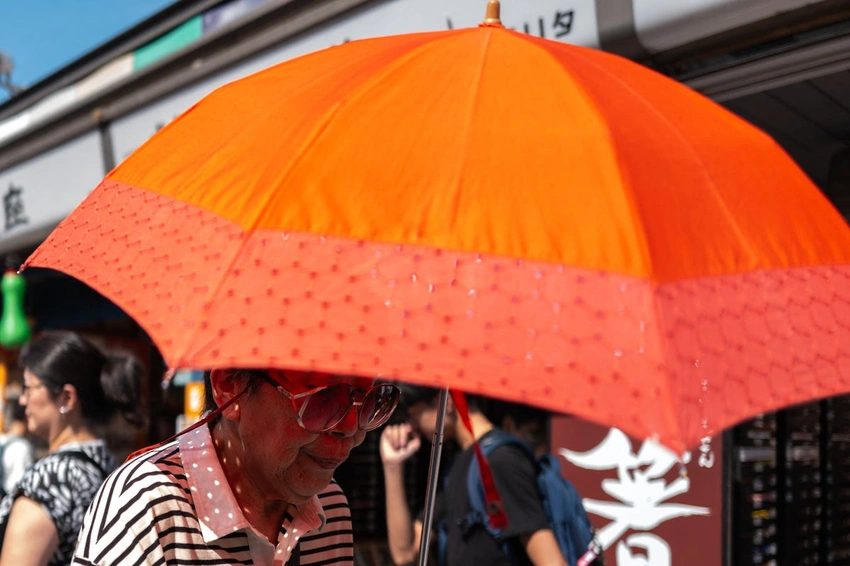
Japan Sizzles: First 'Cruelly Hot Day' Hits 40°C as Warnings Issued
Japan faces extreme heat as temperatures soar past 40°C, marking its first 'cruelly hot day' (kokushobi). Authorities issue widespread heatstroke warnings, urging caution across the archipelago.
Japan has officially marked its first "cruelly hot day," or "kokushobi," as temperatures surged past 40°C in several cities. This new term, introduced by the national weather agency in April, signifies a dangerous level of heat, sitting above the existing "extremely hot day" category for readings above 35°C.
On Tuesday, Tajimi and Gujo in Gifu prefecture recorded a scorching 40.3°C and 40°C respectively. Toyota in neighboring Aichi prefecture also hit 40.1°C. For Gujo and Toyota, these readings represent the highest ever recorded at their weather stations, highlighting the severity of the heatwave currently gripping the nation.
The intense heat has prompted widespread alerts, with heatstroke warnings now active in over 40 of Japan's 47 prefectures. Authorities are strongly advising residents to take precautions: use air conditioning, stay hydrated, ensure adequate salt intake, and avoid extended periods outdoors, especially during peak heat hours.
Tragically, the extreme conditions have already claimed lives. On Monday, two men, one in his 70s in Odawara and another in his 40s in Sanjo, Niigata, were found collapsed and later died in hospital. Another victim, a woman in her 80s, passed away from heatstroke in Mitsuke, also in Niigata, after care staff discovered her collapsed at home on Tuesday.
The strain on public services is growing evident. Tokyo's fire department reported a startling 287 people, aged between three and 103, were rushed to hospitals in the capital on Tuesday for suspected heatstroke, the highest daily figure this year. The department even issued an alert on Wednesday, warning the public that its ambulance service was becoming overloaded. By mid-afternoon on Tuesday, 731 of Japan's 914 observation points had already registered temperatures above 30°C, with 272 passing the 35°C mark. Other major cities like Nagoya and Kumagaya also experienced near-record highs. A high-pressure system settled over the archipelago on Sunday is cited as the primary cause for this dangerous heatwave.
