SC to Probe Face Recognition on NEET Protesters! ⚖️ Privacy Concerns Mount!

SC to Probe Face Recognition on NEET Protesters! ⚖️ Privacy Concerns Mount!
Supreme Court to examine Delhi Police's use of facial recognition tech on NEET-UG protesters. MP A.A. Rahim calls it unconstitutional. A crucial test for civil liberties!
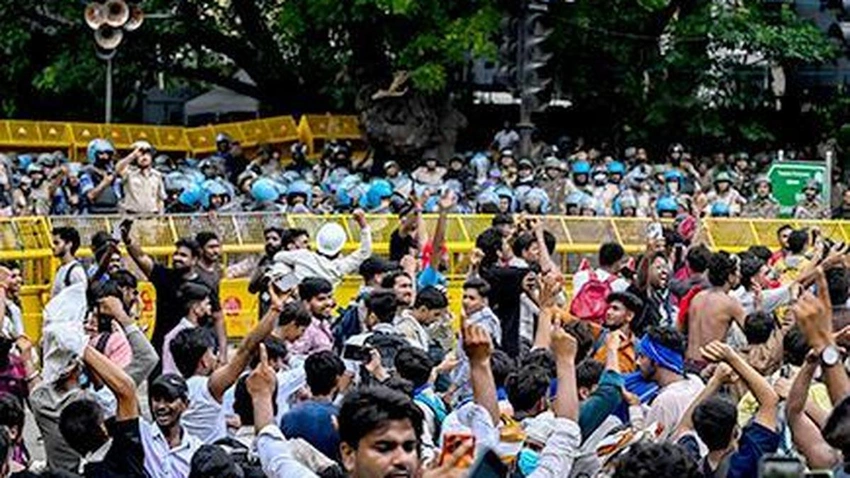
The Supreme Court has agreed to address serious concerns regarding the use of facial recognition technology (FRT) and mass surveillance measures against students and individuals who participated in protests concerning the NEET-UG exam paper leaks. This decision follows a petition filed by Rajya Sabha Member of Parliament A.A. Rahim, who asserts that such surveillance on peaceful protesters is unconstitutional.
A three-judge Bench, led by Chief Justice of India Surya Kant, confirmed that Mr. Rahim’s petition would be consolidated with existing NEET-UG protest cases. These cases already question the police crackdown on students and the use of pellet guns during demonstrations. Senior advocate Menaka Guruswamy, representing the petitioners, highlighted that the surveillance was carried out by the Delhi Police, with the collected data subsequently hosted by private agencies.
Ms. Guruswamy detailed the extent of the surveillance, explaining that it involved mapping faces, using spectacles as identifiers, and deploying vehicles for data acquisition. Crucially, this data was allegedly collected without permission, and its hosting by private entities is argued to violate DPDP Rules, the CrPC, and other legal provisions. The MP’s plea specifically targets the "automated, algorithmic extraction and matching of the biometric identifiers of thousands of peaceful protesters," and the subsequent linking of this data with permanent national criminal databases.
The petition states that since the commencement of the sit-in protests on July 20, the Delhi Police have subjected numerous protesters, journalists, and ordinary citizens to "continuous and pervasive biometric surveillance." This surveillance reportedly involves acquiring videos and photographs through CCTV cameras, raising profound questions about privacy, civil liberties, and the right to peaceful protest in a democratic society. The Supreme Court's decision to take up this matter signals a critical review of the legality and ethics surrounding the deployment of advanced surveillance technologies by law enforcement.
#NEETUGProtests #FacialRecognition #SupremeCourt #CivilLiberties
