Dress Code Debate: Lenskart Explains Policy On Hijab, Bindi And Tilak

Dress Code Debate: Lenskart Explains Policy On Hijab, Bindi And Tilak
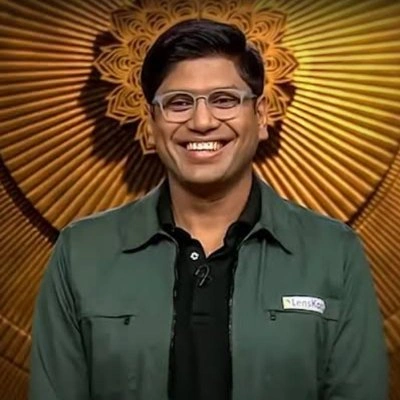
A viral document claimed Lenskart barred religious symbols; CEO Peyush Bansal says the old letter is outdated and the company now supports religious expression as grooming rules evolve.
A document supposedly detailing the dress code at Peyush Bansal-led eyewear company Lenskart has been going viral. As per the document, which is viral on social media, the company allegedly restricts employees from wearing a bindi or a tilak at work. Bansal resorted to social media to defuse the discussion about the company's supposed dress code policies.
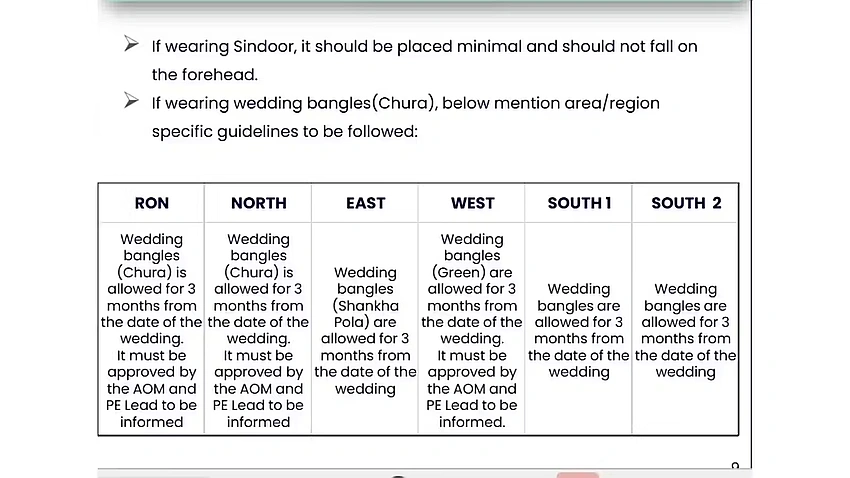
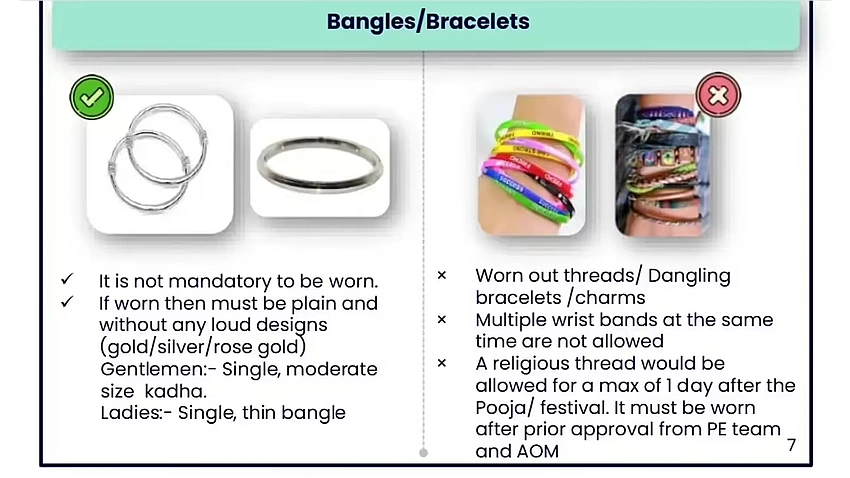
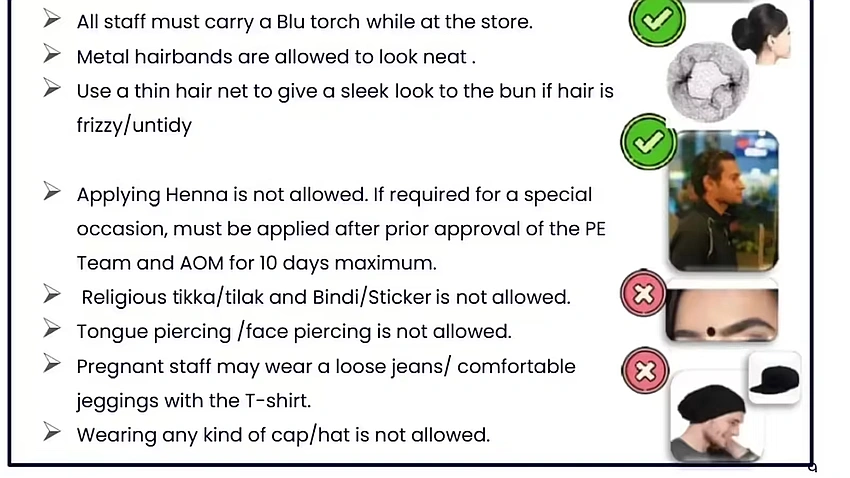
CEO Peyush Bansal Makes Clarifications
In a long post on X, Goyal wrote that the document was old and was not representative of the rules that the company is following. I have been reading a wrong policy letter that is going viral concerning Lenskart. I would like to state that this document does not reflect our current guidelines, Bansal wrote.
He made it clear that there are no limits to any religious expression and added that bindi and tilak are not restricted in the policy of our company and that they update their guidelines frequently.
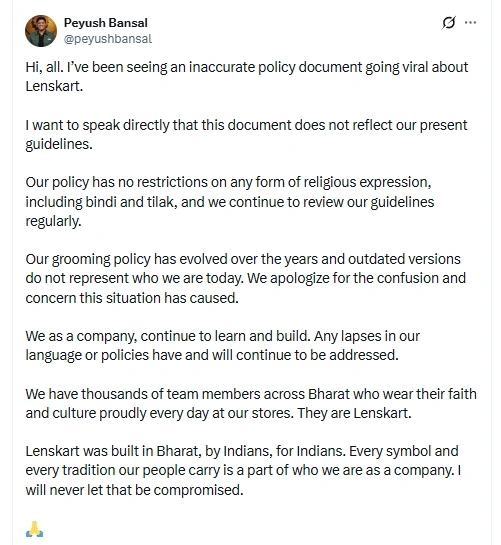
Calling the document outdated, he said,
“Our grooming policy has evolved over the years, and outdated versions do not represent who we are today. We apologize for the confusion and concern this situation has caused.”
Highlighting how Lenskart employees are free to express their identity at work, Peyush Bansal wrote,
“We have thousands of team members across Bharat who wear their faith and culture proudly every day at our stores. They are Lenskart."
“Lenskart was built in Bharat, by Indians, for Indians. Every symbol and every tradition our people carry is a part of who we are as a company. I will never let that be compromised,” he added.
The Discussion about Identity in the Workplace Persists
The controversy has not been settled yet, in spite of the clarification. The question of how such a document came to be in the first place has still been asked by critics, and more transparency in corporate policies has been sought by others.

The event has again brought into focus a balancing act of professional dress code and cultural or religious identity that companies have to balance. With increased discussion, the Lenskart incident might compel more organisations to explicitly establish and articulate inclusive workplace policies.
#Lenskart #PeyushBansal #DressCode #WorkplacePolicy #ReligiousExpression
