One Nation One Election’ Not Unconstitutional, But ECI Must Not Get Unchecked Powers: Ex-CJI Chandra

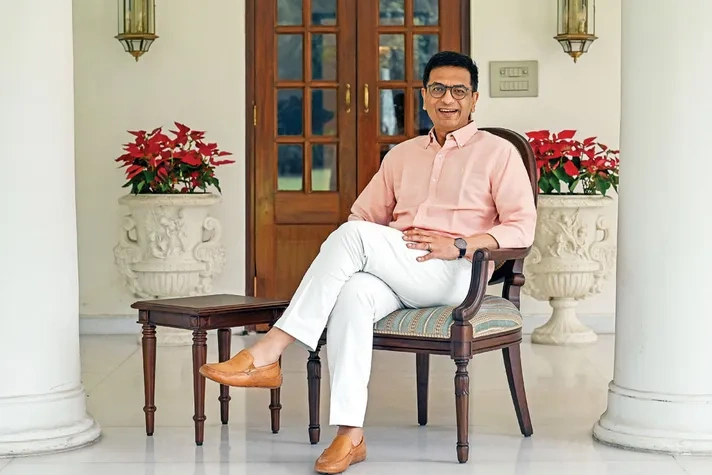
One Nation One Election’ Not Unconstitutional, But ECI Must Not Get Unchecked Powers: Ex-CJI Chandra
Explore the constitutional concerns and necessary adjustments in the One Nation One Election Bill discussed by former Chief Justice D Y Chandrachud. Get the details on what's at stake!
While the One Nation One Election Bill is constitutional and does not violate the fundamental framework of the constitution, there are some gaps in the proposed legislation that need to be filled and some minor adjustments made. Sources at the meeting claim that former Chief Justice of India D Y Chandrachud discussed the matter with the Joint Parliamentary Panel (JPC).
The Election Commission of India should not be granted unrestricted authority to implement ONOP, according to sources who attended the meeting with 38 MPs. He said that it is unconstitutional to give the ECI the authority to unilaterally report to the President to shorten the term of elected assemblies or change significant constitutional provisions.
“This was my first appearance before the Joint Parliamentary Committee. The depth of the learning and knowledge of the respected Members of Parliament has left a lasting impression on my mind. The dialogue which spanned nearly three hours was constructive, cutting across party lines. The meeting today has reaffirmed my faith in India’s Parliamentary democracy and in the future of our democratic institutions”, Chandrachud said.
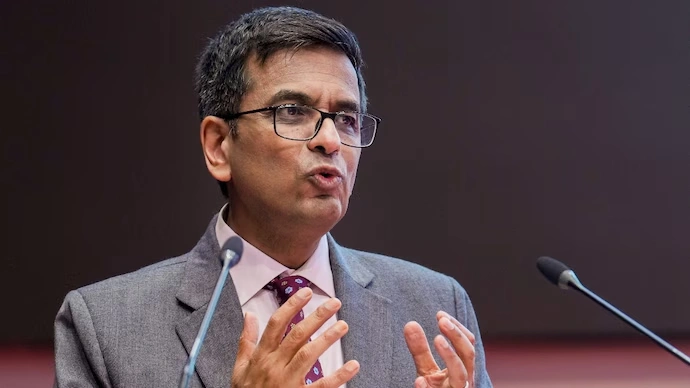
The third former Chief Justice to address the ONOP panel is Justice Chandrachud. Earlier, CJIs Ranjan Gogoi and UU Lalit had previously addressed the committee.
A source claims that the former CJI outlined his opinions under three main headings:
- The concept of simultaneous elections does not violate the fundamental framework of the Constitution.
- Nonetheless, the Election Commission's authority needs to be updated and restricted.
- The Bill needs to address constitutional silences, especially when it comes to emergencies and early dissolution.
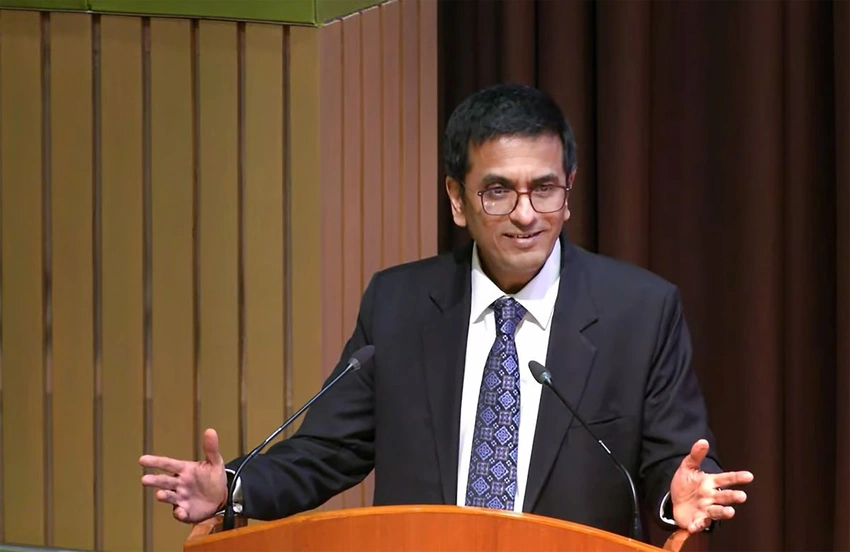
Simultaneous elections do not violate constitutional principles, the former Chief Justice noted. Elections for state assemblies and the parliament were held simultaneously from 1950 to 1960. He used 1957 as an example, when several assemblies were adjourned early to coincide with the country's elections.
Although they are components of the fundamental framework, he emphasized that democracy and federalism do not necessitate separate elections. The Constitution makes no mention of asynchronous elections.
Justice Chandrachud proposed a solution to address the shortcomings:
- ECI should only be permitted to postpone elections in cases involving public order or national security, and any such recommendation must be approved by both Houses of Parliament. Additionally, postponements should only be allowed for a set, constrained amount of time.
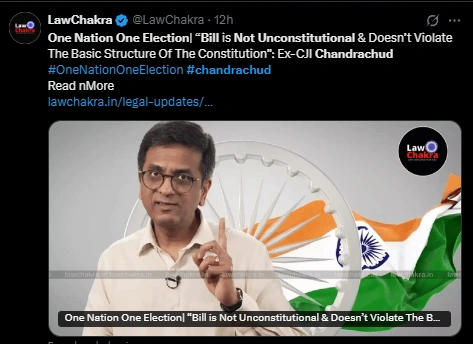
According to sources, Judge Chandrachud brought up two significant issues:
- Article 352's National Emergency clause permits a one-year extension of the terms of state assemblies and Parliament. The impact of such extensions on the synchronized cycle is not explained in the Bill.
- He clarified that after an emergency ends, the government would have to decide whether to prolong the terms of the assemblies or shorten the next term of parliament to bring everything back into sync.
What happens if a State assembly dissolves because of a loss of majority six or seven months before its term is up? The Bill is vague about whether elections can be postponed in these situations to accommodate the parliament. He claimed that Article 356 does not apply in this case and that it may cause misunderstandings or even abuse if it is not specifically addressed in the Bill.
#OneNationOneElection #ConstitutionalDebate #ElectionReform #IndianPolitics #Democracy
