Deep Sea Secrets Unlocked: What Lies Beneath?

Deep Sea Secrets Unlocked: What Lies Beneath?
The ocean's depths continue to astound us! Recent discoveries hint at an unseen world teeming with unique life, urging us to explore and protect our planet's final frontier.
The deep ocean remains one of Earth's last great frontiers, a realm more mysterious to us than the surface of Mars. For centuries, its crushing pressures and utter darkness veiled untold secrets. Yet, with every new generation of submersibles and advanced imaging technology, we peel back another layer, revealing a world so astonishingly alien it constantly redefines our understanding of life itself.
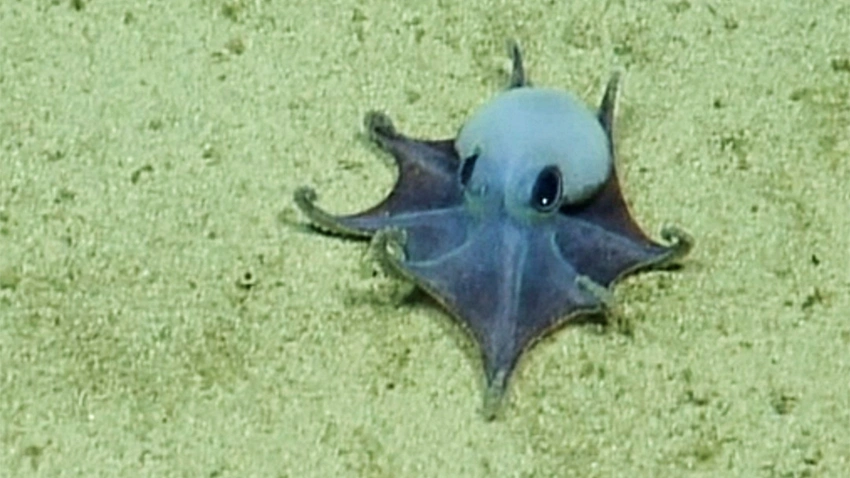
Imagine a creature straight out of a fantastical tale: a tiny, bright blue octopus, no bigger than a golf ball, discovered almost two kilometers beneath the Pacific Ocean's surface near the Galápagos Islands. This isn't science fiction; it's a recent reality. Scientists, marveling at its unusual appearance even on robotic camera feeds, later confirmed it as an entirely new species. Its unique characteristics—relatively few suckers, smooth skin, distinct beak, and peculiar internal coloration—distinguished it from any known octopus, hinting at evolutionary paths we've yet to fully comprehend.
Such discoveries are not isolated incidents. They are powerful reminders of the immense biodiversity hidden in our planet's deep-sea ecosystems. Each new find, whether it is a glow-in-the-dark fish, a giant tube worm, or a delicate, previously unknown cephalopod, expands our biological catalog and challenges our assumptions about where and how life can thrive. These creatures often possess unique adaptations that could hold keys to medical breakthroughs or inspire new technologies.
Unlocking these mysteries requires dedicated exploration and scientific rigor. Tools like micro-CT scanning allow researchers to examine delicate specimens in exquisite detail, piecing together the story of their lives, from their anatomy to potential reproductive strategies, such as the 13 eggs found within one octopus specimen. These insights are not just for academic curiosity; they underscore the urgent need to protect these fragile environments from human impact, including deep-sea mining, pollution, and climate change, before we even fully understand what we stand to lose.
The deep sea is a living library of evolution, a reservoir of wonder that continues to offer profound insights into Earth's past, present, and future. Every new discovery is a testament to the boundless resilience of life and a compelling call for continued exploration, conservation, and appreciation for the extraordinary planet we call home.
