The Stutter-Step Penalty: Cool or Controversy in World Cup Football?

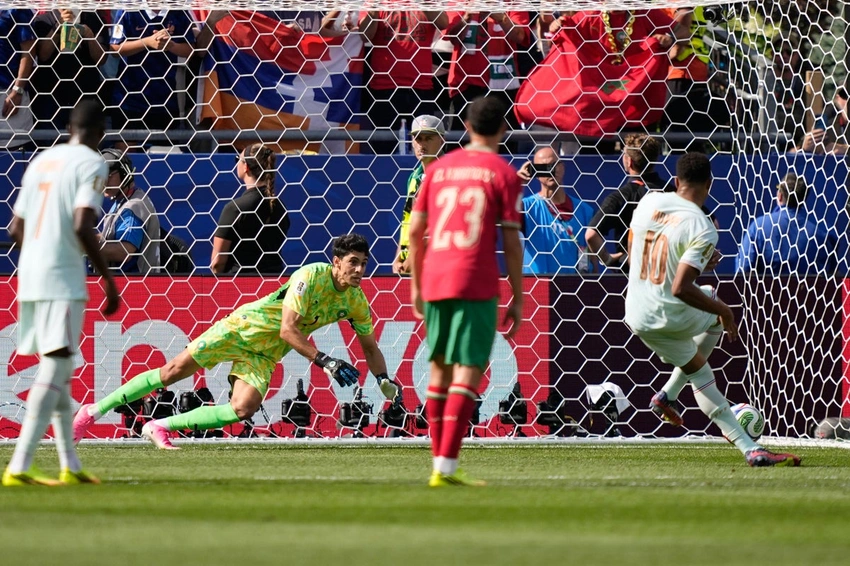
The Stutter-Step Penalty: Cool or Controversy in World Cup Football?
From Pelé to Messi! Explore the 'paradinha' penalty technique, its thrilling history, and how it impacts World Cup superstars. Does it make them legends or look silly? Find out!
It's a move that can define a moment of glory or a moment of embarrassment, often leaving fans and opponents alike on the edge of their seats. The stutter-step penalty, known in Portuguese as "paradinha" or "little stop," has been a dramatic feature of recent World Cups, captivating audiences and challenging the world's best players. From Lionel Messi to Kylian Mbappé, Cristiano Ronaldo, Harry Kane, and Neymar, football's biggest names have adopted this theatrical technique, with varying degrees of success and memorable outcomes. This high-stakes maneuver has sent teams soaring into the quarterfinals and, just as dramatically, contributed to unexpected exits.
The "paradinha" technique, where a player feints or briefly pauses during their run-up to the ball while keeping their eyes on the goalkeeper, is widely believed to have originated in Brazil during the late 1950s and early 1960s. It was famously popularized by the legendary Pelé, who mastered the art of unsettling the goalkeeper. Later, a young Neymar, hailed as a potential successor to Pelé's throne, continued this tradition, showcasing remarkable skill and audacity with his own interpretations of the stutter-step.
Neymar, in particular, pushed the boundaries of the "paradinha." In 2010, while playing for his club Santos at just 18 years old, he executed a penalty by dancing towards the ball, coming to a complete standstill after placing his standing foot next to it, and then effortlessly stroking it into the net after the goalkeeper had already committed to a dive. This audacious display forced football's governing body, FIFA, to intervene. Ahead of the World Cup in South Africa that same year, new regulations were introduced, instructing referees to issue a yellow card to players who feinted just as they were about to strike the ball, and to disallow any goals scored from such attempts.
However, the rules have since been refined to strike a balance between flair and fair play. Players are now permitted to feint during their run-up to the penalty spot, utilizing subtle movements to disrupt the goalkeeper's timing. What remains forbidden, however, is feinting or stopping once the run-up is complete and the player is in the immediate act of striking the ball. This nuanced adjustment allows for some psychological gamesmanship while preventing the excessive, almost misleading, stoppages that Neymar famously employed.
Despite the refined rules, the stutter-step penalty continues to be a high-risk, high-reward gamble. While it has led to crucial goals, sending teams like France through to subsequent rounds, it has also seen top players falter. Lionel Messi, for instance, famously missed a stutter-step penalty in group play, highlighting that even for the greatest, this technique offers no guarantees. Conversely, Neymar's final penalty for international soccer, a converted stutter-step, proved to be a poignant parting gift, encapsulating the dramatic and often unpredictable nature of the beautiful game. This hit-and-miss technique remains a captivating spectacle, a testament to the blend of skill, nerve, and showmanship that defines top-tier football.
