I tried digital-detox (and failed)

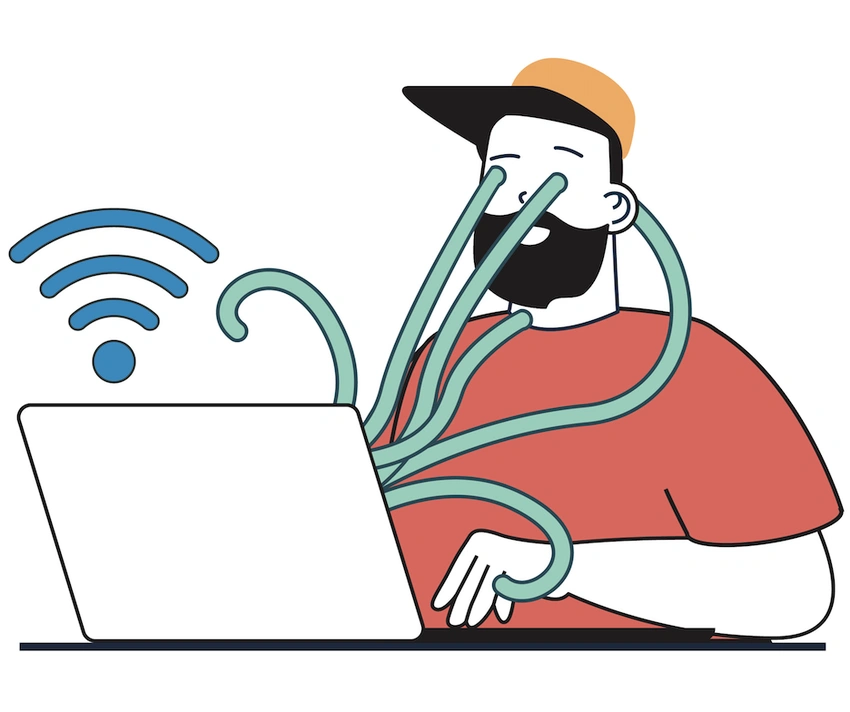
I tried digital-detox (and failed)
Spoilers: it's way overhyped.
Okay, I did it. I finally bowed to the relentless pressure from every self-help guru, wellness podcaster, and smug influencer shilling a “digital wellness journal.” I attempted the almighty Digital Detox.
I was promised mental clarity, restored attention spans, and a newfound appreciation for "the moment." What I got was a crushing wave of existential boredom, an inability to find literally anything without Google Maps, and a deep, unsettling fear that I had missed a truly catastrophic global meme.
The Myth of the Great Escape
The Digital Detox is, in theory, simple: you delete the apps, lock your phone in a drawer, and emerge 72 hours later as a spiritually enlightened being, ready to embrace the unedited, raw beauty of life. It's cousin the Social Media Detox is the same thing, but for social media apps only.
The concept became huge because our society is deeply fatigued by the doomscrolling and the endless comparison game. It’s the ultimate counter-trend: if everyone is online, the real luxury must be being offline. It's the ultimate aspiration of the perpetually overworked: a week of undisturbed, high-quality solitude.
In reality, the detox is way overhyped. It assumes your primary issue is a lack of focus, when often, your primary issue is a lack of things to do when you’re forced to confront your thoughts.
The Stages of the Shameful Relapse
We all crave the 'Main Character Energy' of a successful detox: the peaceful, sunset-gazing photo posted only afterthe break is over. But here’s what the detox enthusiasts never show you:
1. The Boredom Binge
With no social apps, you don't magically become a productive marvel. You just migrate the addiction. I caught myself scrolling through my phone’s photo album for old memes. I kept staring at my phone Half expecting a text from someone asking where I was. We were trying to replicate the scroll, not escape the phone.
2. The Pop Culture Blackout
When I missed a massive, world-altering event - okay I don't wanna admit what it was - let's say it was a celebrity breakup, which was announced and dissected entirely on Instagram, I was crushed. The conversation at work felt like a foreign language. I realized social media is now the central nervous system of pop culture, a fact that’s both terrifying and true. You don't get to be an informed, witty participant in modern life by voluntarily stepping out of the conversation.
My friend Leo, a serial poster, dramatically announced his digital fast in his GroupMe chat before deleting the app. His last text? "Wish me luck! I’m going to read a book! I’m finally going to be present."
The reality was that he spent four straight hours looking at a dusty bookshelf, realizing he didn’t own a single book he actually wanted to read or that hadn't already been adapted into a Netflix series.
3: The Utter Loss of Basic Function (12-48 Hours)
This is when you realize your phone wasn't just a distraction machine; it was your life support system.
My own detox hit a wall when I tried to meet a friend at a new cafe. I didn't want to use my GPS app because I was being “radical.” I spent twenty minutes wandering down the same street, getting increasingly sweaty, before realizing I couldn't remember the last time I looked up directions before I left the house. I had to ask a stranger for help - it felt shameful.
Even worse, the pop culture conversation is lost. When my colleague mentioned the latest celebrity couple breakup, I had nothing. "Wait, who is she dating? And what happened to the dog?" I pleaded, realizing the information gap couldn't be filled by reading a newspaper - it required targeted, immediate Twitter aggregation.
4: The Shameful Relapse (48+ Hours)
The boredom is too much, and people around you in public places think you're jobless. You’ve cleaned your kitchen, done your taxes, and meditated until your ears rang. Now, you just want to know what that one person from high school is doing.
Leo's relapse was legendary. He hadn't just deleted the apps; he’d logged out. He ended up standing by the door of his apartment for ten minutes, trying to remember his seven-year-old Instagram password, sweating profusely.
His quote to me afterward? "It felt like I was breaking into my own brain. And honestly? The twenty minutes of content I missed wasn't worth the hour I spent alone with my thoughts."
The Takeaway: Control, Not Cold Turkey
The truth is, a full-scale detox is not a sustainable trend - it’s a performance. Pop culture, news, and our social lives are fundamentally integrated with our digital devices.
The real goal isn't to disconnect entirely, but to renegotiate the terms of our relationship.
I’m done with the dramatic, overhyped "digital purge." Now, I’m embracing the 'Mini-Mute': setting timers, turning off notifications, and simply being intentional about when and why I pick up the phone.
Because let’s be honest, trying to live a life totally unedited is hard work. And sometimes, you just need a little dose of other people's well-curated highlight reels to get through your own unedited, boring Monday. And I’m okay with that.
