Govt Cracks Down on Obscene Content, Bans ALTT, ULLU & 20+ OTT Apps

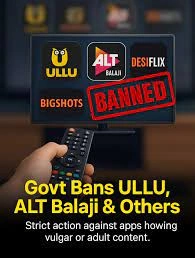
Govt Cracks Down on Obscene Content, Bans ALTT, ULLU & 20+ OTT Apps
The government has banned access to OTT platforms like ALTT and Ullu, citing several legal violations. Learn what led to this decision and its implications for viewers.
According to news agency ANI, the government has prohibited the general public from accessing over-the-top (OTT) platforms such as Ullu, ALTT, and Netflix. Sections 67 and 67A of the Information Technology Act, 2000, Section 294 of the Bharatiya Nyaya Sanhita, 2023, and Section 4 of the Indecent Representation of Women (Prohibition) Act, 1986 were among the laws that were found to have been broken by the banned apps and websites. According to an unidentified source cited in the report,
"There was hardly any storyline, theme, or message in a social context."
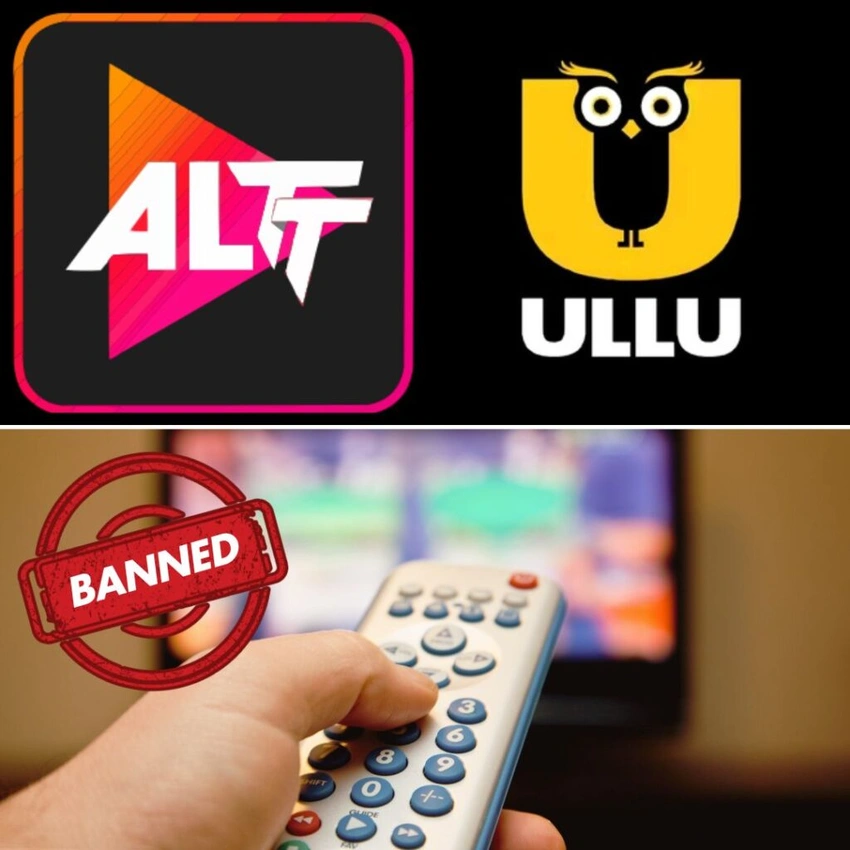
The agency report states that the decision was made after consulting with industry associations FICCI and CII, MHA, MWCD, MeitY, the Department of Legal Affairs, and specialists in women's and children's rights. According to the report, Internet service providers (ISPs) have been instructed by the Ministry of Information and Broadcasting (MIB) to prevent the public from accessing pornographic, obscene, and vulgar content.
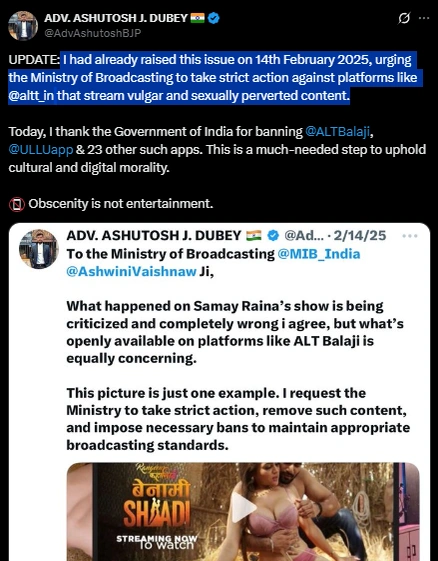
"I had already raised this issue on 14th February 2025, urging the Ministry of Broadcasting to take strict action against platforms like @altt_in that stream vulgar and sexually perverted content." said Advocate Asutosh Dubey on his X account.
The ministry emphasized in its official notification that, under the Information Technology Act of 2000 and the Information Technology (Intermediary Guidelines and Digital Media Ethics Code) Rules of 2021, intermediaries are responsible for removing or blocking access to illegal information.
Section 67 & 67A of the IT Act: What They Say
Sections 67 and 67A of the Information Technology Act, 2000 deal with the publication and transmission of obscene and sexually explicit content in electronic form. The key difference is that Section 67 applies to general obscenity, while Section 67A deals with more graphic, sexually explicit material. The punishments under Section 67A are more severe due to the nature of the content.
According to Section 67 of the IT Act, publishing or transmitting pornographic or vulgar content online that could degrade or corrupt readers is punishable by up to three years in prison and a fine of up to Rs 5 lakh for a first offense, and up to five years in prison and a fine of Rs 10 lakh for subsequent offenses.
In contrast, Section 67A deals specifically with content that contains sexually explicit acts or conduct and carries harsher penalties, including up to five years in prison and a fine of Rs 10 lakh for the first offense and up to seven years in prison and a fine of Rs 10 lakh for subsequent offenses.
Full List of Banned Platforms
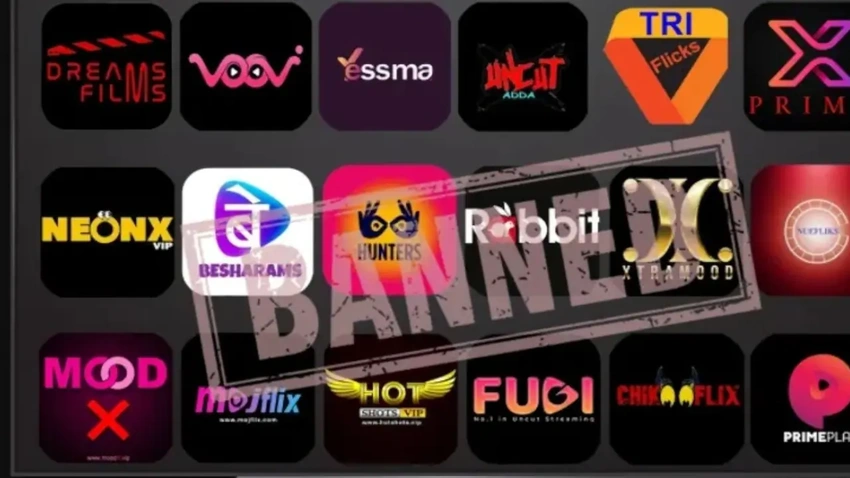
The government has banned 14 apps and 26 websites, according to an ANI report. The following names are on the list of prohibited OTT platforms:
- ALTT (ALTBalaji)
- ULLU
- Desiflix
- Big Shots App
- Boomex
- NeonX VIP
- MoodX
- Mojflix
- Bull App
- Triflicks
- Hulchul App
- Gulab App
India has firmly asserted its content boundaries by banning 20 OTT apps. Legal justifications for restricting the distribution of pornographic and explicit content are highlighted by the flagging of Sections 67 and 67A of the IT Act. Similar dubious content platforms need to prepare for scrutiny or face censorship. This action might change the way digital entertainment is created and regulated by Indian OTT platforms.
