Riyadh Under Attack: US Warns of Rapid Escalation in West Asia

Riyadh Under Attack: US Warns of Rapid Escalation in West Asia
A Houthi ballistic missile attack targeting Saudi Arabia's capital, Riyadh, has prompted a stark warning from the U.S. about rapid escalation in West Asia. Learn about the latest developments and regional tensions.
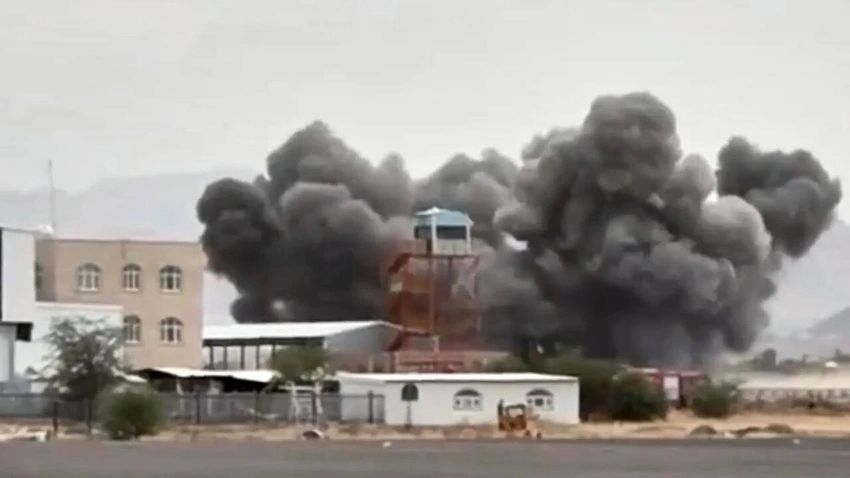
A missile attack on Saudi Arabia’s capital, Riyadh, on Saturday, September 19, 2026, has ignited fresh fears of a rapid escalation in West Asia. The United States issued a stern warning, urging its citizens to reconsider travel to and through the region following the strike, which marked the first time Riyadh has been directly threatened since the Yemen conflict resumed.
Loud explosions rattled the Saudi capital on Saturday, with AFP journalists reporting a fuel tank near the airport, emblazoned with the Aramco logo, catching fire. Flight operations at Riyadh airport reportedly faced "major problems," including cancellations and delays, according to Flightradar24.
The Riyadh-led coalition confirmed on X (formerly Twitter) that a ballistic missile launched by the Iran-backed Houthis towards the capital was "successfully intercepted and destroyed." The coalition accused the Houthi fighters of attempting to target "civilians and civilian infrastructure" in multiple cities, including the crucial oil export hub of Yanbu on the Red Sea. These attacks, they stated, were thwarted by Gulf monarchy's air defenses.
The Houthis, who control significant parts of Yemen and are locked in conflict with government forces backed by Riyadh, claimed responsibility for the attacks. Houthi military spokesman Yahya Saree stated on Telegram that they carried out
two successful military operations using a large number of ballistic and cruise missiles and drones.
He specified that the first targeted "sensitive sites in the Saudi capital, Riyadh," and the second aimed at "Aramco facilities in Yanbu."
In response to the escalating hostilities, Saudi authorities had issued an overnight air raid alert, urging residents to stay indoors.
Residents described the experience as "terrifying," with one telling AFP, "I heard the alarm, then my windows shook." The alert was lifted about half an hour later after the explosions.
The timing of the attack is significant, coming just days after Riyadh accused the Houthis of targeting Islam's holy city of Mecca on September 16, 2026, an accusation the Houthis strongly denied. This latest incident, coupled with the Houthis' recent lightning offensive that has displaced over 110,000 people and disrupted Saudi oil exports, adds immense pressure to a global economy already reeling from ongoing conflicts.
U.S. President Donald Trump notably cut short his weekend at Camp David, returning to the White House on Saturday without immediate explanation. The White House's silence, alongside the State Department's strong travel advisory, underscores the gravity of the situation and the potential for the conflict to expand beyond current bounds.
