Why Is 90% Of Pop Music In 4/4 Tempo?

Why Is 90% Of Pop Music In 4/4 Tempo?
Why Is 90% Of Pop Music In 4/4 Tempo?
Trace the four-beat bar from The Beatles to Beyoncé and discover why 4/4 time is so dominant in pop—yet so easy to overlook in today’s music.
When you turn on the radio, scroll through Spotify, or walk past a café speaker, chances are the song you hear is written in 4/4 time. Roughly 90% of all pop music, some say even more, follows this rhythmic framework. But why this one? Why four beats per bar, not three, five, or seven?
What 4/4 means and how common it really is
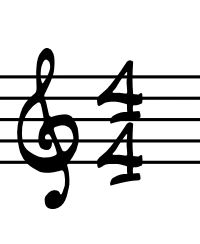
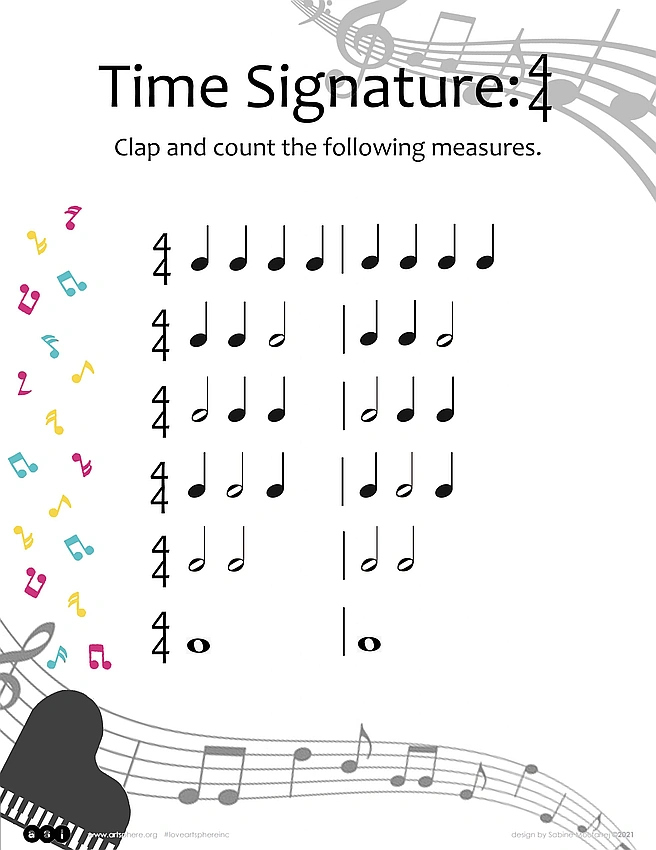
In technical terms, the 4/4 time signature simply means there are four beats in every bar, and the quarter note (or crotchet) gets one beat. It’s sometimes called “common time”, which already tells you something about its cultural ubiquity.
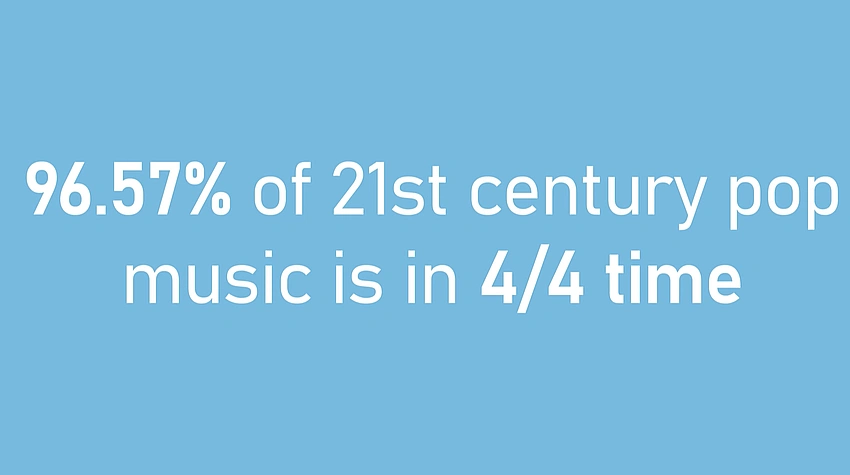
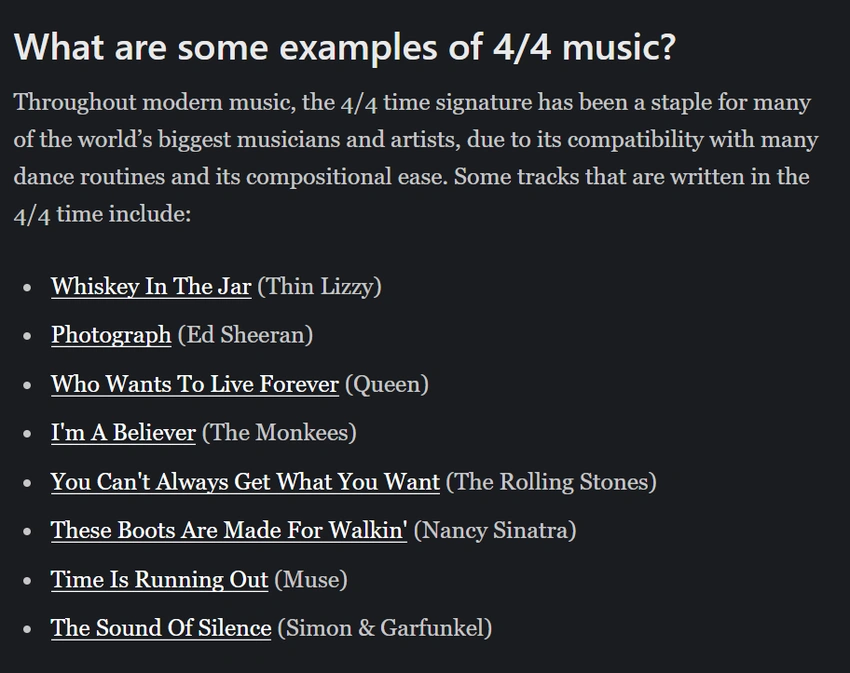
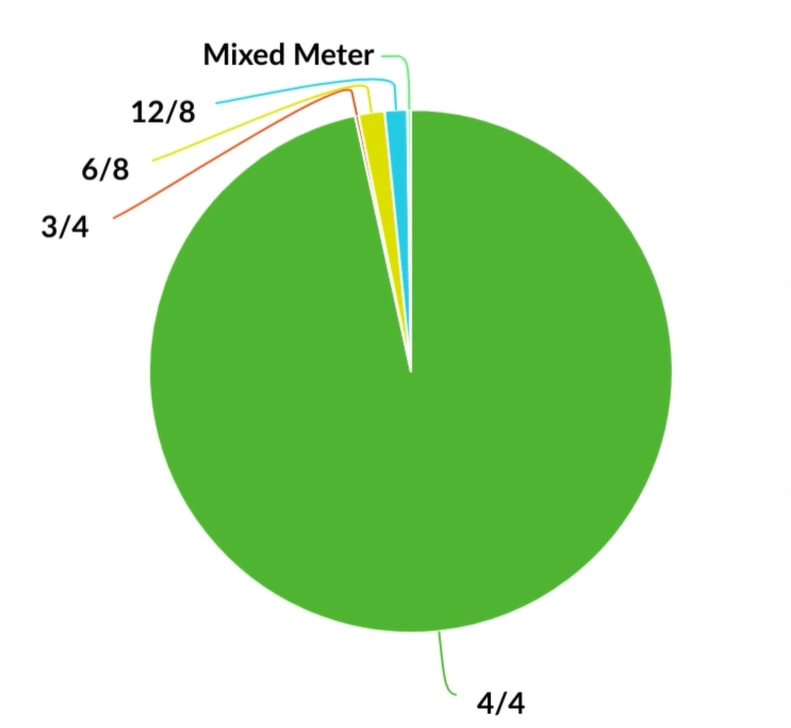
Studies analysing popular music across the Billboard charts have found that the vast majority, i.e., around 90–95%, of songs fall under 4/4, with only rare exceptions venturing into 3/4 or 6/8. From The Beatles to Beyoncé, from disco to hyperpop, the four-count underlies almost everything we casually call “a beat”.
 It’s so natural that we hardly notice it. But the question lingers: what makes 4/4 feel so right?
A history written in dance and machinery
The roots of 4/4 lie less in theory than in movement. Western popular music evolved out of dance traditions of folk songs, marching bands, waltzes turned square dances, and early jazz. As music became increasingly commercial and mechanical through the 20th century, predictability became valuable. The recording industry, radio, and later digital sequencing all reinforced rhythms that could be easily standardised and looped.
A study by Michigan Library notes that of popular-music pedagogy, 4/4 is overwhelmingly the default metre in teaching and songwriting because it connects most clearly with established rhythmic traditions.
In that sense, it suits the mechanical reproduction of sound, the metronomic precision of studio recording, and the global rhythms of dance floors where beats per minute (BPM) rule over regional nuance. The rise of electronic music only deepened this, as drum machines and digital audio workstations naturally defaulted to a four-beat grid.
The psychology of four
The appeal of 4/4 isn’t purely historical. There’s a psychological comfort to its symmetry. Four beats divide evenly into halves, quarters, and eighths. Our brains, which like patterns and repetition, find it easy to predict where the next accent will fall. This sense of predictability creates what psychologists call entrainment: our bodies begin to synchronise with the rhythm almost unconsciously. You don’t need training to feel 4/4; it feels innate, even if that “innateness” is learned through cultural immersion.
The logic of commerce
There’s also the pragmatic side. Pop music is not just art but also an industry. And in an industry designed around mass consumption, ease of recognition matters. Producers know that tracks in 4/4 sell better and mix easier, both for radio formats and live DJ sets. The structure helps standardise transitions between songs in playlists and clubs, allowing seamless blending at the level of both rhythm and production.
Listeners reward familiarity. If a beat feels immediate, if you can anticipate the drop or chorus by instinct, you’re more likely to stay hooked. 4/4 has thus become not just a musical choice but a commercial shorthand for accessibility.
The illusion of universality
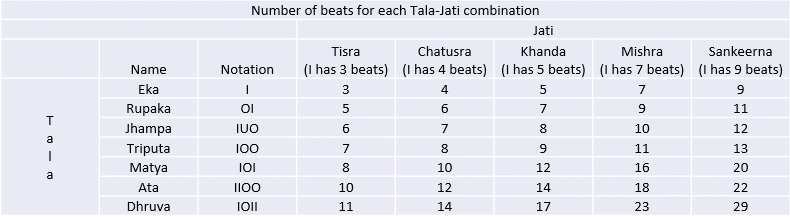
But is 4/4 truly natural or simply dominant because we’re used to it? That’s where I start to feel sceptical. A Guardian feature once posed this question directly, concluding that there’s no biological reason humans prefer four beats per bar. Many non-Western musical traditions, such as Indian talas, West African polyrhythms, Balkan and Turkish metres, regularly employ cycles of five, seven, or nine beats, all of which are deeply intuitive to their native listeners.
So what feels “natural” to us is largely cultural conditioning. The 4/4 rhythm has become our dominant narrative for,m like prose compared to poetry, or realism compared to abstraction. We mistake familiarity for universality.
The comfort and constraint of four
The reason 90% of pop songs use 4/4 isn’t that it’s the only rhythm humans can understand. It’s because it works historically, psychologically, and commercially. It’s a rhythm of bodies and markets, of both heartbeat and algorithm.
But perhaps the real question isn’t why pop music loves 4/4. It is why we, as listeners, have learned to. When the rhythm feels so familiar that it disappears, that’s when art risks turning mechanical. And maybe that’s why the rare pop songs that break the pattern, like the waltz sway of Norwegian Wood or the shifting metre of Money, feel so thrilling. They remind us that rhythm, like language, can still surprise.
So next time you find yourself nodding to a pop song, listen not just to the melody but to the structure beneath it. Count the beats if you can. One, two, three, four. One, two, three, four. It’s the pulse of a steady, familiar, and, for better or worse, irresistibly ours modern world.
#MusicTheory #4-4Time #CommonTime #PopMusicFacts #BeatScience

Login to comment.
No thots yet. Be the first to share your thoughts!