From 'Looksmaxxing' to 'Vibe Coding': Your Dictionary Just Got a Glow-Up
From 'Looksmaxxing' to 'Vibe Coding': Your Dictionary Just Got a Glow-Up
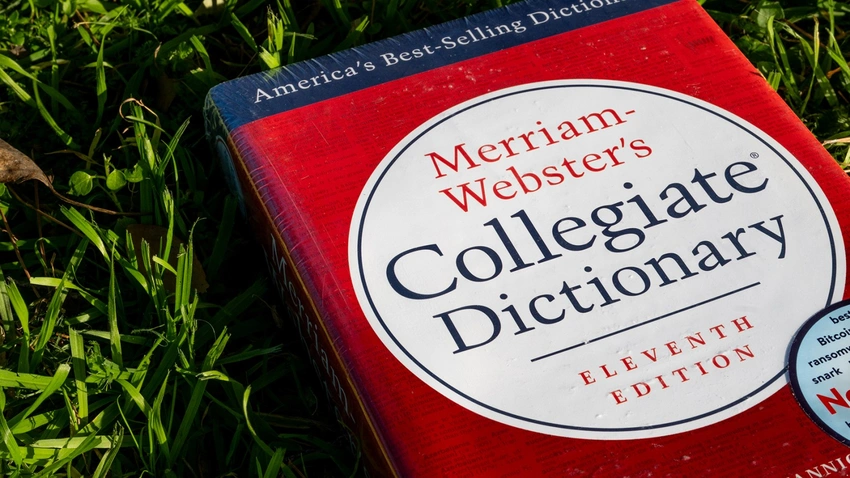
Merriam-Webster just added 1,400 new words, officially welcoming terms like 'looksmaxxing,' 'cuffing season,' and 'vibe coding' into the lexicon. Discover how internet culture is reshaping our language.
Our Language is Evolving - And Your Dictionary Knows It
Ever feel like the internet is constantly inventing new ways to say things, making it tough to keep up? You're not alone. Our language is a living, breathing entity, and its evolution has accelerated dramatically thanks to online culture.
The exciting news is, even traditional gatekeepers of language are recognizing this seismic shift.
The Lexicon Gets a “Glow-Up”
Recently, Merriam-Webster officially unveiled 1,400 new words, a massive update that brings many internet-first phrases and trends into the fold.
The dictionary's editorial team perfectly encapsulated this moment, describing the additions as a “glow-up” to its historic lexicon.
It's about reflecting contemporary communication and understanding the world we live in today.
The new entries span diverse areas: from food and fashion to social media and technology: proving just how deeply digital life has permeated every aspect of our existence.
Decoding Gen Z Speak
Many of these fresh additions are terms you’ve likely encountered scrolling through your feeds or overheard in conversations. Think about the self-improvement and aesthetic focus captured by ‘looksmaxxing,’ or the relationship dynamics of ‘cuffing season.’ And for those who subtly communicate their feelings through curated online aesthetics, there’s now ‘vibe coding.’
But the list goes on. Terms like 'meme coin,' 'parasocial,' and 'promposal' highlight the unique social dynamics born online. Even self-care gets a modern twist with 'Sunday scaries' and 'California sober.' Beyond these, the update includes popular culture staples like 'Rickroll,' and digital concepts like 'compute' and 'uncanny valley.' These aren't just passing fads; they've proven their staying power.
The Science Behind the Words
How do words earn their spot in such a revered institution?
Merriam-Webster isn't just throwing darts at a list of trending topics.
Their rigorous selection process relies on three key criteria: frequent use, widespread use, and meaningful use.
This ensures that only words that have truly integrated into our collective consciousness, demonstrating consistent and significant application over time, make the cut.
It's a testament to the organic way language evolves, driven by the people who use it every day.
Old Words, New Meanings
It's not only brand new coinages that shape our evolving dictionary. Often, existing words take on entirely new meanings in the digital age. Consider 'mouse' and 'cookie,' which now evoke images beyond rodents and baked goods.
Or how the internet has given fresh life to verbs like 'lurk' and 'browse.' Even a word as fundamental as 'access,' first added to the Collegiate Dictionary in 1973, gained a specific computer-related sense by 1993.
These shifts, while less headline-grabbing, are just as crucial in tracking the pulse of communication.
What Does This Mean for How We Connect?
The dictionary's expansion is more than just an academic exercise, it's a mirror reflecting our changing society. It acknowledges that digital spaces are now primary arenas for cultural formation and linguistic innovation. As we continue to connect and create online, expect our lexicon to keep expanding, reminding us that language is always adapting, always reflecting the human experience, and always, truly, a “glow-up” in progress.

Login to comment.
No thots yet. Be the first to share your thoughts!