India Tightens AI Content Rules, Orders Faster Takedowns

India Tightens AI Content Rules, Orders Faster Takedowns
The government expands IT Rules to cover AI-made content, mandating labels, metadata, and 3-hour takedowns to curb deepfakes and misinformation.
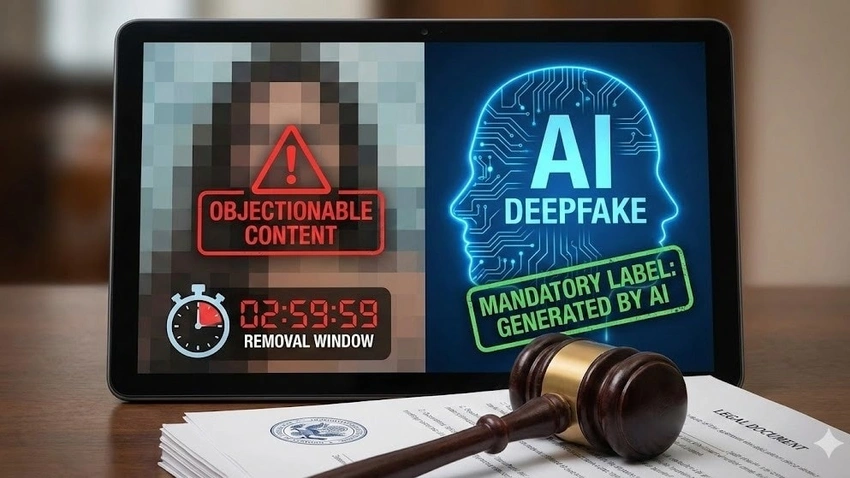
The government has tightened regulations on AI-generated and synthetic content by bringing it firmly under the Information Technology Rules. The amendments, notified this week and effective from February 20, mandate clear labels and permanent metadata on AI-created images, videos and audio. Social media platforms and online intermediaries will now be required to act much faster on flagged unlawful content, with takedown timelines reduced to as little as three hours. Platforms must also deploy tools to verify user declarations of AI usage and introduce quicker reporting mechanisms. The move is aimed at curbing the spread of deepfakes, misinformation and harmful synthetic media, especially impersonation and explicit content, while holding tech platforms to stricter compliance and accountability standards.
In a broader push to govern synthetic information, the Information Technology (Intermediary Guidelines and Digital Media Ethics Code) Amendment Rules, 2026 expand the law to explicitly cover what the government calls “synthetically generated information.” The new rules target content created or altered using AI—audio, video or images—that looks real and can mislead users. By widening the scope beyond traditional content, authorities hope to close loopholes that allowed misleading media to circulate unchecked on major platforms.
Platforms subject to these changes will need to introduce robust labeling practices, ensuring that AI-generated content carries clear indicators and remains traceable through permanent metadata. The three-hour takedown window is among the most aggressive deadlines in digital governance, signaling a strong intent to curb the rapid spread of harmful material before it can do lasting damage. Equally important is the requirement for platforms to provide mechanisms that verify user declarations of AI involvement in a piece of content, reducing anonymity around synthetic media.
The amendments also obligate quicker reporting pathways for suspicious content, enabling platforms to flag and remove harmful material faster. While the rules place greater responsibility on intermediaries, they also aim to balance innovation with safety, providing a framework for platforms to manage evolving digital content landscapes. As AI-generated media becomes more prevalent across social networks, creators, brands, and users will need to be mindful of these new labeling and reporting expectations. The policy underscores the government’s priority to safeguard digital spaces while ensuring accountability and compliance from technology providers.
For users, the changes translate into more visible cues about AI-created content and faster action from platforms when issues arise. For platforms, they bring tighter scrutiny, more automated verification, and clear timelines that could affect how content is produced, shared, and moderated in India’s fast-moving online ecosystem.
