Oceans are Rising Faster Than You Think and NASA Just Launched a Fix

Oceans are Rising Faster Than You Think and NASA Just Launched a Fix
Oceans are Rising Faster Than You Think and NASA Just Launched a Fix
NASA Sentinel 6B extends the global sea level record with sharper data and faster alerts for storms and coastal risk
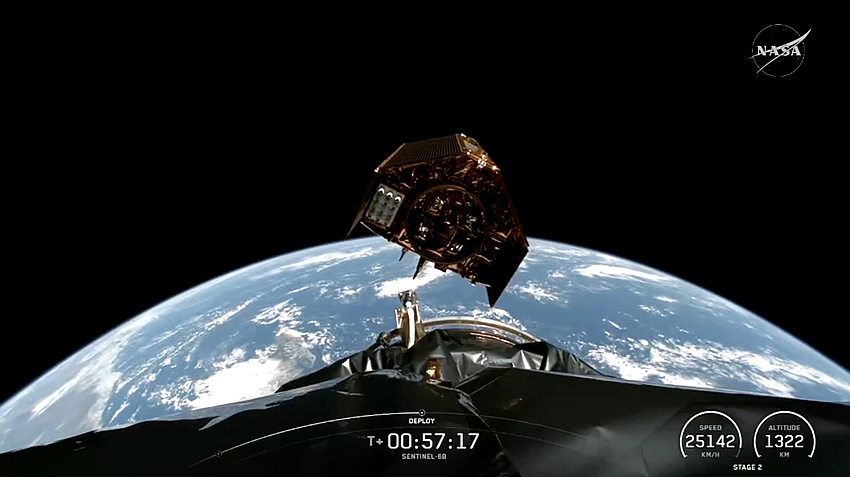
NASA and its partners just advanced ocean intelligence. Sentinel 6B is now set to take over as the new reference for global sea level measurements. It continues the decades long record that began in 1992 and follows Sentinel 6 Michael Freilich launched in 2020.
This satellite watches the oceans with precision. It uses advanced radar altimetry to track sea surface height across most of the planet. Accuracy is measured down to about an inch for near global coverage. That level of detail improves weather forecasts and flood predictions and supports coastal planning.
Sentinel 6B orbits Earth and delivers rapid data. Scientists will refine atmospheric forecast models with its measurements. NASA teams even use these models to plan safer astronaut reentries. Public safety and commercial decisions benefit from the faster insights this mission provides.
The mission is an international alliance. NASA ESA EUMETSAT and NOAA lead the work with support from the European Commission and CNES. This continuity of service protects the long term data record that policymakers and researchers depend on. The joint effort ensures resilience and reliability across agencies.
Users care about impact not specs. Coastal residents want earlier warnings before storms hit. Shippers need clean routes and fewer surprises. City planners look for trustworthy numbers when deciding where to build and how to defend. Sentinel 6B answers those demands with consistent global coverage and quick data access.
General sentiment is hopeful and urgent. Many readers say finally we are tracking the right signals and not waiting for disaster to confirm the trend. Others ask for the data to be shared broadly and fast so local alerts can improve before the next storm season.
Here is what stands out. The record continues without gaps. The instruments push accuracy into the millimeter class in practice when combined across time. The data arrives quickly enough to move the needle for emergency planning. That blend of continuity speed and precision is rare in space missions at this scale.
Three sources shape this update. NASA Science confirms the mission purpose and continuity. NASA JPL explains instruments and forecasting use. NASA launch notes detail the partnership and the role as reference satellite.
Source: NASA Science About Sentinel 6B 🔗
