Shinde-led Sena Secures MNS Backing in Kalyan-Dombivli Polls

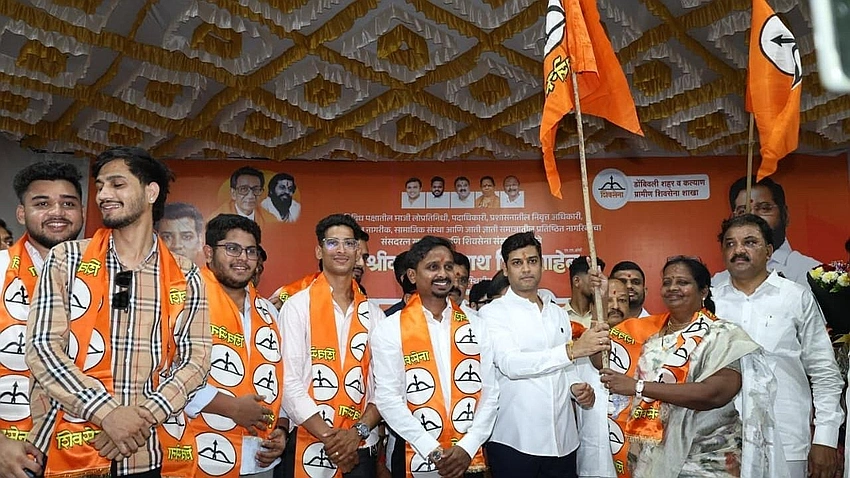
Shinde-led Sena Secures MNS Backing in Kalyan-Dombivli Polls
Post-poll twist as Shinde-led Sena claims MNS support for Kalyan-Dombivli, with Raj Thackeray’s clearance still pending and rivals watching closely.
In a post-poll development, the Shiv Sena faction led by Eknath Shinde said the Maharashtra Navnirman Sena (MNS) has offered its support to help it take control of the Kalyan-Dombivli Municipal Corporation. The claim comes as both sides had contested the civic polls in alliance-dominated Maharashtra, with the BJP emerging as the single-largest party in Mumbai and 20 other municipal bodies. Shinde’s camp stressed that the arrangement would form the Mahayuti in Kalyan-Dombivli. They said a group of 53 corporators aligned with the Shinde faction has been registered with the Konkan commissioner, while the MNS has registered five corporators as their potential ally. More importantly, they indicated that two Shiv Sena (UBT) corporators are in touch with the Shinde group, and two are reportedly untraceable.
Avinash Jadhav, a top MNS leader, said the party has not yet received final clearance from Raj Thackeray, underscoring the delicate and evolving nature of post-poll negotiations. Shiv Sena (UBT) orientation remains wary as it watches how the realignment unfolds. Sandeep Deshpande, the Mumbai MNS chief, asserted that local units can take their own decisions while keeping the broader strategic picture in mind. On the Shiv Sena side, Shrikant Shinde noted that Eknath Shinde and chief minister Devendra Fadnavis would make the final call, adding there was no discussion on posts yet. He framed the development as a pragmatic move toward development, saying, “Whoever comes is welcome. More people are better for development.”
This shift follows the wider post-poll mood where alliances and counter-alliances are redefining power at the city level, even as the BJP remains a dominant force in several urban bodies. The Kalyan-Dombivli discourse illustrates how regional dynamics and personal loyalties can influence who ultimately runs the civic administration, affecting local governance and development plans for residents.
