Nobel Physics Prize: Francis Halzen Wins for Ghost Particle Hunt!
Nobel Physics Prize: Francis Halzen Wins for Ghost Particle Hunt!
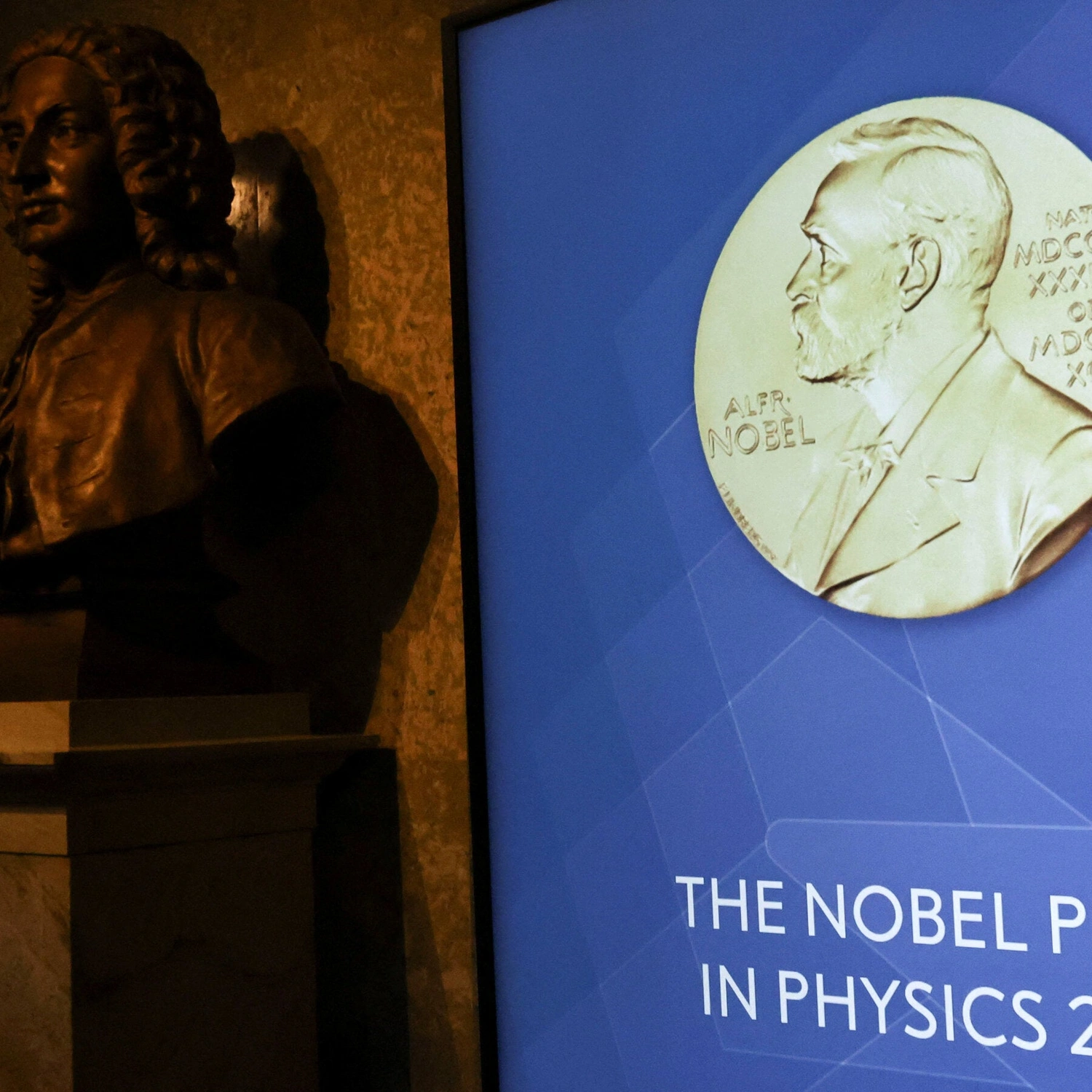
Belgian physicist Francis Halzen wins the 2026 Nobel Prize in Physics for his pioneering work on the IceCube detector, unraveling cosmic secrets with neutrinos from the South Pole!
The scientific community is abuzz with the news that Prof. Francis Halzen, a Belgian particle physicist from the University of Wisconsin-Madison, has been awarded the Nobel Prize in Physics 2026. He received this prestigious honor for his groundbreaking contributions to the IceCube Neutrino Observatory, which led to the discovery of high-energy neutrinos of astrophysical origin.
Professor Halzen spearheaded the ambitious project to transform a cubic kilometer of ice at the Amundsen-Scott South Pole Station in Antarctica into the world's largest particle detector. This colossal observatory uses thousands of basketball-sized light detectors embedded deep in the ice to catch the faint flashes produced when elusive neutrinos collide with atomic nuclei.
It's an engineering marvel designed to study some of the universe's most mysterious particles.
Neutrinos, often called 'ghost particles,' are incredibly hard to detect.
They zip through matter, including our bodies and entire planets, almost without interaction.
Billions of them from the sun pass through us every second unnoticed. However, every so often, one will interact, creating a tiny, detectable signal. Halzen's brilliant insight was realizing that the clear, pristine glacial ice at the South Pole could serve as the perfect medium for capturing these rare interactions.
The IceCube observatory made its first monumental detection of high-energy extraterrestrial neutrinos in 2013, shortly after it became operational.
This breakthrough paved the way for a revolutionary new era of astronomy.
While humans have historically studied the cosmos through light, other electromagnetic radiation, and more recently, gravitational waves, neutrinos offer a completely new 'lens.' They act as cosmic messengers, carrying information directly from distant and extreme phenomena across the universe, providing fresh clues about its evolution. Receiving the news while traveling in Italy, Halzen expressed his surprise and gratitude, acknowledging the courage of the many talented individuals who joined him on the project when it was considered highly unconventional.
Dr. Patrick Dunne of Imperial College London highlighted the profound impact of this work, likening it to Galileo's first use of the telescope, emphasizing that neutrinos open up an unprecedented way to understand phenomena beyond our solar system.
