France's Student Protests Escalate: Up to 500 Schools Face Closures

France's Student Protests Escalate: Up to 500 Schools Face Closures
Student protests in France are intensifying, leading to school closures and clashes with police. Discover why students are demonstrating and how the government plans to respond amidst growing calls for change.
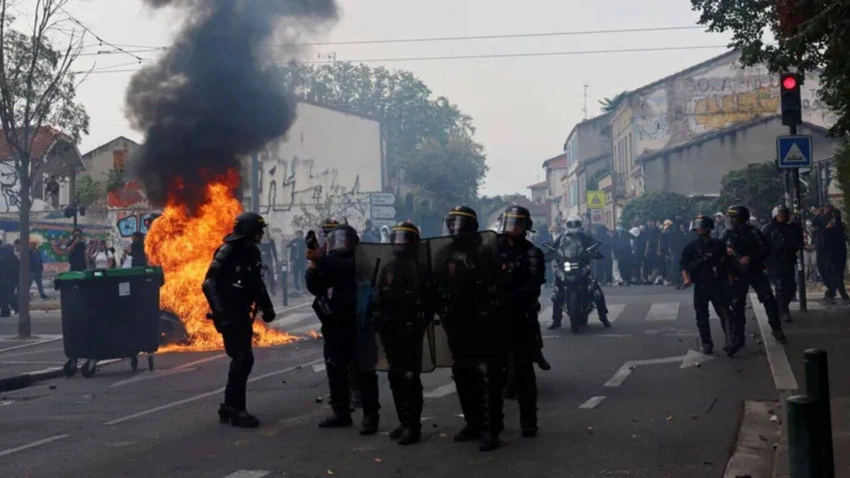
Student protests across France, which began as a localized mobilization in a Paris suburb on September 17, have rapidly escalated, leading to widespread class strikes, blockades, and street demonstrations. The initial grievances stemmed from excessive school-day hours, chronic teacher absences, and neglected facilities, but the movement has now gripped the nation. The human and physical toll of these protests is significant.
Education Minister Édouard Geffray reported that at least 170 students and 78 educational personnel have sustained injuries since the demonstrations first erupted in Paris. The Ministry of National Education noted that on Friday alone, at least 400 of France's 3,700 high schools were completely closed, with an additional 560 experiencing active protests or blockades.
These figures underscore the widespread disruption impacting the country's education system.
Law enforcement has responded with a heavy hand, leading to widespread arrests. The Interior Ministry confirmed that over 5,000 people have been detained in the past week, with a staggering 85% of those arrested being minors.
This aggressive crackdown has drawn fierce criticism from rights advocates and various organizations, who point to what they describe as “disproportionate” police violence. Amnesty International issued a strong warning, emphasizing that student protestors “must be listened to, not repressed.” In an attempt to quell the escalating unrest, French Prime Minister Sébastien Lecornu announced on Sunday that his government is taking further steps to address the difficulties faced by both high school students and educational staff.
Lecornu outlined measures aimed at ensuring the continuity of classes, improving school facilities, better organizing school days, and enhancing the transparency of the French university admissions platform. However, the government is also adopting a firm stance against physical destruction, with Lecornu stating that officials are accelerating the review of a “vandal-pays” bill.
This legislation aims to ensure that individuals responsible for property damage bear the financial cost of their actions.
Despite the government's efforts, protest organizers have largely dismissed these responses, citing a lack of “concrete measures.” In defiance, student groups have issued calls for a return to large-scale, nationwide demonstrations scheduled for Tuesday, indicating that the unrest is far from over and is likely to continue impacting schools and cities across France.
#FranceProtests #StudentRights #EducationCrisis #FrenchEducation
