AI in Filmmaking: Cheaper, Safer, or a Creative Betrayal?

AI in Filmmaking: Cheaper, Safer, or a Creative Betrayal?
Director Jon Erwin discusses how AI made 'Young Washington' production 'Safer and More Affordable.' Is this the future for cinema, tackling tough scenes like William Franklyn-Miller's water ordeal with innovative tech?
Let's talk about AI in filmmaking, because it's no longer a distant sci-fi concept; it's here, and it's changing how we make movies. We often hear the hand-wringing about AI replacing artists or compromising creativity. But what if it's actually unlocking new possibilities, making ambitious projects feasible where they once weren't?
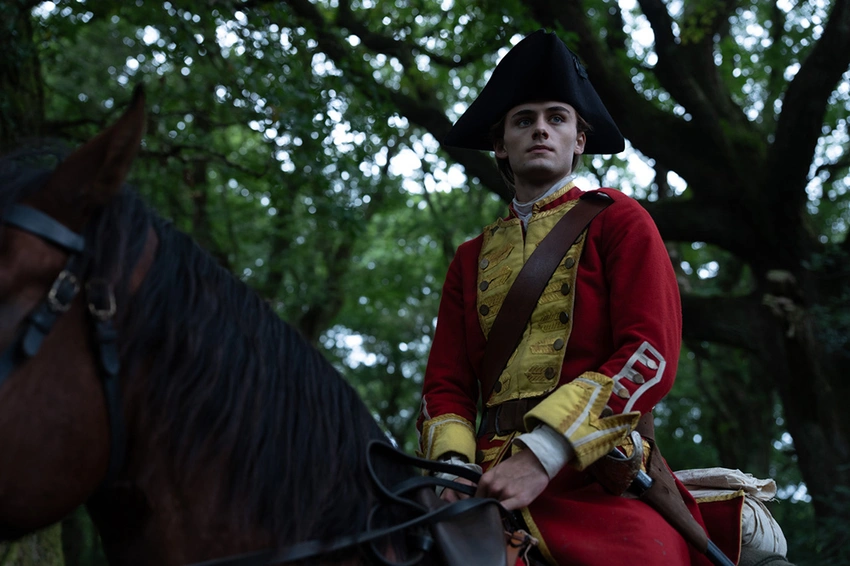
Take Jon Erwin's work on 'Young Washington,' for instance. This historical drama, set to release nationwide on Friday (July 3), needed to tackle some challenging sequences. You know, the kind that can spike budgets and safety concerns faster than you can yell 'action.' Erwin faced a critical scene where a pre-Revolutionary War George Washington, played by William Franklyn-Miller, and his companion nearly drown. Anyone in the industry knows the 'physics of water' is incredibly complex and dangerous to simulate on set, especially for historical pieces where you can't just throw on a wetsuit and call it a day.
This is where AI stepped in. Erwin has explicitly stated that the tech made the production 'Safer and More Affordable.' Think about that for a second. We’re not talking about simply adding lens flares or touching up pixels. We’re talking about fundamentally changing how we approach inherently risky and expensive practical effects. Instead of elaborate, multi-day shoots with divers, safety crews, and complex rigs—all while battling unpredictable elements—AI offers a controlled, predictable, and frankly, less terrifying alternative.
Now, some will argue this is where the 'creative compromise' comes into play. Is a digitally rendered water sequence as visceral as a practical one? Does the audience feel the danger the same way? These are valid questions. However, if AI allows a filmmaker like Erwin to bring a crucial narrative moment to life without breaking the bank or putting cast and crew at undue risk, it sounds less like a compromise and more like a smart evolution.
In an era where budgets are constantly scrutinised, and the quest for visual spectacle never ends, AI is emerging as a powerful tool. It’s not about replacing human ingenuity, but augmenting it. It's about finding solutions to problems that were once deemed too difficult or too costly. For 'Young Washington,' it meant delivering a pivotal, high-stakes scene efficiently. This isn't just about saving a buck; it's about enabling storytelling. The real debate shouldn't be whether AI is good or bad, but how we harness its potential to push the boundaries of what's possible on screen, making the seemingly impossible 'Safer and More Affordable' for everyone involved.
