The Real Reason Mobile Games Make Fake Ads


The Real Reason Mobile Games Make Fake Ads
The Real Reason Mobile Games Make Fake Ads
Exploring why mobile game ads hype epic rewards while gameplay rarely matches the promise, and how the industry capitalizes on curiosity to grab your attention.
If you have spent more than a few minutes scrolling through YouTube, Instagram, or TikTok, you have probably seen them. A king fails to pull the correct pin and loses his treasure. Someone ignores the obvious solution to a simple puzzle. A woman and her baby freeze in an abandoned house while you are invited to "help them survive". You download the game, only to discover that almost none of those mechanics actually exist.
It is tempting to dismiss these advertisements as simply dishonest marketing. They certainly rely on exaggeration, and in many cases they present gameplay that barely resembles the final product. Yet their persistence suggests something more interesting. If millions of people complain about these ads, why do companies keep making them?
The answer lies less in game design than in the economics of attention.
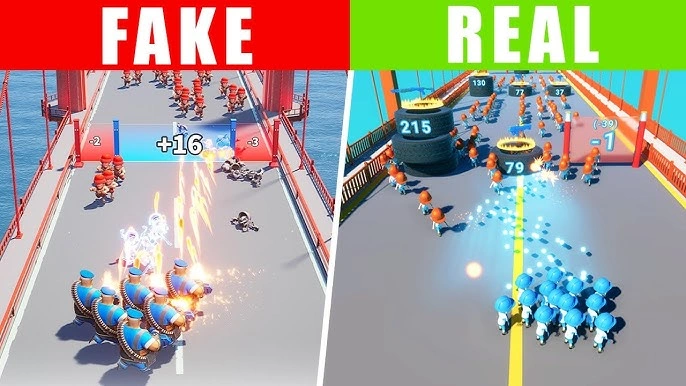
Selling curiosity, not accuracy
The mobile games industry is one of the most competitive digital markets in the world. Thousands of new games appear every year, most of them competing for the same few seconds of a person's attention. In this environment, visibility becomes more valuable than authenticity.
Advertisers measure success through metrics such as click through rates, installs, and cost per acquisition. Whether someone enjoys the game later is important, but the first objective is getting them to download it. Research and industry analyses consistently show that unconventional, emotionally charged advertisements often outperform conventional gameplay footage in attracting users. This reflects a broader transformation in digital culture. Online platforms reward interruption rather than accuracy. An advert that makes someone stop scrolling has already succeeded in the marketplace of attention.
Why fake gameplay works
Many misleading mobile game adverts exploit a surprisingly simple psychological trick. Instead of showing power and success, they show failure.
The player in the advert makes an obviously incorrect decision. Viewers immediately believe they could solve the puzzle better. This small feeling of superiority encourages interaction. The desire is not necessarily to play the advertised game but to prove that the advert is wrong.
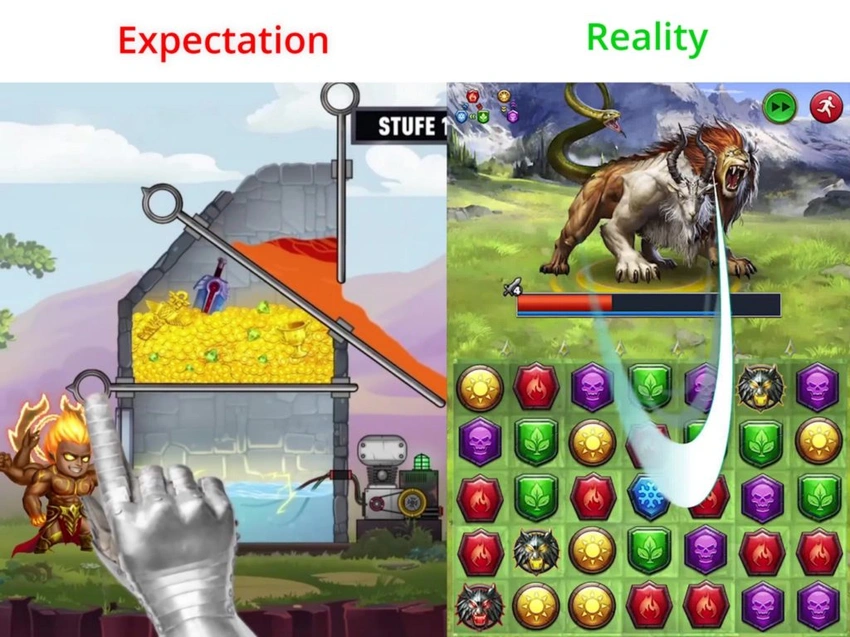
Psychologists often describe this as creating a cognitive itch. An unfinished problem stays in the mind longer than a completed one. Mobile game advertisers have become remarkably skilled at manufacturing that feeling within thirty seconds.
Ironically, many of the puzzle mechanics featured in these adverts would probably make enjoyable games on their own. They are used because they are instantly understandable, even if they represent only a tiny section of the actual product.
The platform economy rewards the click
The persistence of fake advertisements is not simply the responsibility of individual developers. It is also a consequence of the advertising ecosystem itself.
Platforms such as Meta, Google, TikTok, and other advertising networks operate on performance metrics. If a misleading advert consistently generates more downloads at a lower cost, the algorithms distributing advertisements may continue rewarding it until it violates platform policies or attracts regulatory scrutiny.
This creates an uncomfortable incentive. Developers are competing not only against other games but against the recommendation systems that determine which advertisements receive wider distribution.
In other words, deception becomes economically rational, even if it damages long term trust.
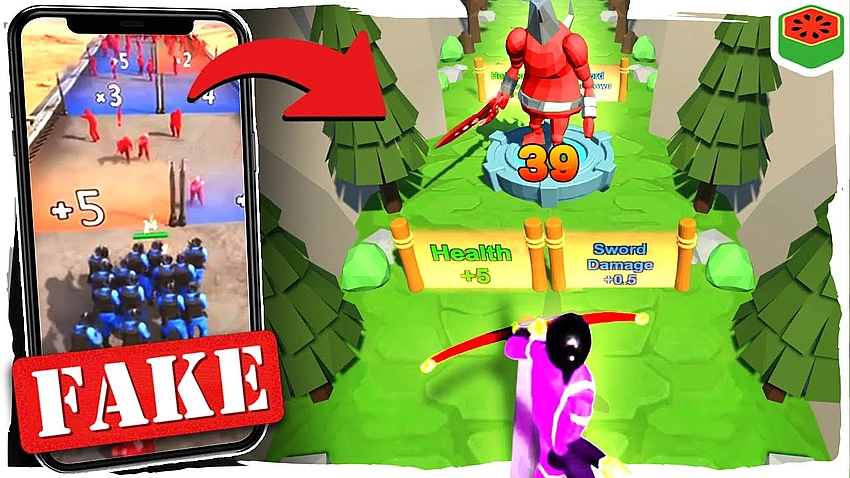
Attention has become the real product
Looking at these adverts through a humanities lens reveals something larger than questionable marketing practices. They illustrate how digital capitalism increasingly treats attention as a commodity.
The game itself often becomes secondary to the advertisement surrounding it. The advert is designed to provoke frustration, curiosity, or outrage because these emotions generate measurable engagement. Success is determined before gameplay even begins.
This logic resembles much of contemporary online culture. Headlines exaggerate. Thumbnails mislead. Social media rewards emotional reactions over careful explanation. Fake mobile game advertisements are not an exception to digital culture. They are one of its clearest expressions.
The advertised game functions almost like a promise that never needed to be fulfilled. What mattered was persuading someone to install the application.

Trust is becoming harder to earn
Regulators have repeatedly emphasised that advertising should not deceive consumers, and agencies such as the US Federal Trade Commission have taken enforcement action against misleading practices in mobile advertising. Yet enforcement remains difficult because digital advertising changes faster than regulation, and many adverts exist in legal grey areas where exaggeration stops just short of outright fraud.
For developers, fake advertisements may produce short term growth, but they also risk disappointing players who uninstall the game almost immediately after realising they were promised something entirely different. Trust, once lost, is considerably harder to rebuild than downloads are to generate.
Perhaps the most revealing aspect of these advertisements is that they expose the priorities of the digital economy. Mobile games do not make fake adverts because developers believe players enjoy being deceived. They make them because attention has become more valuable than accuracy, and because the systems distributing those adverts often reward whichever strategy captures the next click.
#MobileGames #AdMarketing #AttentionEconomy #GamingAds #DigitalMarketing

Login to comment.
No thots yet. Be the first to share your thoughts!