Beyond the Binary: The Rise of Androgynous Menswear
Beyond the Binary: The Rise of Androgynous Menswear
Beyond the Binary: The Rise of Androgynous Menswear
There’s a quiet revolution happening in fashion — and it’s walking down the runway in pearls, skirts, nail polish, and confidence. Androgynous menswear, once dismissed as avant-garde or rebellious, has become a powerful cultural statement — one that challenges gender expectations, redefines masculinity, and reimagines what “style” even means.
For decades, men’s fashion followed strict, invisible rules: straight lines, neutral tones, sharp tailoring. It was a world where femininity was off-limits — softness was weakness, and color was caution. But today, something’s changed.
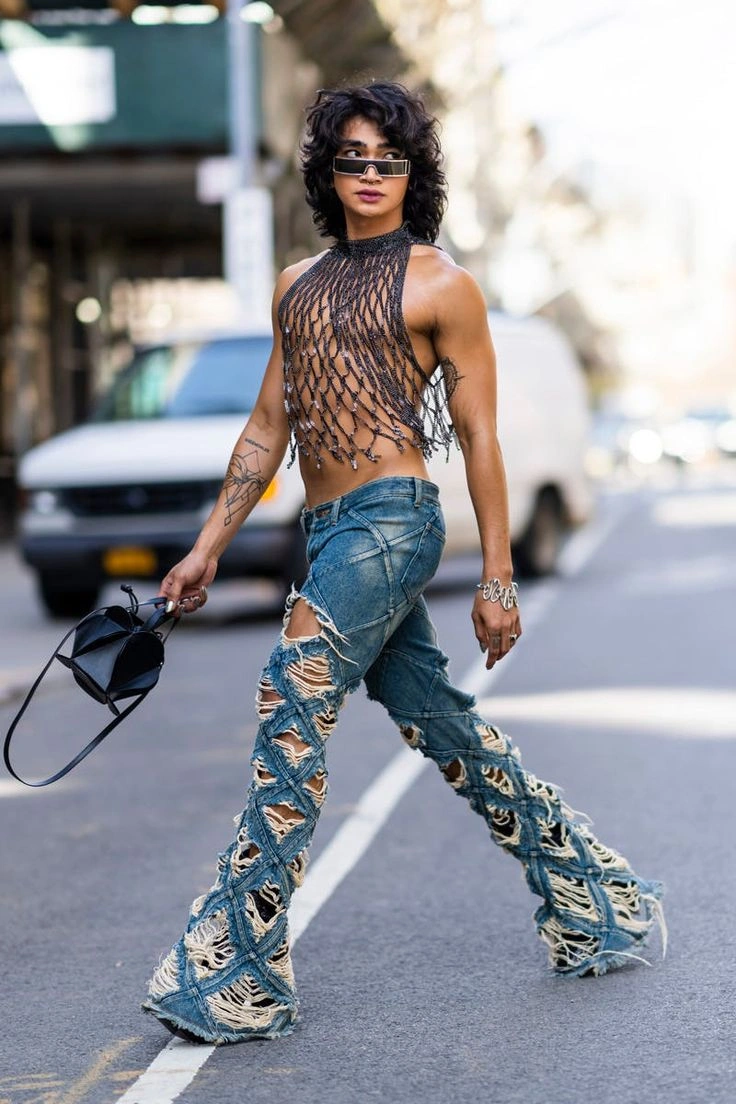
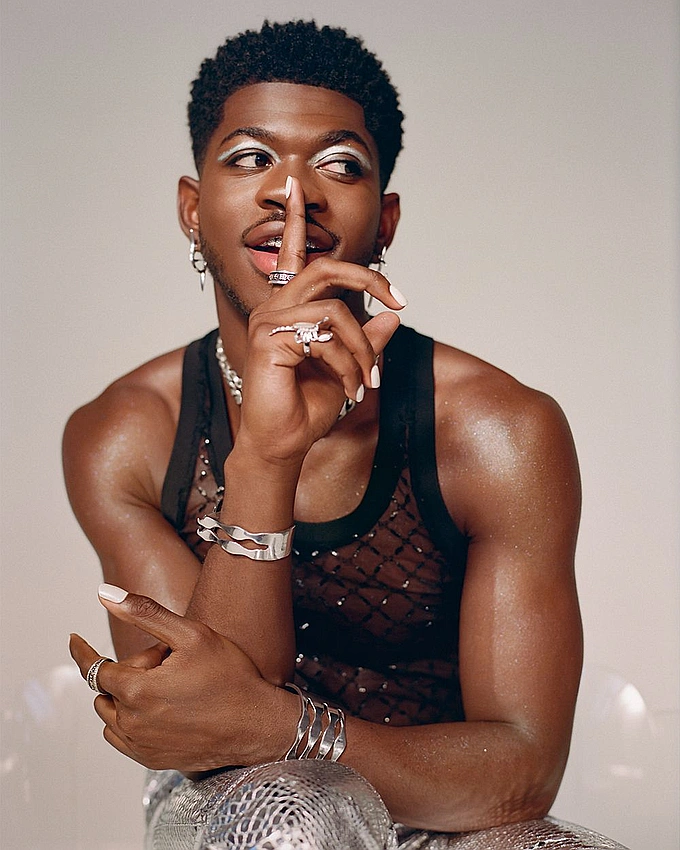
From Harry Styles in a Gucci gown on the cover of Vogue to Lil Nas X’s glittering Met Gala armor, the male silhouette is expanding. Skirts are no longer “for women,” pearls no longer “too delicate,” and pink no longer “too loud.” Designers like Harris Reed, Palomo Spain, and Grace Wales Bonner have blurred the gender divide on purpose — proving that clothes don’t belong to genders, they belong to people.
Fashion has always reflected culture, and this shift signals something deeper: a collective rethinking of identity, freedom, and authenticity. The rise of androgynous menswear isn’t just about aesthetics — it’s about unlearning the gender codes society stitched into us.
Ironically, fashion wasn’t always this gendered.
If you look back far enough, the lines blur quickly — 18th-century European men wore lace, heels, and powdered wigs without shame. Kings like Louis XIV flaunted gold embroidery and silk stockings. The idea that “masculinity” meant minimalism and structure came much later, during the industrial era, when men’s clothing became a symbol of practicality and control.
Androgyny, therefore, isn’t a new invention — it’s a return.
As historian Valerie Steele writes, “Fashion has always been a mirror of gender relations. When gender norms change, so does fashion.”
The current wave of gender-fluid dressing, from runways to streetwear, signals that we’re once again entering an era of creative liberation — one that prioritizes self-expression over conformity.
The change isn’t just on social media — it’s stitched into the seams of high fashion.
Harris Reed describes their work as “romanticism gone nonbinary.” Their collections feature flowing silhouettes, ruffled collars, and dramatic proportions — defying the expectation that men’s fashion must always be muted or minimal.
Even major brands have begun to evolve: Gucci’s “MX” line, Prada’s gender-neutral silhouettes, and Thom Browne’s now-iconic pleated skirts all signal that the industry is no longer afraid of fluidity.
What was once a niche aesthetic has become a cultural reset — a new standard for self-expression that’s not confined by the “men’s” or “women’s” sign above a dressing room door.
Dressing beyond the binary becomes an act of visibility, a declaration that identity is not a box but a spectrum.
But even for cisgender men, androgynous fashion can be freeing. It challenges the old equation of masculinity with suppression — of emotion, of softness, of beauty. In embracing color, texture, and vulnerability, men aren’t losing masculinity; they’re expanding it.
androgynous fashion is a form of quiet activism — one that doesn’t need slogans, just visibility. Every pearl, every painted nail, every skirt on a runway whispers: “We’re not dressing to please you anymore.”
To call androgynous menswear a “trend” would be to underestimate its impact. Trends fade. Cultural shifts stay.
We’re witnessing something much bigger — a redefinition of beauty and identity that refuses to be boxed in.
And perhaps that’s the most radical thing about this movement:
it’s not trying to erase masculinity or femininity, but to make room for both — and everything in between.
Fashion has always been a reflection of who we are, but now, it’s becoming a reflection of who we could be.
And in that vision — where everyone gets to dress without apology — lies something more powerful than style.
