Hegseth Challenges NATO Allies: US to Review Europe Presence & Spending
Hegseth Challenges NATO Allies: US to Review Europe Presence & Spending
US Defense Secretary Pete Hegseth announced a six-month review of US forces in Europe, sharply criticizing NATO allies over defense spending and calling for Europe to take the lead in its own security. This move follows
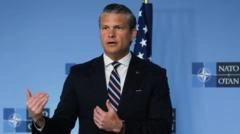
US Defense Secretary Pete Hegseth delivered a stark message to NATO allies during a meeting in Brussels, announcing a comprehensive six-month review of the presence of American forces in Europe. He sharply criticized several member states, accusing some of being "free-riders" and failing to meet their defense spending commitments, while warning that "some countries will fail, and others will pass with flying colors" in the upcoming assessment.
Hegseth, who termed this process "Nato 3.0," emphasized that the review aims to ensure NATO evolves "fast and irreversibly toward Europe leading" on security across the continent. This initiative comes amidst growing calls from the US for European nations to shoulder a greater share of the financial and military burden for their own defense. A US official clarified that the outcomes of this review are not predetermined, but the message from Washington is clear: change is expected.
A key point of contention is the demand for NATO members to increase their defense contributions. The US is pushing for countries to allocate an agreed target of 5% of their national economic output (GDP) to defense, which includes 3.5% for core defense and an additional 1.5% for related infrastructure. Hegseth also voiced strong disapproval of NATO member states that had previously imposed limitations on support to US forces during the conflict with Iran, labeling such actions as "shameful."
The announcement of this review follows a decision by the US to reduce its commitments to the NATO Force Model (NFM), a high-readiness force within the alliance. While specific details of these cutbacks, which reportedly include air and naval capabilities, have not been publicly disclosed, they underscore the US's intent to recalibrate its involvement. Hegseth further indicated that annual NATO dues would be made "contingent on other countries meeting their defense spending targets."
In response, NATO Secretary-General Mark Rutte acknowledged the rising contributions from European nations. He highlighted that defense spending among European allies and Canada collectively increased by €90 billion (£78 billion; $103 billion) last year, marking a nearly 20% rise. Rutte stated that Europeans were "already backfilling" resources that the US was reducing, suggesting that allies are indeed stepping up their efforts, even as the US reassesses its role within the alliance.
