Is Life Now a Game? How Badges, Points, and Streaks Shape Who We Are

Is Life Now a Game? How Badges, Points, and Streaks Shape Who We Are
Is Life Now a Game? How Badges, Points, and Streaks Shape Who We Are
Discover how points, badges, and streaks shape motivation, habits, and identity and when well-designed gamification helps lasting change, and when it creates noise.
I’ve been thinking lately about how so many aspects of our lives are now scored, tracked, and rewarded. The relentless dazzle of badges, levels, “streaks,” and progress bars is everywhere, from fitness apps to language learners to even habit trackers. I’m intrigued by the stories we tell ourselves about motivation, desire, and identity and how the gamification of life reshapes those narratives.
What is Gamification, Really?
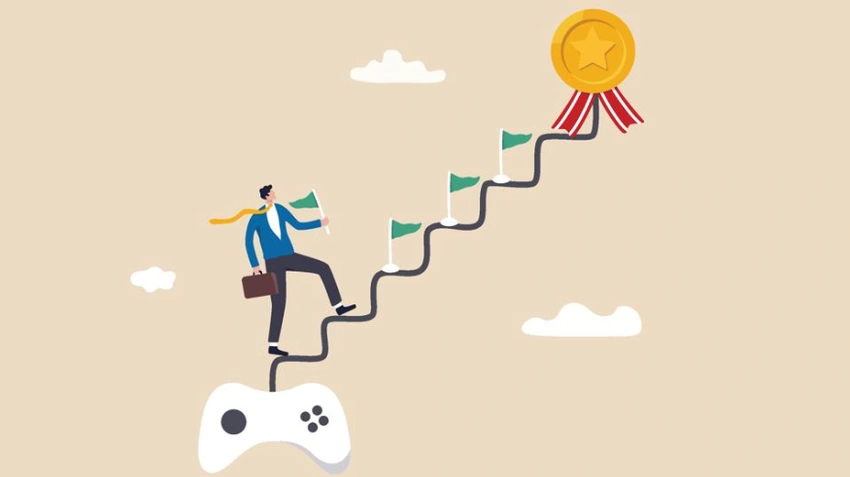
Gamification refers to the use of game-design elements in contexts that are not games, such as points, badges, leaderboards, challenges, and feedback loops. The aim is to boost user engagement, encourage certain behaviours, and shape experience. According to various studies, these elements serve both extrinsic motivation (doing something for a reward) and sometimes intrinsic motivation (doing something for its own sake) when well designed.
For example, a study of behaviour change showed that awarding points for desired behaviours (and penalising omissions) can aid habit formation. Another large‐scale analysis of walking challenges in an activity tracking app found that competitions (a form of gamification) increased physical activity by roughly 23 per cent during the challenges.
The Mechanics: How Apps Make Us Play
Here are some common tools in the gamification toolbox:
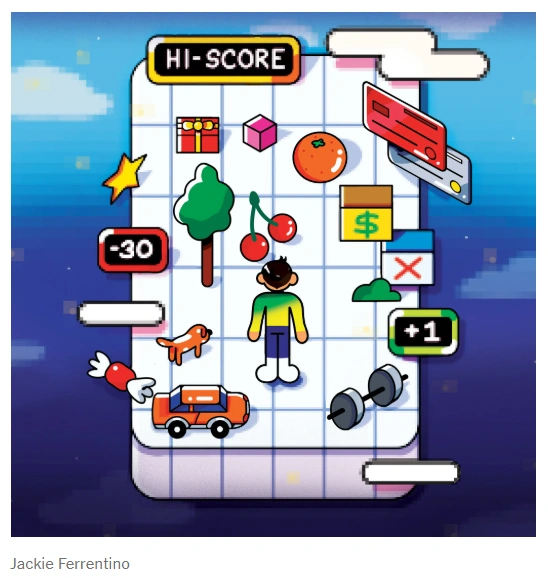
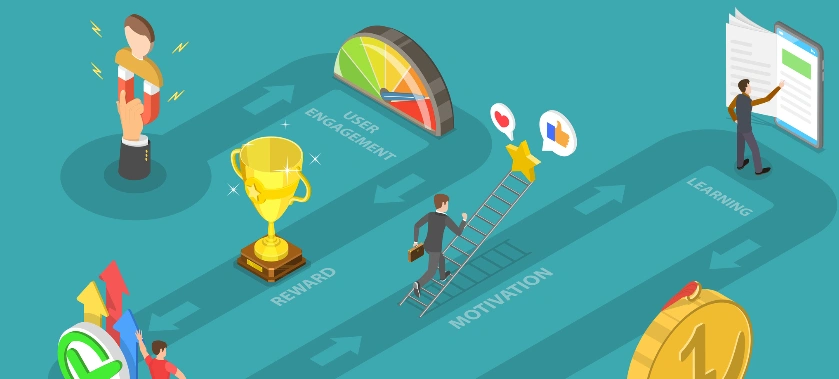
- Points and levels: You do something like walk, practise, or write a page, and you accrue points. Reach some threshold, unlock something. Progress becomes visible.
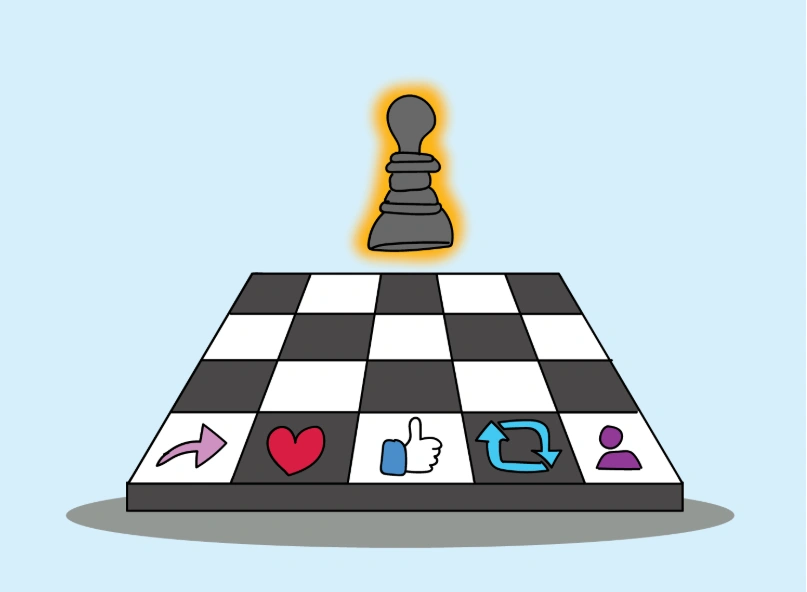
- Badges and achievements: Symbols of recognition, often public, often shared. They show that you did something (or many things).
- Streaks, daily goals, habit loops: The idea is to build momentum, make consistency more tempting than quitting. Apps exploit feedback loops nicely.
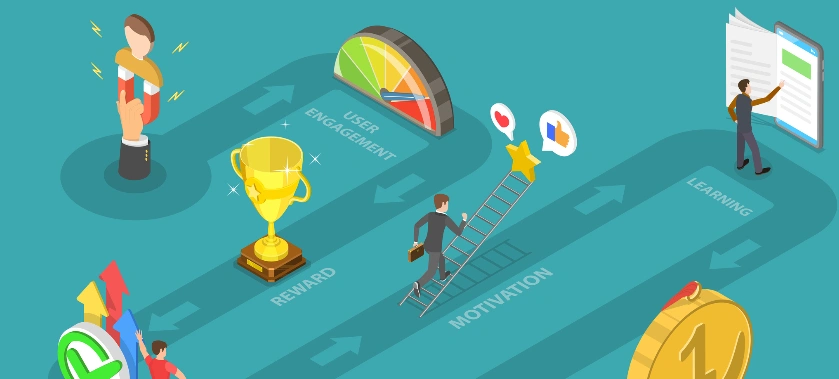
These tools exploit what psychology tells us: humans like to see progress, to feel competent, to be recognised. They feel good when something increases, when a threshold is crossed, when others view us favourably.
Why We Accept the Game
From where I stand, there are several reasons why people wrap themselves up in these gamified designs; some conscious, others more subtle.
- The gratification from earning a badge or seeing a streak continue gives a small dopamine hit. These frequent micro-rewards can be very addictive, in the sense of being habit-forming.
- Real-life goals are messy. Gamification gives order: small wins, measurable steps, visible progress. It can feel like reclaiming agency.
- Many apps are designed to help with habits, health, and education. Gamification may lower the friction of adopting a new behaviour by making the initial costs less painful (since the model rewards even small steps), and by forging routines.
What Can Go Wrong
It’s not all roses. When everything becomes a game, there are costs, trade-offs, and distortions.
- Over-dependence on extrinsic rewards: When you act not because you love something but because you’ll get a badge, there’s a risk that once the reward disappears, motivation goes with it.
- Motivation decay or burnout: The novelty of badges and streaks can wear off. Maintaining rewards and sprints can feel exhausting.
- Misuse and distraction: Sometimes the game overtakes the purpose. A language-learning app might get users chasing points rather than focusing on actual learning. The goal becomes the score, not the growth.
- Inequality and discouragement: Leaderboards and competitions can demotivate those who are always behind. If you compare with someone much further ahead, you may feel defeated rather than inspired. Also, context matters: people with more resources (time, money, energy) can more easily play along and win.
- Ethical issues: There is an element of design manipulation in many gamified designs; creators often know what triggers us, what keeps us coming back. When does that cross the line into exploitation?
Narratives We Tell Ourselves
As someone invested in literature, I see gamification as a kind of narrative technology. We are asked to frame our lives as quests, our days as levels, our small victories as achievements. There is meaning in that. It gives us a coherent story: “I am progressing”, “I am growing”, “I will unlock something greater”.
But every story has its tropes and its blind spots. The story of progress presumes that more is always better. That reward is always meaningful. That external markers (badges, points) correlate with internal worth or growth. And literature teaches me to question those assumptions: to notice what is left out when we focus on measurable progress.
So, What Should We Do?
I don’t mean to be a digital Luddite. I see value in gamification. But I think we need to be more conscious about how we engage with it as both users and as designers.
- Use gamification for starters, not everything. It’s very helpful to get going, to habit-form; less helpful for sustaining resounding meaning or mastery.
- Prefer apps that combine extrinsic with intrinsic motivation: tasks that are meaningful to us, that we value regardless of external reward.
- Avoid constantly comparing with others. Use personal progress more than leaderboards.
- Be ready to drop the game when the game becomes a trap, that is, when the thrill of the game takes over your decisions more than you intend.
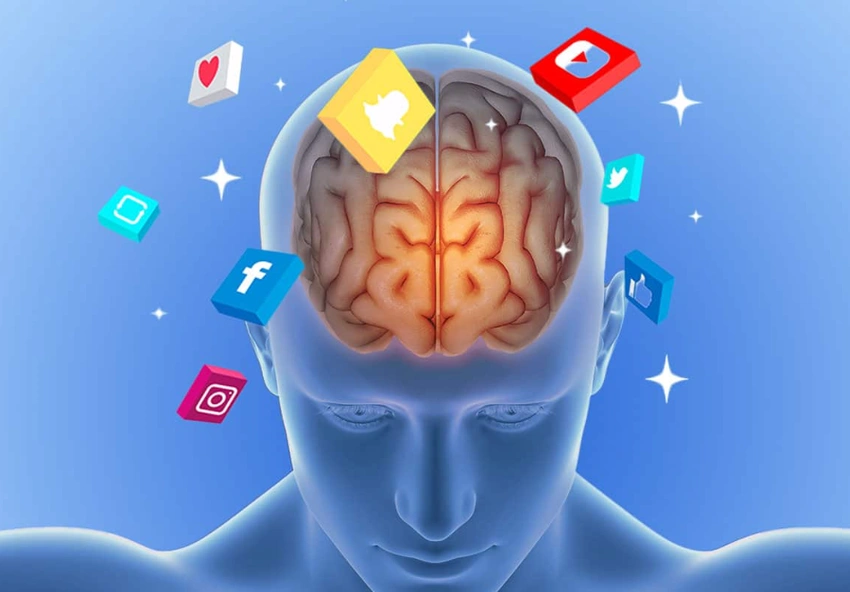
In many ways, we are living in a moment when so much of life is designed to feel like a game. And that might not be a bad thing. There is beauty in small victories, in visible progress, in the joys of recognition. These are old human desires, and gamified apps have simply found new ways of expressing them.
But we mustn’t forget that not all games are good, not all rewards reflect value, and not all progress is progress. As I write this, I remind myself: the game is a tool, not the goal. And though it may help me learn, grow, and become more disciplined, I hope I never lose sight of doing things for their own sake, not just for the points or the badge on display.
#Gamification #BehaviorChange #Motivation #UXDesign #Lifestyle
