The Great Quiet: Why Are We Talking Less Than Ever Before?

The Great Quiet: Why Are We Talking Less Than Ever Before?
Ever feel like conversations are getting shorter? A recent dive into global communication trends reveals a surprising truth: we’re speaking fewer words daily than before. What’s going on?
It's a subtle shift, but one with profound implications for how we connect and interact. We've entered an era I call 'The Great Quiet.' Data consistently shows a fascinating trend: in 2019, people spoke significantly fewer words per day compared to 2005. Think about that for a moment, in just over a decade, our collective daily word count has dropped.
What exactly is driving this increasingly silent shift in human interaction?
It's not just about what we say, but how we say it, or more accurately, don't say it. The rise of digital communication is undoubtedly a major player. Text messages, emojis, short social media captions, and rapid-fire instant messages have largely replaced lengthy phone calls or in-person chats for casual interactions.
Why explain something in detail when a quick GIF or a few bullet points will suffice?
Our communication has become incredibly efficient, but perhaps at the cost of depth.
The Digital Divide in Dialogue
The move towards remote and hybrid work models has also played a crucial role. Those impromptu hallway conversations, water cooler debates, or after-work catch-ups, once staples of daily life, are now less frequent. Our interactions are often scheduled, purposeful, and, yes, shorter.
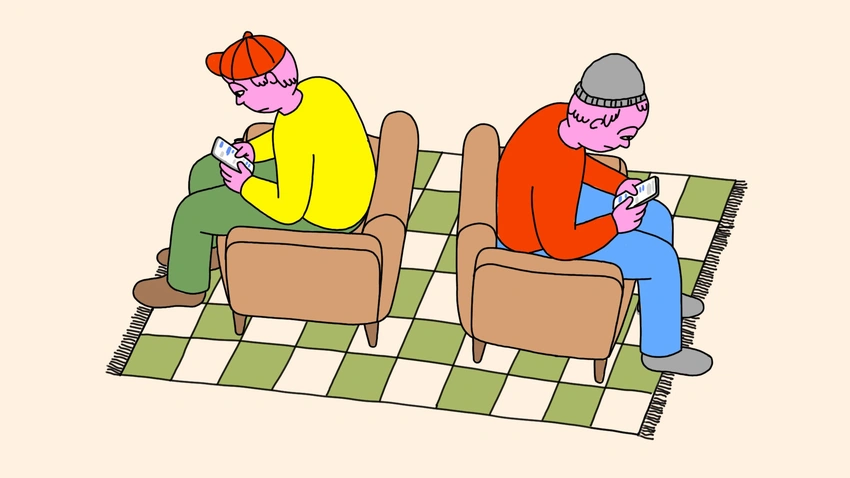
Social gatherings themselves often see people more engaged with their screens than with each other. The temptation to scroll, to check updates, to exist in a curated digital world, can override the impulse for real-time, unstructured dialogue.
Another factor could be the increasing complexity and polarization of topics in the public sphere. Sometimes, it feels safer to remain silent than to risk a contentious conversation. Online echo chambers and curated feeds might also reduce our exposure to diverse viewpoints, making us less accustomed to engaging in nuanced, verbal debate.
Implications for Connection
What are the long-term effects of this silent revolution?
Fewer spoken words could impact:
- Emotional Intelligence: Verbal communication is vital for understanding non-verbal cues and developing empathy.
- Social Bonds: Spontaneous, informal conversations often strengthen relationships.
- Critical Thinking: Debating ideas aloud helps us process and refine our thoughts.
- Language Development: Especially in younger generations, reduced verbal output could alter linguistic fluency.
This isn't necessarily a doomsday scenario, but it is a call for awareness. We're adapting to a new communication landscape, one where brevity often reigns supreme. The challenge now is to understand the balance: how do we harness the efficiency of modern communication without losing the richness and depth that only genuine, spoken conversation can provide?
As we move further into the 2020s, it's worth asking ourselves: are we okay with speaking less, or is it time to rediscover the power of our voices?
