Fielder vs. Holmes: The Ultimate Reality Showdown?

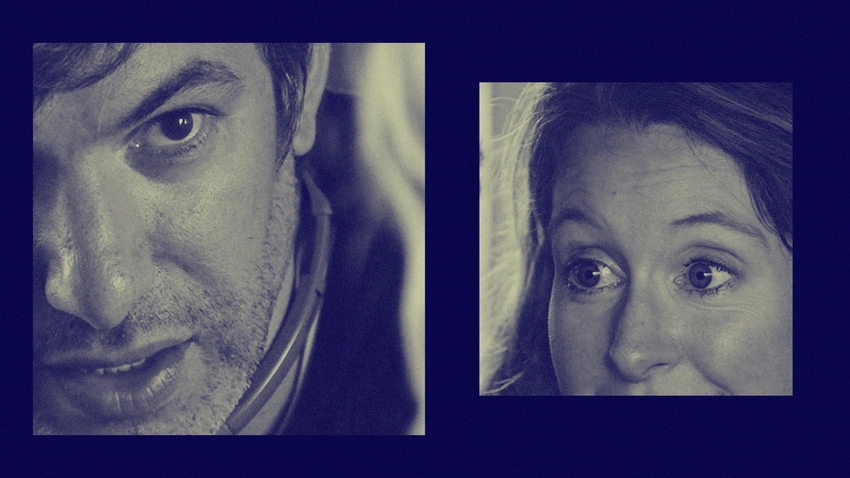
Fielder vs. Holmes: The Ultimate Reality Showdown?
Nathan Fielder's deep dive into the world of Elizabeth Holmes reveals a blurred line between performance art and calculated deception. It's a compelling look at who truly controls the narrative.
The Uncanny Valley of Performance
There's a unique intersection where performance art meets cold, hard reality, and it's never been more apparent than in Nathan Fielder's encounter with Elizabeth Holmes. Fielder, a master of meta-manipulation, often constructs elaborate scenarios that blur the lines of reality for comedic and critical effect.
His subjects, and often the audience, find themselves questioning what's real and what's part of the elaborate 'bit.' So, when someone like Fielder gets an “up-close look” at a figure as notoriously enigmatic as Elizabeth Holmes, the results are bound to be fascinating.
Holmes, for her part, perfected a different kind of performance. Hers was a carefully crafted persona, designed to inspire trust and project genius, a Silicon Valley disruptor.
The black turtlenecks, the deep voice, the unwavering gaze, these weren't accidental.
They were elements of a sophisticated, sustained act, built to sell a vision that ultimately crumbled under scrutiny. She manipulated perceptions, not for artistic exploration, but for profound financial gain and power.
Reality vs. Rehearsal
What happens when a professional manipulator of reality - someone like Fielder, who shows you the strings - faces off against someone who hides them so completely? That's the core question here. Fielder's entire brand is built on exposing the performative aspects of everyday life, often by escalating them to absurd levels.
He's asking, “How much are we all performing?”
Holmes, conversely, operated under the guise of absolute authenticity, even as her empire was built on a foundation of lies. Her performance was so convincing that it took years, and countless lives, to unravel. The Atlantic's note that Fielder is “still unsure whom he really met” after his encounter is incredibly telling.
It suggests that even his finely tuned radar for deception and constructed realities struggled to penetrate Holmes's carefully maintained facade.
It's a clash of different kinds of manipulation.
What's the Game?
This interaction, however brief or prolonged, offers a crucial insight into how narratives are built and controlled in the modern media landscape. Both Fielder and Holmes are figures who command attention through their unique approaches to reality. Fielder uses media as a tool for deconstruction, inviting us to question authenticity.
Holmes used it as a shield, deflecting doubt and projecting a false truth.
The key difference lies in their intent .
One seeks to reveal the mechanics of human behavior and media portrayals, even if through unconventional means.
The other sought to conceal. Fielder's confusion, his inability to fully categorize Holmes, highlights the profound challenge she posed.
It's a stark reminder that some performances are so deeply ingrained, so intrinsically linked to a person's identity or survival, that even the most seasoned observers can struggle to discern the actor from the role. In a world saturated with carefully curated images and narratives, understanding these distinct forms of manipulation becomes paramount.
