NTSB: Communication Snafu Led to Marine One's Close Call with Passenger Jet

NTSB: Communication Snafu Led to Marine One's Close Call with Passenger Jet
A startling NTSB report reveals a serious air safety breach: President Trump's helicopter, Marine One, nearly collided with a passenger jet near the White House due to critical communication failures. Discover what went
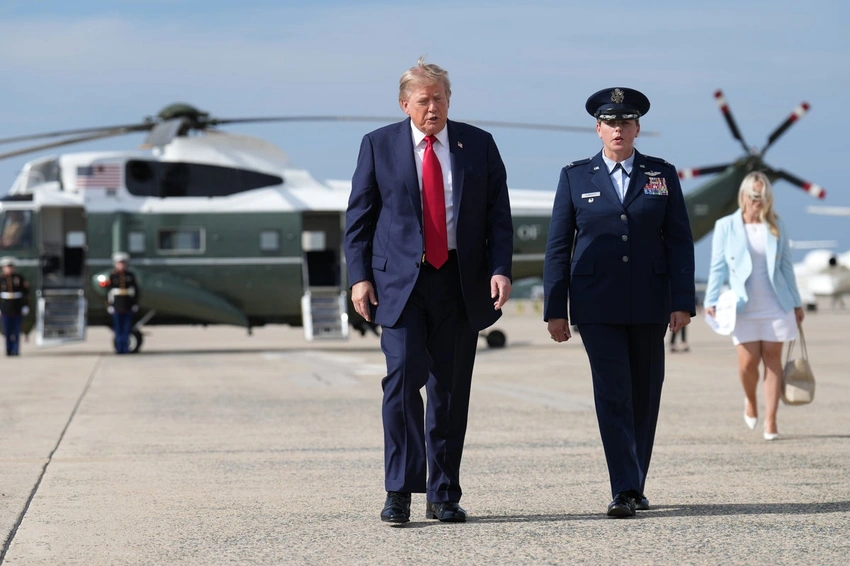
A potentially catastrophic air safety incident unfolded on August 4, 2026, when President Donald Trump's helicopter, Marine One, had a concerning close call with a passenger jet near the highly congested airspace of the White House and Ronald Reagan Washington National Airport. A preliminary report from the National Transportation Safety Board (NTSB) has shed light on the alarming communication failures that led to this near-miss.
According to investigators, an air traffic controller mistakenly allowed the passenger jet to take off after crucial warnings about Marine One's impending flight through the area were missed. This grave oversight occurred despite existing safety protocols designed to prevent such incidents, particularly those established in the wake of a tragic mid-air collision near the same airport just last year, on January 29, 2025, which claimed 67 lives.
The NTSB report reveals a troubling pattern of communication breakdowns.
Air traffic controllers reportedly did not receive the standard three-minute warning call required before Marine One departures.
Even more concerning, controllers and Marine One pilots had met just one week prior to the incident to discuss ongoing communication problems.
During that meeting, an alternative plan involving a third-party relay for these critical warnings was agreed upon, but this arrangement also failed on the day of the close call. Tower recordings examined by the NTSB indicated that controllers never heard the warning calls from Marine One's pilot, even though separate recordings published by ATC.com suggest the helicopter crew did transmit these warnings.
The attempt to relay the three-minute warning through the flight facility at Joint Base Anacostia-Bolling was unsuccessful, highlighting a systemic failure in the communication chain. The simultaneous operation of both the jet and the presidential helicopter appears to have violated safety procedures specifically put in place after the 2025 mid-air collision.
These rules mandate that all takeoffs and landings at the airport must be halted whenever a helicopter is on a conflicting route. Furthermore, a long-standing agreement between the Pentagon and the Federal Aviation Administration (FAA) requires a three-minute warning before the president's helicopter takes off, a protocol that predates even last year's crash.
While officials have stressed that President Trump was never in immediate danger, the incident underscores serious vulnerabilities in air traffic control systems and communication protocols surrounding the nation's highest office. The NTSB continues its investigation into how such a critical lapse could occur in one of the most protected airspaces in the world.

Login to comment.
No thots yet. Be the first to share your thoughts!