Nepal's $5 Billion Flood Rebuild: Global Climate Fund Faces First Major Test!

Nepal's $5 Billion Flood Rebuild: Global Climate Fund Faces First Major Test!
Nepal faces a colossal $5bn rebuild after devastating floods, pushing the world's new climate disaster fund to its limits. Discover the urgent global challenge this Himalayan nation presents to climate justice.
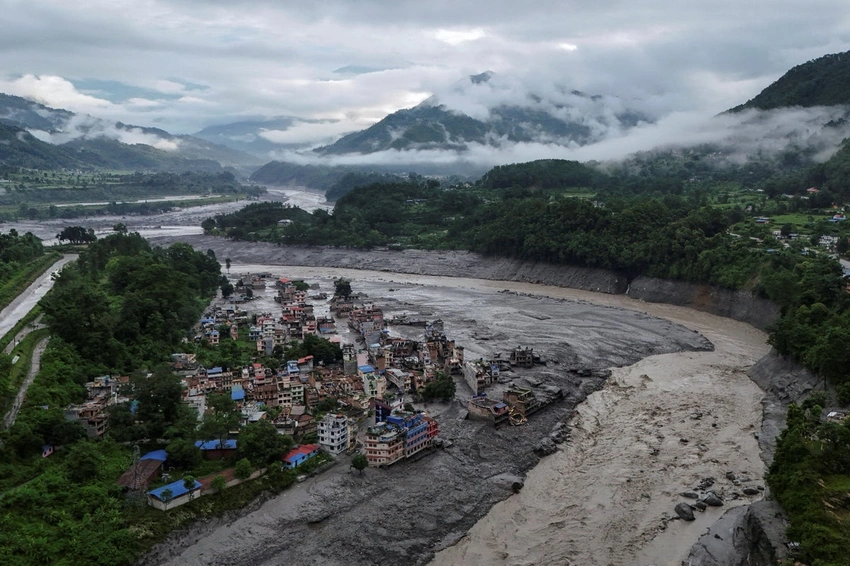
Nepal is grappling with a monumental reconstruction challenge following devastating flash floods, triggered by a glacial lake collapse in late August. The disaster tragically claimed over 1,300 lives and left thousands more missing, prompting the Himalayan nation to estimate rebuilding costs at a staggering $4 to $5 billion. This figure represents roughly 10 percent of Nepal's annual GDP, a sum far too immense for the country to manage alone.
In a landmark move, Nepal has become the first country to invoke the emergency procedures of the Fund for Responding to Loss and Damage (FRLD), a global climate disaster support mechanism established by the UN in 2023. This critical request puts the new fund to its first major test, highlighting the stark reality of climate-driven destruction and the dire need for international aid.
However, the assistance Nepal is likely to receive from the FRLD falls dramatically short of its needs. While the estimated cost of rebuilding is up to $5 billion, the fund's limit for a single disaster is just $20 million, less than one percent of what Nepal requires.
This significant disparity underscores a fundamental challenge: the FRLD, despite its crucial mandate, currently holds only $822 million in total pledges, with approximately $350 million earmarked for disbursement.
Experts have long warned about the inadequacy of such funds.
Harjeet Singh, who has worked on the fund's design, pointed out that the scale of damage and loss from climate disasters has reached unprecedented levels, far exceeding the fund's capacity.
A 2024 study in the journal Nature estimated that developing countries would need $395 billion annually by 2025 to cover climate-driven loss and damage, a figure broadly consistent with other international estimates.
This dwarfs the current global climate finance target of $300 billion a year, which itself remains far from being met.
Despite the limited amount, securing even $20 million would be a significant victory for Nepal, as no country has previously invoked the fund's emergency provisions. The standard processing time for requests can take six to eight months, but emergency cases are designed for quicker disbursal, ideally within six to eight weeks.
As of early September, no projects had been approved, and no money had reached any country, making Nepal's case a critical precedent for the fund's operational viability and commitment to its founding promise.

Login to comment.
No thots yet. Be the first to share your thoughts!