CJI to Re-Examine Poll Panel Law Verdict Amid Judge's Son-ECI Link!

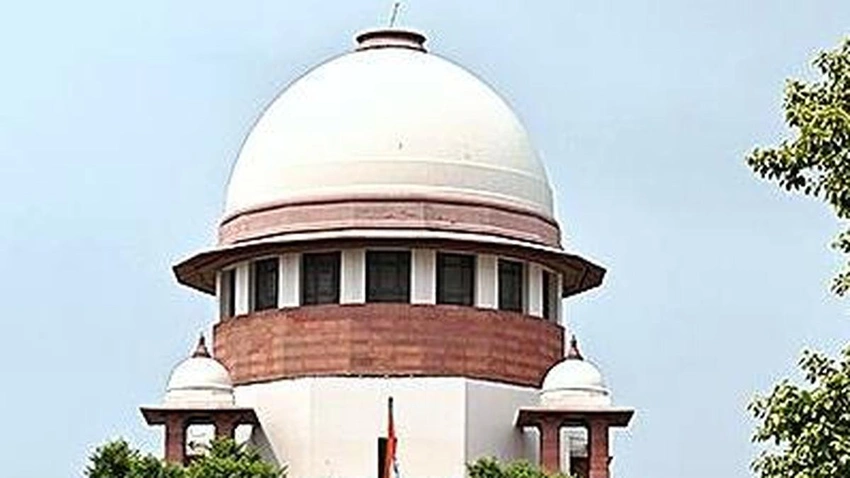
CJI to Re-Examine Poll Panel Law Verdict Amid Judge's Son-ECI Link!
India's Chief Justice agrees to hear a plea challenging a split verdict on the Election Commissioners' appointments law. Allegations of undisclosed conflict of interest involving a judge's son and the ECI raise serious q
The Supreme Court of India is set to revisit a crucial case concerning the Election Commissioners' appointments law. Chief Justice of India Surya Kant has agreed to hear an application seeking to recall a split verdict from September 23, following serious allegations of an undisclosed conflict of interest.
The application, brought forth by Naman Sherstra and orally mentioned by senior advocate Gopal Sankaranarayanan, questions why Justice Satish Chandra Sharma did not disclose that his son was a standing counsel for the Election Commission of India (ECI) during the court proceedings. This alleged professional engagement of an immediate family member with an institution whose statutory composition was under direct challenge forms the crux of the petitioner's grievance.
The original split verdict involved Justice Sharma and Justice Dipankar Datta. The case challenged the constitutional validity of the Chief Election Commissioner and Other Election Commissioners (Appointment, Conditions of Service and Term of Office) Act, 2023. While Justice Datta had initially declined a reference to a five-judge Constitution Bench, Justice Sharma took an opposing view, pushing for the referral.
Ultimately, both judges issued a common order for the Chief Justice to allocate the case to a Constitution Bench.
The 2023 law itself has been a point of contention. Justice Datta had previously opined that the law was "prima facie wrong" for ignoring an earlier Constitution Bench judgment in the Anoop Baranwal case.
That judgment had included the Chief Justice of India as a neutral member in the Prime Minister-led selection panel for CECs and ECs. The new 2023 law, however, replaced the CJI with a Union Minister nominated by the Prime Minister. Justice Datta argued that this change effectively gave the Executive a veto power over appointments and reduced the Opposition Leader's role to a mere formality.
Media reports surfaced after the September 23 verdict, highlighting that Justice Sharma's son was indeed a standing counsel for the ECI. Another petitioner, Jaya Thakur, had already filed a curative petition on September 29, citing "reasonable apprehension of bias and propriety." Sherstra's plea, while also seeking a recall, carefully avoids imputing "actual bias, motive or want of good faith" on Justice Sharma, focusing instead on the ethical question of non-disclosure.
The application specifically points out that Siddharth Sharma, Justice Satish Chandra Sharma's son, was appointed as standing counsel for the ECI before the Madhya Pradesh High Court on July 10, 2024. This appointment occurred after the controversial elevation of Gyanesh Kumar and Dr.
Sukhbir Singh Sandhu to the poll body, and the engagement has reportedly continued since then.
The Supreme Court's decision to examine this plea could have significant implications for judicial transparency and the integrity of electoral appointments.
#SupremeCourt #IndianJudiciary #ElectionCommission #CECLawVerdict
