India's Air Crisis: Not A Single District Hits WHO's Safe PM2.5 Limit

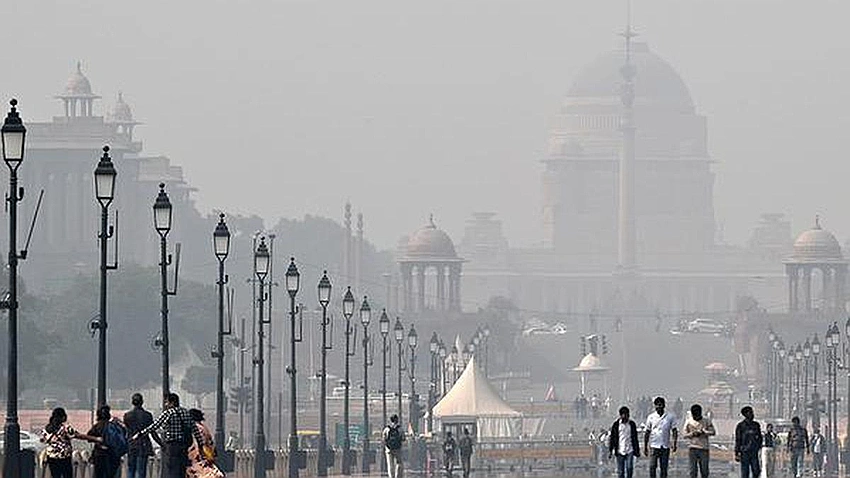
India's Air Crisis: Not A Single District Hits WHO's Safe PM2.5 Limit
India's Air Crisis: Not A Single District Hits WHO's Safe PM2.5 Limit
CREA's 2025 satellite assessment shows 60% of India's 749 districts breach the national standard, with none meeting the WHO's 5 µg/m³ guideline. The analysis argues governance failure and calls for urgent, concrete polic
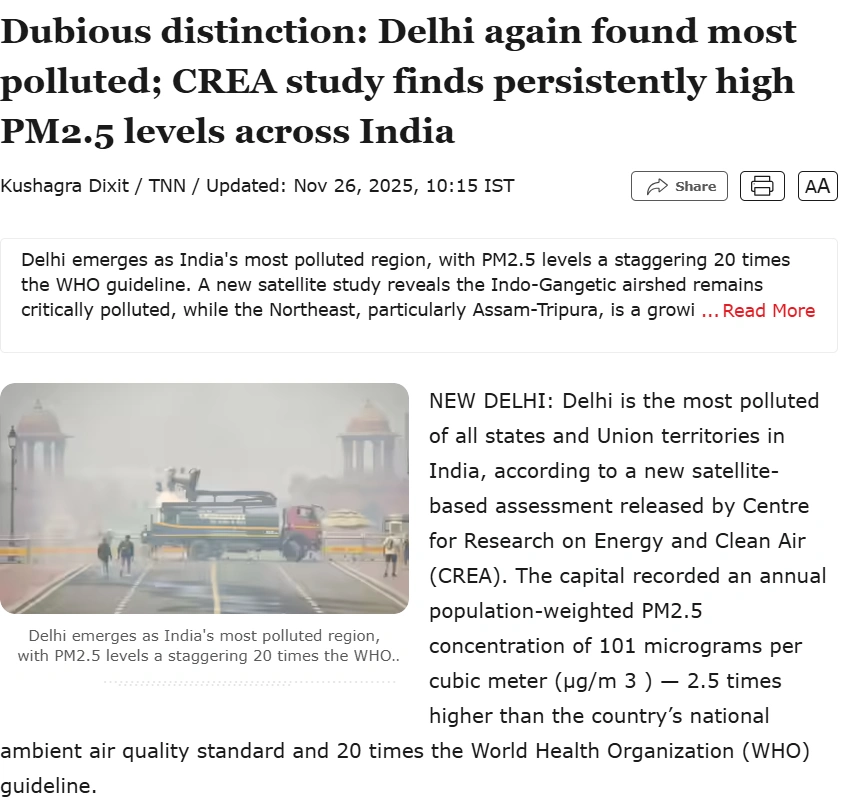
When the Centre for Research on Energy and Clean Air (CREA) recently revealed that none of India’s 749 districts meet the World Health Organization (WHO)’s safe annual PM 2.5 limit, it should have been a nationwide alarm. Instead, the reaction feels muted, as though we are collectively pretending this is someone else’s problem. This is not an act of nature alone; it is a failure of governance, of policy, and of political will.
The scale of neglect
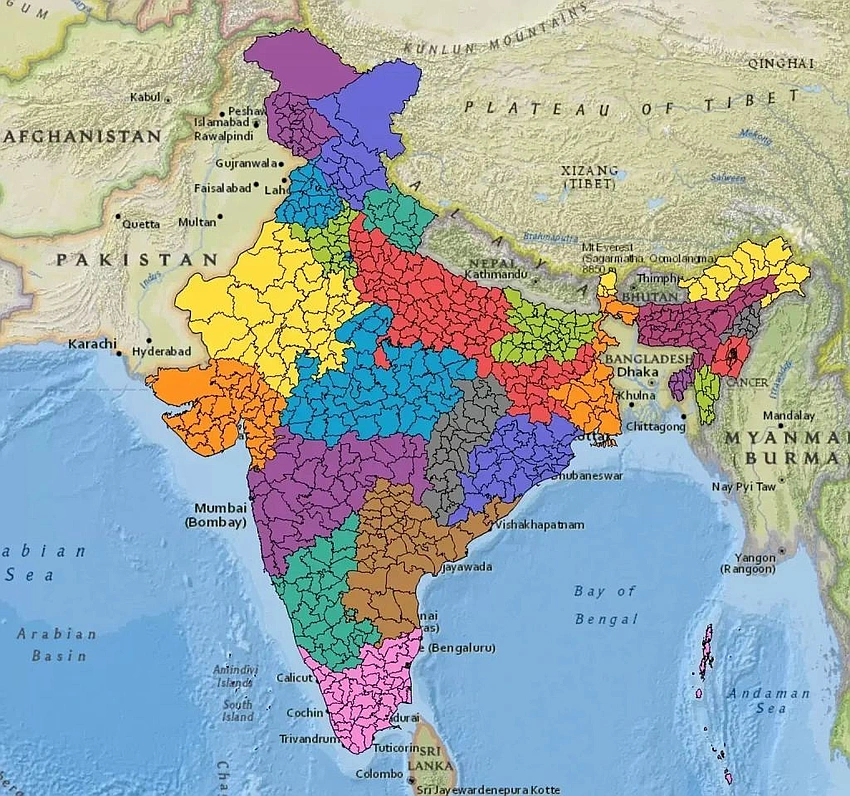
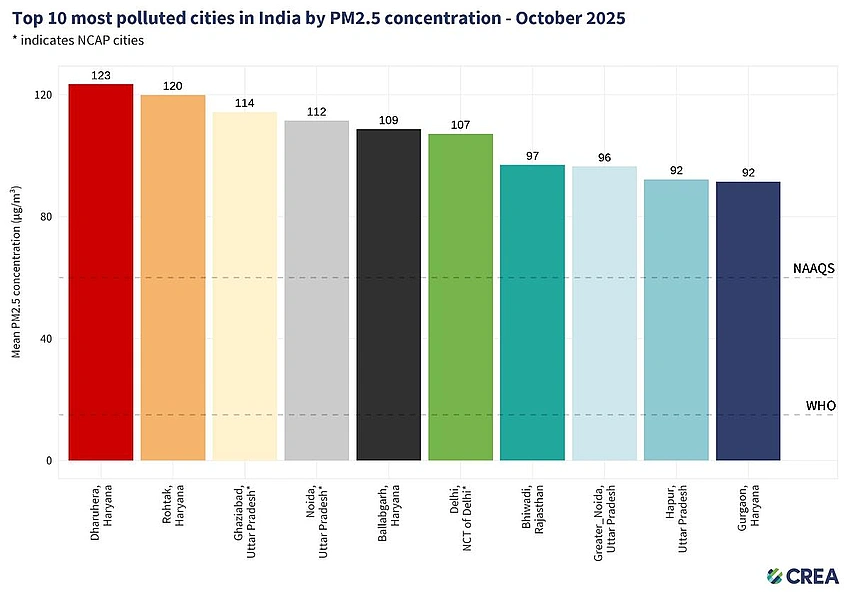
CREA’s 2025 satellite-based assessment shows that 60 per cent of districts (447 out of 749) breach India’s own standard, the National Ambient Air Quality Standard (NAAQS) of 40 µg/m³. Worse still: not a single district meets the WHO’s guideline of 5 µg/m³.
From Delhi to Assam, Punjab to West Bengal, and from small towns to rural hinterlands, air that is unfit to breathe is no longer confined to industrial zones or congested cities. It has become the default across the country, every season of the year.
Yet despite decades of schemes, speeches and legislation, the air remains poisonous. This is the most basic sign of a systemic failing.
Promises, programmes and the gap between plan and practice
It would be unfair to say the government has done nothing. The National Clean Air Programme (NCAP), for example, was launched precisely to tackle air-quality issues nationwide. But in practice, its mandate has been weak. Experts have pointed out that NCAP functions more as a cooperative guideline than a legally binding framework, lacking hard enforcement, consistent funding and accountability.
In recent years, the number of air-quality monitors in India has been extremely low compared to the population and size, undermining any real-time tracking of pollution or enforcement potential. At a more local level, many state pollution control boards and urban bodies (the agencies meant to translate national policy into local action) suffer from funding shortages, institutional weakness, and lack of political pressure.
In short, there is a plan, but no follow-through.
The human cost of bureaucratic inertia
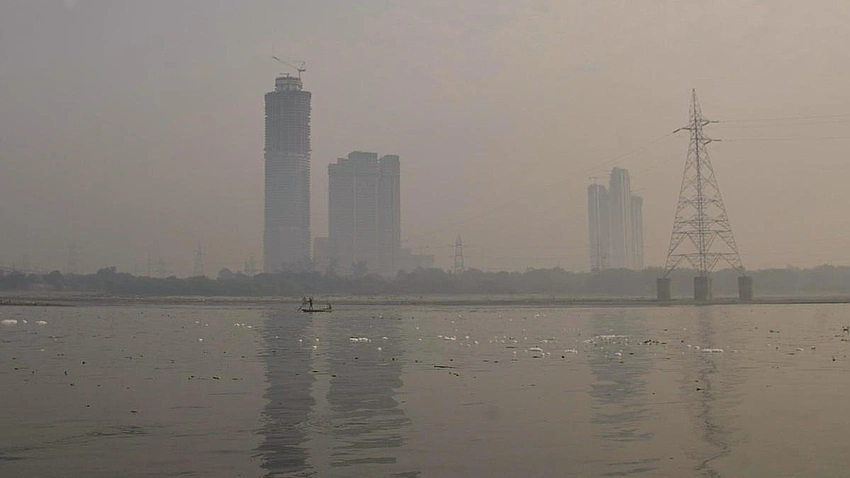
Air is the most fundamental public good. Clean air is not an amenity; it is a right. To allow pollution to become universal across every district is to deny that right to 1.4 billion people.
When governments fail to enforce emission standards, regulate industries, curb vehicular pollution, manage construction dust, monitor air quality, and invest in infrastructure for clean energy or public transport, what we see is a collective abdication of responsibility.
Worse, this failure is deeply uneven in its impact. The poorest, those working outdoors, children, and the elderly all pay the price. Their labour becomes a risk exposure; their bodies bear the chronic burden of respiratory ailments, cardiovascular stress, and developmental issues.
The satellite data is only the first alarm. The real toll will be measured in compromised lives and futures.
Political will: the missing pollutant
What do you do when you face such a crisis? You govern. You legislate. You enforce. You mobilize resources. You treat air quality not as a footnote in environmental policy, but as a fundamental issue of public health and justice.
Instead, what we have seen is a government content with issuing targets, launching programmes, and conducting studies while lacking follow-through. NCAP remains underfunded, under-monitored, and under-enforced. Regional bodies remain understaffed or dependent on inadequate technical capacity. Data remains sparse or unreliable.
Breathing is political
As someone trained in the humanities, I find something profoundly symbolic in the way pollution is allowed to become universal. Air is invisibly shared; it does not respect class, caste, or state boundaries. Yet the fact that every district fails the WHO standard speaks of inequality: inequality of protection, inequality of care, and inequality of life chances.
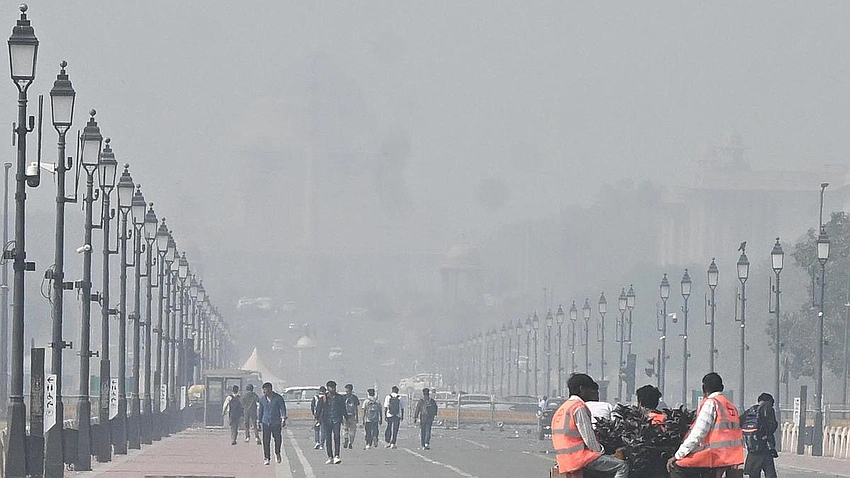
To say “air pollution” in India currently is to say “governance failure”. It is to acknowledge that policy and power have colluded, or at least co-existed, with inaction — and that such inaction is a collective social decision.
A call for political respiration
If we are to reclaim the air, what we need is not just more studies but stronger governance. That means:
- Making air-quality standards legally binding rather than advisory.
- Ensuring rigorous, transparent monitoring across every district, rural and urban, with publicly accessible data.
- Securing stable, adequate funding for clean-air programmes, with strict accountability for utilisation.
- Regulating major pollutant sources, industries, power plants, and vehicular emissions with enforceable penalties.
- Investing in public transport, clean energy, and infrastructural reforms, rather than cosmetic fixes or seasonal band-aids.
It also means rethinking the relationship between citizens and the state: air should not be a privilege; it must remain a right.
#AirQuality #PM25 #CleanAir #IndiaPollution #EnvironmentalPolicy
