10-Minute Delivery Apps and the Precarity of Workers


10-Minute Delivery Apps and the Precarity of Workers
10-Minute Delivery Apps and the Precarity of Workers
Quick-delivery apps promise groceries in minutes, but riders often work long hours for tiny pay. A closer look at earnings and the human cost behind India's 10-minute delivery boom.
A tap on an app and within minutes, groceries, snacks or medicine appear on your doorstep. It feels like magic. Urban Indians, pressed for time, have embraced the 10-minute delivery model offered by quick-commerce platforms such as Swiggy Instamart, Blinkit, Zepto and others. This segment, born from the broader e-commerce boom, is now projected to become a dominant slice of India’s grocery market in the coming decade.
Yet this spectacle of speed is not a neutral technical feat; it is built on human labour that is often low-paid, insecure, and structurally undervalued.
Worker Earnings on the Ground
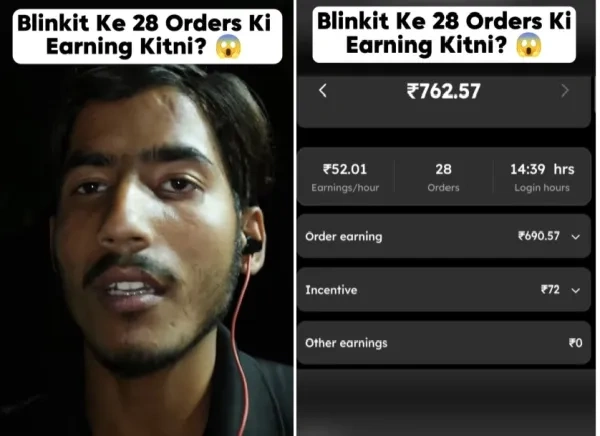
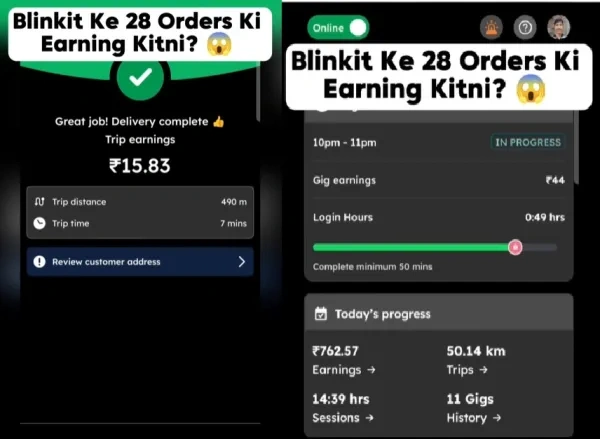
There has been a recent viral example that brought this reality into sharp focus: a Blinkit delivery rider from Uttarakhand shared that after 14+ hours of work and 28 deliveries, he earned ₹762 for the day, an average of only ~₹52 per hour, including incentives. That is a daily wage well below even the most basic living wage benchmarks in urban India.
Reports and studies show that before 2023, many quick-commerce delivery workers had relatively stable wages of about ₹18,000–₹20,000 per month. After platforms switched to purely per-delivery payments, base payouts collapsed, with some workers reportedly earning as little as ₹12 per delivery at certain points.
For context, studies in parts of India suggest gig workers earn on average ₹20,000 per month, but delivery-specific roles often fall significantly lower, around ₹13,753 per month, despite 10–12 hour working days.
If you tip a rider ₹30 or ₹40 on a single order, imagine how small that feels compared with 14 hours of intense work just to scrape together ₹762, and yet that informal tip often becomes the only buffer between the worker and extreme precarity.
How This Compares to Minimum Wage Standards
Here is where the structural irony gets starker. India’s minimum wage system varies by state and skill type, but even in poorer states, daily minimum wages for unskilled labour (when formally applied) are often much higher than what many delivery partners realise after expenses such as fuel, bike maintenance, mobile data and protective gear. Platforms categorise riders as independent partners, not employees, meaning workers are not entitled to minimum wage protections, paid leave, social security, or even guaranteed working hours; a condition that depresses bargaining power and embeds precarity into the very design of the work.
The Irony of High-Value Consumption
The paradox becomes almost absurd when we consider what users are ordering while delivery partners labour on tenuous pay. Urban consumers happily click to dispatch expensive electronics such as smartphones worth ₹1 lakh or more, high-end bottles of wine, or premium groceries, with the same nonchalance as ordering ₹30 samosas. These are goods that cost as much as a decent monthly household income in India, yet the labour that brings them to our doorsteps is paid measurably less. However compelling the UX design or marketing claims of “effortless convenience,” the value chain from production to last-mile delivery still channels the vast majority of surplus to capital and tech platforms, not to human workers.
Why This System Persists
There are several structural reasons this exploitation persists:
- Labour Oversupply: India’s vast workforce and persistent under-employment mean many workers are willing or forced to accept precarious, low-paid gig work in the absence of better options.
- Regulatory Gaps: Until very recently, gig workers lacked any legal recognition as a category with enforceable rights; new labour codes have begun defining gig and platform workers, but benefits like minimum wages or paid leave are still not guaranteed.
- Algorithmic Control: Apps manage work through opaque algorithms that can impose penalties for perceived “unreliability,” or deactivate accounts with little human recourse, all while absolving platforms of direct employment responsibility.
The Moral Economy of Convenience
There is an uncomfortable moral dimension here. We prize convenience, yet we seldom ask: at whose cost? Instant gratification masks deep inequalities. If a delivery window shrinks from two hours to ten minutes, who pays for that acceleration? In these labour conditions, the faster you want something, the more likely someone else’s labour time stretches further just to meet your demand.
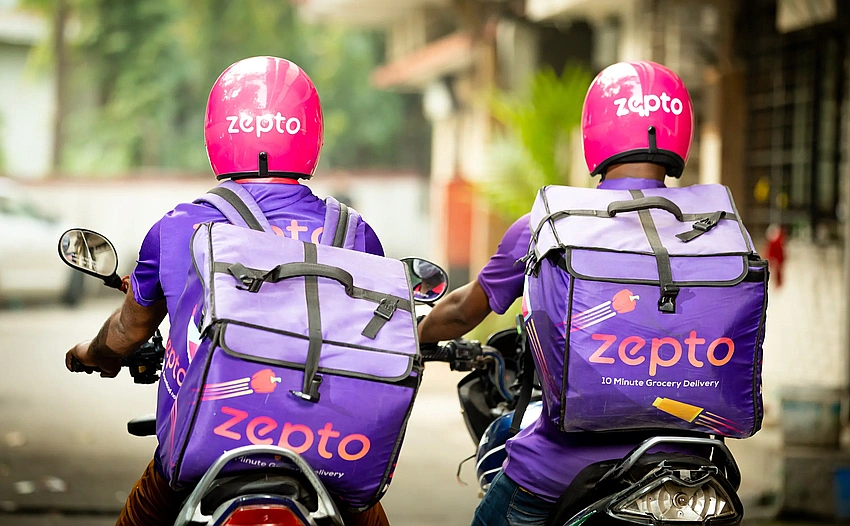
In this moral economy, the city and its labour become amortised into a service expectation, and the worker becomes an almost interchangeable unit of time elasticity.
Reimagining the Future
Ten-minute delivery doesn’t have to be a dystopian speed race built on poor labour standards. Thoughtful regulation can require platforms to pay guaranteed base wages, extend social security and insurance, and allow workers to collectively bargain or join unions. Consumers, too, can play a role through informed choice, choosing platforms with transparent, fair-wage policies and tipping workers meaningfully.
If convenience is a public good, as many tech evangelists claim, then the labour that produces it should be protected and compensated as a foundational principle.
#GigEconomyIndia #DeliveryRiders #FairWagesForRiders #TenMinuteDelivery #IndianEcommerce

Login to comment.
No thots yet. Be the first to share your thoughts!