Aravalli Definition Sparks Clash Over Mining Rules, Delhi in Focus

Aravalli Definition Sparks Clash Over Mining Rules, Delhi in Focus
New 100m Aravalli height rule tightens mining controls; BJP says it's protective, activists fear ecological damage and protests rise.
A landmark Supreme Court-backed move has formalized a 100-meter elevation threshold for Aravalli Hills and a 500-meter proximity rule to define Aravalli Range, shaping how the hills can be treated for mining and development. The framework is presented as stricter and more scientific, aiming to better conserve the ancient mountain system while balancing growth needs. The court-approved approach emphasizes that hills meeting or exceeding the 100-meter mark, along with their slopes and land within 500 meters of nearby hills, fall outside the mining ambit, even if individual heights vary.
In a strong political rebuttal, a senior BJP leader argued that the new definition does not expand mining. He cited government data suggesting roughly a quarter of the Aravalli expanse lies within wildlife sanctuaries, national parks, or reserved forests where mining is already prohibited, and that only a small fraction—about 2.56%—is under limited and regulated mining. He also highlighted regional figures, stating that nearly all hilly areas in Rajsamand and Udaipur would stay out of mining, with substantial portions in Gujarat and Haryana likewise protected by existing protections.
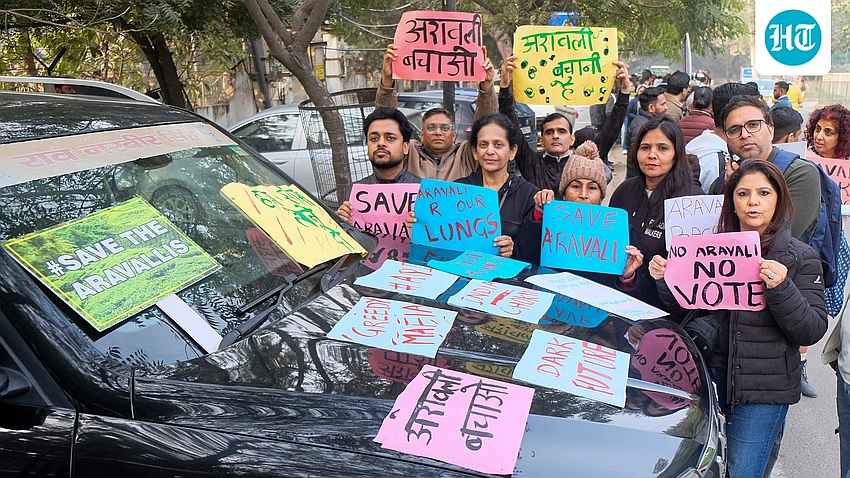
Activists, however, counter that the new definition could still overlook critical ecological functions of the Aravallis, especially in the Delhi-NCR region where the hills act as a natural shield against pollution and climate fluctuations. They warn that focusing strictly on a height criterion and a narrow 500-meter rule may miss key ecological services, water security concerns, and long-term environmental health. Protests and public commentary have grown as debates intensify over how to balance conservation with development needs.
Beyond mining, the controversy touches on broader environmental safeguards and the potential impact on water resources and climate stability. The Supreme Court’s ruling, following recommendations from a union environment committee, has intensified policy discussions and area-wise assessments across Rajasthan, Gujarat, Haryana, and beyond, with Delhi observers watching closely for how the definitions will play out on the ground.
