NASA adds 2027 docking test ahead of Moon landings

NASA adds 2027 docking test ahead of Moon landings
NASA bets on a 2027 low-Earth orbit docking test to guide Artemis toward 2028 Moon landings, while ironing out SLS delays.
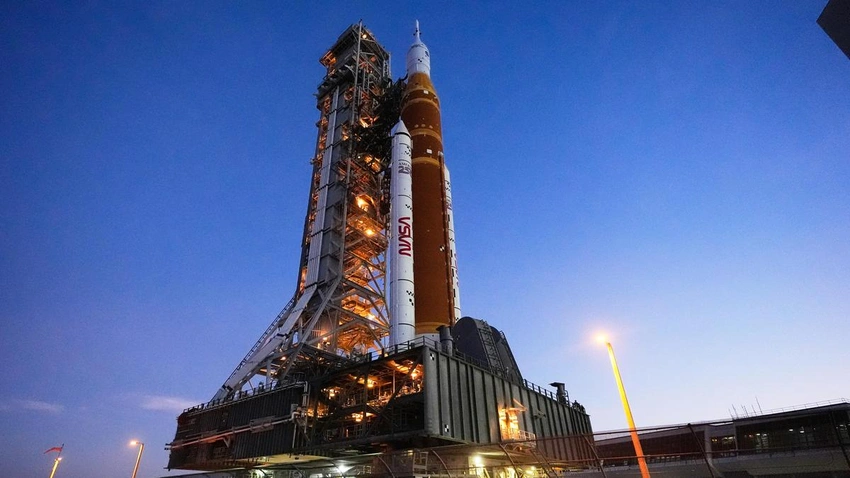
NASA has unveiled a revised Artemis roadmap, adding a dedicated low-Earth orbit docking test in 2027 before any Moon landing. The plan keeps 2028 as the target for lunar landings, with Artemis IV and V slated to reach the Moon. Artemis II will still fly around the Moon and back, though its timeline has shifted due to a helium leak on the Space Launch System rocket, which has been moved from the launchpad to the Vehicle Assembly Building for repairs.
Under the updated plan, Artemis III will stay closer to Earth in 2027 to practice docking with a lunar lander, rather than attempting a lunar touchdown. NASA Administrator Jared Isaacman described the extra flight as a crucial step to avoid long gaps between launches and to verify docking technology in a real environment. He said the additional mission would help test systems before a Moon landing, while still keeping the broader timetable on track for 2028.
The helium leak delaying Artemis II has left a path forward but introduces scheduling uncertainty. The earliest launch opportunity is now April, and the Space Launch System rocket remains at the Vehicle Assembly Building in Florida for repairs. NASA’s shift toward an extra, near-Earth test underscores a more incremental, test-driven approach to returning astronauts to the Moon, focusing on proven docking procedures and spacecraft interoperability before committing to a landing.
This strategy positions Artemis IV and V as the actual Moon landings in 2028, following a series of preparatory steps and flight tests designed to validate the hardware and mission architectures. The broader aim remains bold: establish a sustainable human presence on the Moon and lay groundwork for future crewed missions to more distant destinations in the solar system.
