The $80 Billion Chip Race: Geopolitics & Your Tech Future

The $80 Billion Chip Race: Geopolitics & Your Tech Future
The global fight for semiconductor independence is heating up! India's ambitious $80B plan shows just how critical chip ecosystems are for national security and economic power. Don't miss this dive into the stakes.
The Geopolitical Battle for Chip Dominance
Chips are the undisputed engine of the modern world, and the global scramble to build robust, self-reliant semiconductor ecosystems has become a defining geopolitical challenge. It’s not just about economic growth anymore; it's about national security, technological sovereignty, and securing a vital place in a global industry projected to exceed $1 trillion by the decade's end.
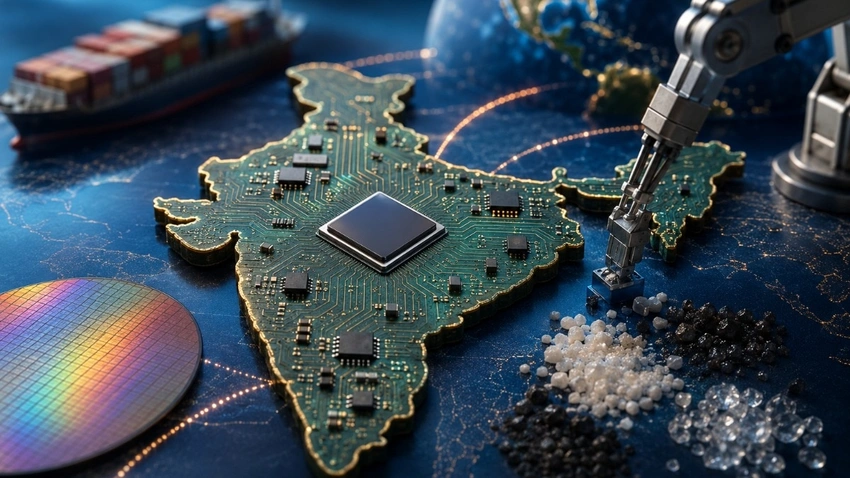
Take India, for example. In 2021, it launched the India Semiconductor Mission with a substantial Rs 76,000-crore incentive package. The goal was clear: move beyond simply manufacturing chips to securing a strategic position in a supply chain increasingly shaped by global power dynamics.
We're talking about reducing critical import dependencies and positioning India as a serious contender in an industry dominated by a few key players.
India's Ambitious Bet: Billions on the Line
Early wins are already apparent. Major players like Tata Electronics are investing in semiconductor fabrication, while assembly, testing, and packaging (OSAT) projects involving Micron, CG Power, Kaynes, and HCL-Foxconn are laying crucial groundwork. They're the foundations of domestic chip manufacturing capabilities.
However, these initial steps are just the beginning of a much larger, more expensive journey.
Industry estimates suggest that building a truly competitive, comprehensive domestic ecosystem could require a staggering $80 billion in government incentives through 2035. That’s the scale of commitment needed to truly shift the needle.
The Catch: Deep Dependencies Remain
Even with these massive investments, the path to full independence is fraught with challenges. As PS Subramaniam, partner at Kearney, aptly puts it,
Despite investments in fabs and OSAT facilities, a lion share of critical inputs into the value chain will still be imported.
This isn't just about the chips themselves, but the entire support structure.
Consider the raw realities: most equipment for OSAT facilities is currently sourced from countries like Japan, Malaysia, Taiwan, and Singapore. Semiconductor foundries, the most capital-intensive part of the equation, rely on highly specialized fabrication tools from powerhouses such as the US, the Netherlands, Japan, Taiwan, China, and South Korea.
This import reliance extends far beyond machinery to critical materials like wafers, gases, and specialty chemicals. Fabs and packaging units are essential, but without the underlying ecosystem of materials, equipment, and skilled talent, self-reliance remains a distant dream.
Why This Matters for Everyone
The geopolitical implications are immense. Nations are recognizing that control over semiconductor manufacturing is synonymous with control over their technological future. Supply chain vulnerabilities exposed by recent global events have only accelerated this race.
Every country, every business, and ultimately every consumer is impacted by the stability and security of the global chip supply. The massive financial commitments and strategic partnerships we're seeing today underscore that this isn't just a tech trend; it's a fundamental reordering of global power, with silicon at its core.
