CPC Delegation Meets BJP-RSS in Delhi as Congress Attacks Move

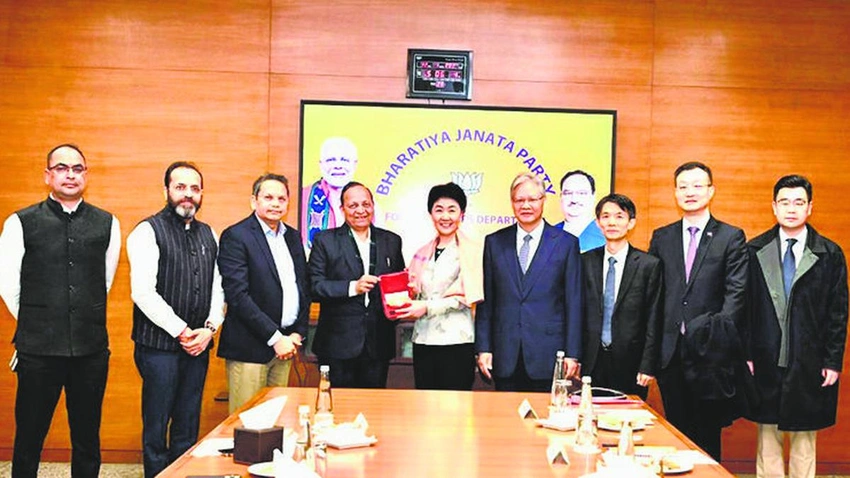
CPC Delegation Meets BJP-RSS in Delhi as Congress Attacks Move
China's CPC delegation meets BJP and RSS leaders in New Delhi, prompting Congress to question timing and transparency in China policy.
In New Delhi, a delegation from the Communist Party of China led by Sun Haiyan, vice-minister of the International Department of the CPC, and Chinese Ambassador Xu Feihong, paid a courtesy call on senior RSS functionaries and later held talks with BJP leaders at the party headquarters. An RSS functionary described the visit as a courtesy call aimed at broadening mutual understanding, with Dattatreya Hosabale, the Sangh’s general secretary, receiving the guests.
The CPC delegation's meetings with BJP leaders at the party HQ came a day after similar discussions with senior BJP figures at the party’s headquarters. Party officials emphasized that the exchanges were intended to enhance dialogue rather than signal any hard policy shifts, noting that diplomatic engagement has quickened pace since Modi’s outreach to Xi Jinping at the BRICS summit in Kazan.
The Congress party criticized the timing and intent of the engagement, questioning the government’s China policy and demanding full accountability and transparency. Congress representatives argued that China claimed the Shaksgam Valley in Jammu and Kashmir within hours of the closed-door interaction, suggesting a need for public disclosure of the discussions and their aims.
This kind of interaction is not new: since 2014, after the BJP came to power, Chinese officials have made courtesy visits to Sangh functionaries as part of broader inter-party diplomacy. The latest meetings are framed by officials as efforts to keep channels open and foster dialogue, with no detailed disclosures about topics discussed beyond the overarching aim of enhanced communication.
Overall, the meetings signal ongoing, low-key diplomacy intended to maintain lines of contact between Indian political entities and Chinese officials, even as questions about policy direction and strategic intent continue to loom.
