World Cup Halftime: Did We Just Witness the Ultimate Pop Culture Blitz?

World Cup Halftime: Did We Just Witness the Ultimate Pop Culture Blitz?
Madonna, BTS, Bieber, Shakira, and more crammed into 11 minutes at the World Cup Halftime. Was it genius or chaos? We break down the most talked-about spectacle!
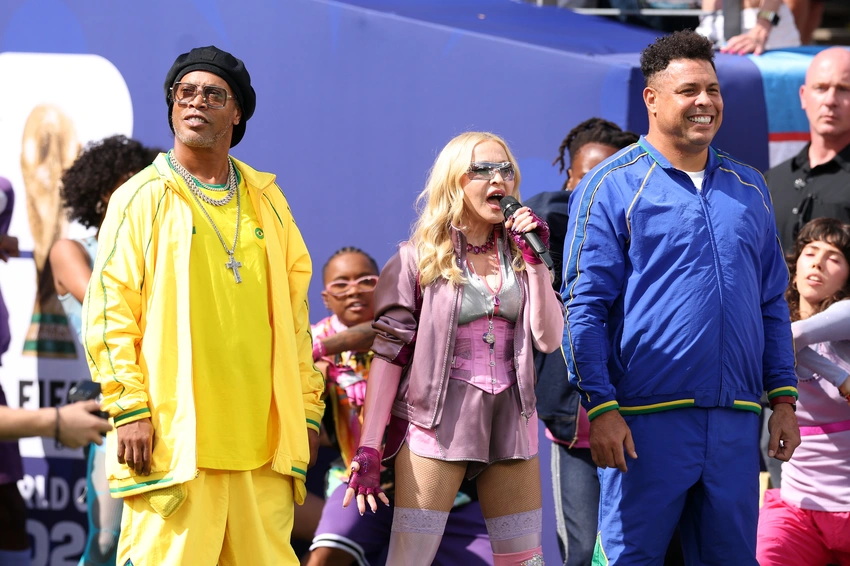
Okay, let's talk about the World Cup Final Halftime Show. Because if you blinked, you probably missed half of it. We're still trying to process how Madonna, BTS, Justin Bieber, Shakira, Burna Boy, Gustavo Dudamel, Chris Martin, and The Muppets were all squeezed into one unforgettable 11-minute segment.
It was, in true form, a “cluster-FIFA” of epic proportions, a pop culture blitz that defied expectations and perhaps, the laws of physics.
The Blink-and-You’ll-Miss-‘Em Phenomenon
For years, we've wondered how producers could possibly top themselves with these global spectacle halftime shows. This year, the answer was clear: throw every major name you can find onto the stage, give them just enough time to wave, sing a snippet, and make way for the next icon.
It's a bold strategy, and honestly, a fascinating one.
How do you manage such a diverse roster - from K-pop sensations to legendary pop queens, Latin music royalty, and even classical maestros - without it devolving into a mess?
The secret, it seems, was precision-timed fleeting moments.
Imagine the sheer star power: Madonna, a titan of pop, sharing the spotlight with BTS, the biggest boy band on the planet. Add in Justin Bieber, Shakira, the vibrant energy of Burna Boy, the orchestral gravitas of Gustavo Dudamel, the rock sensibilities of Chris Martin, and the pure, unadulterated joy of The Muppets. It was a cultural symposium, albeit a very, very fast one.
Each artist delivered a moment, a flash of their brilliance, designed to grab headlines and send social media into a frenzy.
More Than Just Music: A Global Statement
Beyond the rapid-fire celebrity cameos, what does this kind of mega-collaboration signify? It's a powerful statement about music's ability to transcend genres, languages, and demographics. The World Cup, a truly global event, mirrored this universality in its halftime entertainment.
It was about the collective power of global artistry.
Fans from every corner of the world saw a piece of their musical landscape represented, even if it was for mere seconds.
While some might argue that these blink-and-you'll-miss-'em appearances left audiences wanting more, or even feeling a bit shortchanged, there's no denying the immediate impact. The sheer audacity of assembling such a lineup, and then delivering it in such a condensed format, created an unprecedented level of buzz. It's a masterclass in modern event programming, leveraging short attention spans and the hunger for constant novelty.
Whether you loved the whirlwind or wished for more substantial performances, one thing is certain: the World Cup Final Halftime Show delivered a spectacle unlike any other. It was a carefully orchestrated, high-octane experiment in pop culture maximum impact. And for 11 glorious, dizzying minutes, the world watched, tweeted, and tried to keep up.
