Nobel Winner Francis Halzen Snags Physics Prize for "Ghost Particle" Hunt!

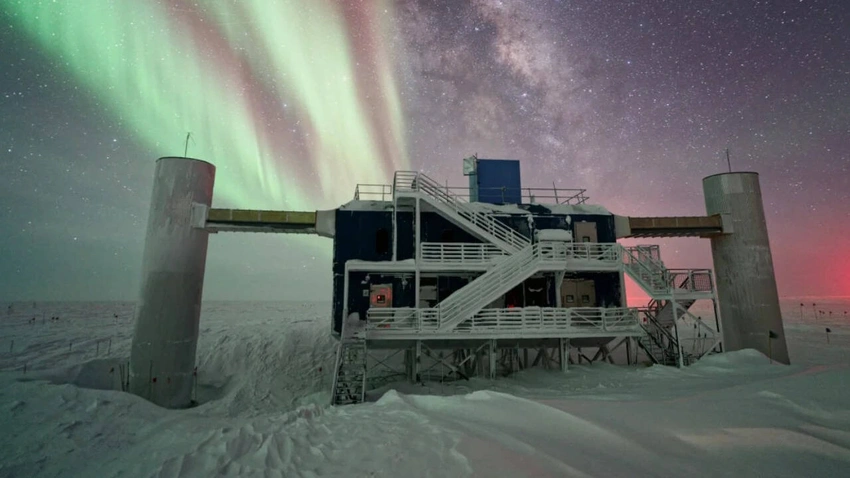
Nobel Winner Francis Halzen Snags Physics Prize for "Ghost Particle" Hunt!
Nobel laureate Francis Halzen revolutionized astrophysics by developing the IceCube Observatory, detecting elusive cosmic neutrinos. Dive into the groundbreaking discovery!
Belgian physicist Francis Halzen has been awarded the prestigious Nobel Prize in Physics for his groundbreaking work in detecting elusive cosmic particles known as neutrinos. Halzen's pioneering efforts led to the creation of the IceCube Neutrino Observatory, a colossal detector buried deep within the Antarctic ice, which has opened an entirely new window into the universe.
Neutrinos, often dubbed "ghost particles" due to their infinitesimal mass and tendency to pass through matter almost entirely undetected, originate from extreme cosmic phenomena such as exploding stars and black holes. Their elusive nature makes them incredibly challenging to observe, prompting Halzen and his team to devise an ingenious method to capture them.
The IceCube observatory, located at the geographical South Pole, utilizes thousands of optical sensors embedded in a cubic kilometer of ice. These sensors are designed to detect the faint flashes of light produced when a neutrino rarely interacts with an atom in the ice.
This monumental project achieved a historic milestone in 2013 by successfully detecting the first extraterrestrial neutrinos, a discovery that has since paved the way for the burgeoning field of neutrino astronomy.
This recognition by the Nobel Committee highlights the profound impact of Halzen's research, not only in advancing our understanding of these enigmatic particles but also in providing unprecedented insights into the distant and energetic processes shaping our cosmos.
His work continues to inspire scientists globally to explore the deepest mysteries of the universe.
