Georg Baselitz dies at 88, leaving a brutal, revealing postwar art legacy

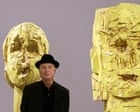
Georg Baselitz dies at 88, leaving a brutal, revealing postwar art legacy
Georg Baselitz, a German painter who inverted postwar imagery, dies at 88, leaving a provocative legacy that grapples with guilt, memory and human frailty.
Georg Baselitz, a towering figure in postwar art, has died at 88, leaving behind a legacy that fused history with fearless provocation. He lived through Nazism and East German communism, experiences that shaped a career dedicated to forcing society to face its past. His work would repeatedly confront Germany’s difficult memory, using violence, reversal and shock to demand attention to crimes that many preferred to forget.
In the 1960s, Baselitz stunned audiences with images that seemed to turn the viewer on their head—literally. His 1961 Die große Nacht im Eimer (The Big Night Down the Drain) depicted a stark figure with Hitlerian hints and nudity, a body rendered in ways that unsettled and unsettled again. In later years, he intensified this approach, reworking the figure’s identity to sharpen the critique. His famous upside-down German eagles, hovering over an infernal landscape of his own making, became emblematic of an artist pressing a society to acknowledge its complicity and guilt.
But Baselitz was more than shock for shock’s sake. As his career unfolded, he also explored vulnerability and humanity, painting himself and his wife nude and capturing the frailty of ordinary life. Across six decades, he bridged the fear and ugliness of history with a tender, almost intimate late-life sincerity. He moved from the confrontational late-60s to a more nuanced examination of memory, identity and the imperfect truth that survives personal and collective trauma.
With his death, the art world loses a singular voice that transformed how we talk about guilt, memory and the responsibility of artists to oppose forgetfulness. Baselitz’s work remains a potent reminder that art can force difficult conversations about a country’s past, while also revealing the stubborn humanity that endures within it. His legacy endures in the ways contemporary painters, sculptors and conceptualists continue to probe the edges of history, memory, and the human condition.
