The Empathy Paradox: Are We Fragile, Or Finally Feeling?

Are we truly becoming too emotionally fragile, or is our society simply evolving to embrace deeper empathy and understanding? Explore the fine line between sensitivity and resilience in today's world.
It feels like a daily debate on our feeds and in our living rooms: are we, as a society, becoming too emotionally fragile? From 'cancel culture' to calls for 'safe spaces,' the perception of a collective thinning of skin is palpable. Yet, another perspective argues we're not fragile at all, but rather, finally growing into a more emotionally intelligent, empathetic species.
Where does the truth lie in this fascinating, often charged, conversation?

The Echo Chamber of Sensitivity
For many, the evidence of increased fragility seems clear.
Every slight, every differing opinion, every uncomfortable truth appears to be met with outrage or a demand for protection. Social media, with its instant amplification, often transforms minor disagreements into seismic emotional events.
Are we perhaps coddling ourselves too much, inadvertently stripping away the very resilience that allows us to navigate a complex, often harsh world? Some argue that an overemphasis on avoiding discomfort might hinder personal growth, leaving us ill-equipped for genuine challenges.
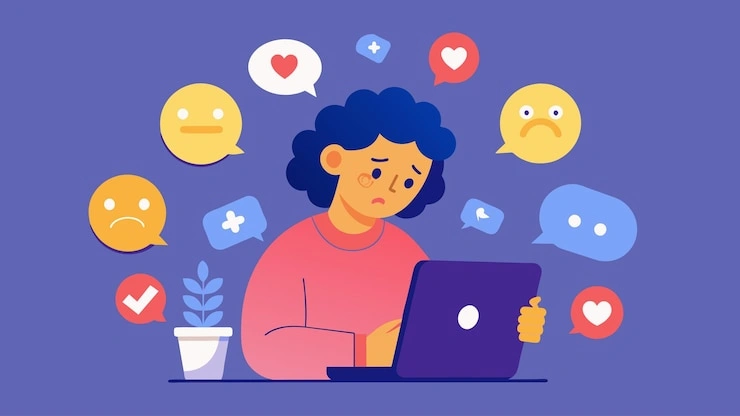
A New Dawn of Emotional Awareness
However, the narrative of fragility overlooks a crucial development: a surging awareness around mental health and emotional well-being. What some label as 'fragility,' others celebrate as a long-overdue embrace of emotional literacy. We are, arguably, more open about discussing trauma, anxiety, and depression than ever before.
It's about acknowledging our internal landscapes with honesty and seeking healthier ways to cope and connect. As psychologist Dr. Brené Brown often reminds us, 'Vulnerability is not weakness; it's our greatest measure of courage.' This perspective suggests that expressing discomfort or setting boundaries isn't fragility, but a brave act of self-preservation and growth.
Cultivating Robust Empathy
So, how do we reconcile these seemingly opposing views? The answer might lie in cultivating what we could call 'robust empathy', a sensitivity that doesn't collapse under pressure but instead strengthens our capacity for understanding and connection. This involves developing a strong inner core, one that can withstand differing opinions and discomfort, while simultaneously extending genuine compassion to others.
It's about building emotional muscle, not just cushioning ourselves from every bump. True resilience isn't about never feeling pain, but about learning to navigate it, process it, and emerge stronger.

Where Do We Build Our Emotional Muscle?
The line isn't about choosing between being empathetic or resilient; it's about integrating both. We need to foster environments where emotional expression is safe, but also where individuals are encouraged to develop coping mechanisms and critical thinking skills. This means learning to discern genuine harm from mere disagreement, and understanding that growth often happens outside our comfort zones.
It means engaging in thoughtful dialogue, even when it's challenging, and practicing self-compassion alongside social responsibility.
Perhaps we aren't becoming too fragile; perhaps we're simply learning to be fully human, with all the beautiful, messy, and resilient emotions that come with it.