Netherlands Returns 1,000-Year-Old Chola Plates to India Ahead of Modi Tour

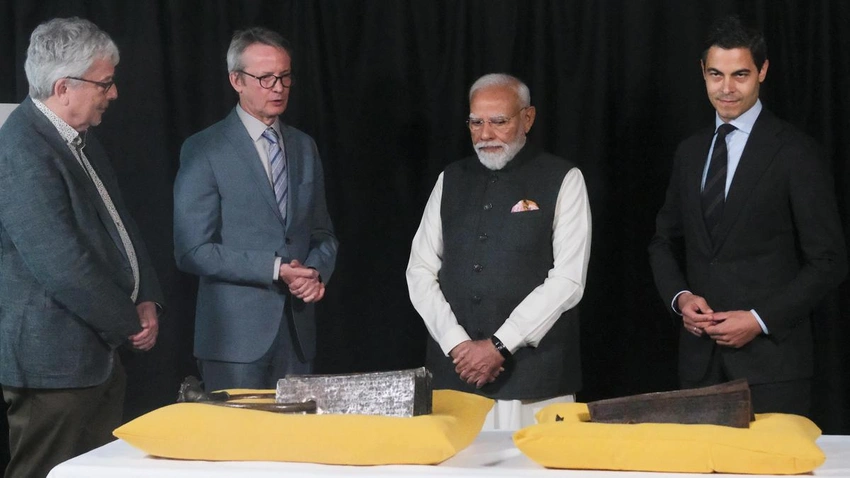
Netherlands Returns 1,000-Year-Old Chola Plates to India Ahead of Modi Tour
The 21 large plates and 3 small Chola copper plates, linked to Nagapattinam's maritime history, are being repatriated from the Netherlands to India.
In a landmark move for heritage restitution, the Netherlands has handed back a 1,000-year-old set of Chola copper plates to India. The collection includes 21 large plates and 3 small plates, tied together by a bronze ring bearing the royal seal. Tamil inscriptions on the plates highlight the language's beauty and offer insights into the Chola maritime empire. The plates were taken to the Netherlands in the 1700s by Florentius Camper, a member of a Christian mission in Nagapattinam when the town was under Dutch control. The pieces are part of a wider historic record that also includes the Anaimangalam Copper Plates, known in the Netherlands as the Leiden Plates. They will be handed over to the Archaeological Survey of India in New Delhi, which will decide how and where to exhibit them.
Experts say the plates formalise an oral commitment by Chola rulers — Rajaraja I and his son Rajendra Chola I — and shed light on the Cholas' scholarly and maritime reach. The weight of the collection, around 30 kilograms, underscores their significance and the careful stewardship required in display and storage. The Leiden University collection has long been a symbol of the era's cross-cultural exchanges, and India's claim to rightful ownership has been pursued since 2012.
Prime Minister Narendra Modi's five-nation tour, with the Netherlands as the second stop after the UAE, frames the return in a broader diplomatic context. He has outlined plans to visit Sweden, Norway and Italy on the tour, which culminates on May 20. The restitution is described by Indian officials as an emotionally resonant moment for a nation proud of the Cholas' cultural heritage and Tamil language.
Beyond symbol, the handover signals ongoing cooperation to recover and preserve artefacts scattered around the world. The ASI will decide where to place the plates for public display, ensuring they are contextualised within Indian history. The repatriation adds momentum to India's wider effort to reclaim cultural artefacts and tell their stories on home soil.
