AI in Music: Tool or Threat to Authentic Artistry?

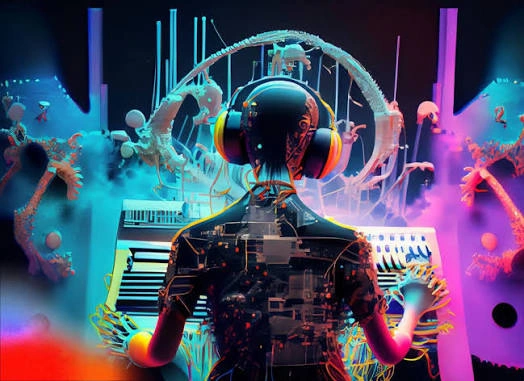
AI in Music: Tool or Threat to Authentic Artistry?
Are artists who use AI innovative pioneers or are they destroying the essence of music? We break down the latest buzz around Tyga, Fenix Flexin, and the future of creative sound.
The Beat Drops: Is AI Music's New Rockstar or Its Nemesis?
The music industry is buzzing, and it's not just about a new track. The conversation dominating our feeds is all about AI, and whether it's a revolutionary tool or a direct threat to authentic artistry. Let's be real, the lines are blurring faster than a 16-bar verse, and artists like Tyga and Fenix Flexin are right in the thick of it.
Tyga, for instance, isn't shying away from his AI usage. He recently dropped an 80s-inspired album, $TARFACE , confirming that generative tech helped craft some of its retro vibes: think synths and even a guitar solo. His take? “If you like it, you like it, if you don't, you don't.
I don't care.” That's a pretty strong stance, isn't it? He's drawing parallels to the skepticism around Auto-Tune in the early 2000s, arguing that 'real' artists embrace new technology. It's a compelling point: are we just resistant to change, or is there something fundamentally different about AI?
Then there's Fenix Flexin. His viral hit “RUBBERZ” has been blowing up, even reaching No. 58 on Billboard's Hot 100. The twist?
It's the first fully AI-generated song to hit that chart, created using the Treblo platform. Flexin initially tried to dance around the accusations, but once Treblo launched a tool to detect its own creations, the truth came out. He then admitted,
I didn't even know what da app was till we mixed it and erbody started commenting.
This raises questions about intention and awareness.
Is it still 'his' art if he wasn't even fully aware of the generative process?
On one hand, we're seeing unprecedented creative possibilities. AI can generate sounds, melodies, and even full instrumental tracks that might be beyond a human artist's immediate skill set or typical workflow. It can democratize music production, allowing more people to bring their sonic visions to life.
It's a tool, much like a sampler or a digital audio workstation, evolving the creative landscape.
But the pushback is real. When artists like Tyga explicitly use AI for instrumentation, or when a track like “RUBBERZ” makes waves thanks to a generative platform, it sparks a vital debate. Is the 'human touch' being eroded?
What does 'authenticity' mean in an era where algorithms can compose?
We're already seeing the legal ramifications, with figures like Ye facing lawsuits over uncompensated, AI-generated vocals. The stakes are clearly high.
Ultimately, whether AI is innovation or an artistic apocalypse probably depends on who you ask, and how they choose to use it. Is it a co-creator, a muse, or simply a sophisticated shortcut? The music world is collectively figuring out the answer, one AI-powered track at a time.
