The 70-Hour Photo: Why True Beauty Takes Extreme Patience

The 70-Hour Photo: Why True Beauty Takes Extreme Patience
In a world of instant gratification, one astrophotographer spent nearly 70 hours staring at Orion. The resulting image proves that slow, careful work is the only way to uncover the universe's hidden masterpieces.
In an era where we can snap a photo, slap a filter on it, and share it with the world in less than ten seconds, the idea of spending days on a single image seems almost radical. But sometimes, taking the slow lane is the only way to uncover something truly magnificent.
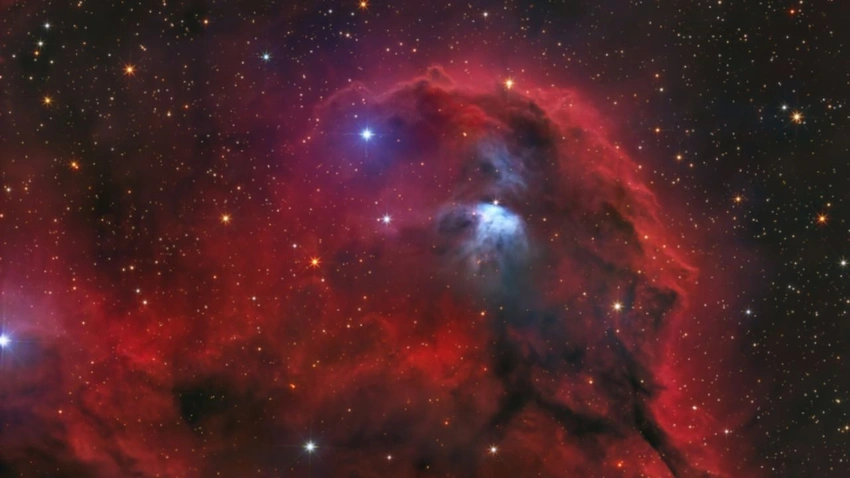
Take the recent work of astrophotographer Emil Andronic. He did not just point his camera at the night sky and hope for the best. Instead, he dedicated nearly 70 hours to capturing a single, spectacular frame: a delicate blue reflection nebula glowing brightly inside the sprawling red clouds of Orion's Head. Seventy hours for one photo. Let that sink in.
This level of dedication is a powerful reminder that true beauty and deep truths often hide behind a wall of time and effort. Here is why extreme patience still matters in both science and art.
The Universe Does Not Rush Cosmic events take millions of years to unfold. Capturing the faint light of a distant nebula requires tracking the sky meticulously, gathering photons one by one, and waiting for the right conditions. You simply cannot rush the cosmos. When we slow down to match the pace of nature, we begin to see details that are entirely invisible to the impatient eye.
Mastery Demands Time Whether you are painting a canvas, mapping a genome, or photographing deep space, mastery is a slow burn. The magic happens in the tedious moments. It is in the aligning of lenses, the calibration of equipment, and the careful processing of data. That is where the artist and the scientist meet. Both disciplines require a willingness to sit in the quiet, do the hard work, and trust the process.
Reclaiming Our Attention We live in a scroll-heavy culture. We want quick answers and instant results. But looking at an image that took nearly three full days of exposure time forces us to pause. It invites us to appreciate not just the stunning contrast of blue against red in the Orion constellation, but the human grit required to reveal it to us.
Next time you find yourself frustrated by how long a project is taking, remember the glowing blue nebula hidden in Orion. Sometimes, the most breathtaking rewards are reserved for those who are willing to wait.
