Indian Army Cheetal Helicopters Fly On Amid Crash Probe in Ladakh!

Indian Army Cheetal Helicopters Fly On Amid Crash Probe in Ladakh!
Indian Army's Cheetal helicopters continue vital Ladakh operations despite a recent crash investigation. Discover details on the ongoing probe and why these crucial choppers remain essential for high-altitude missions.
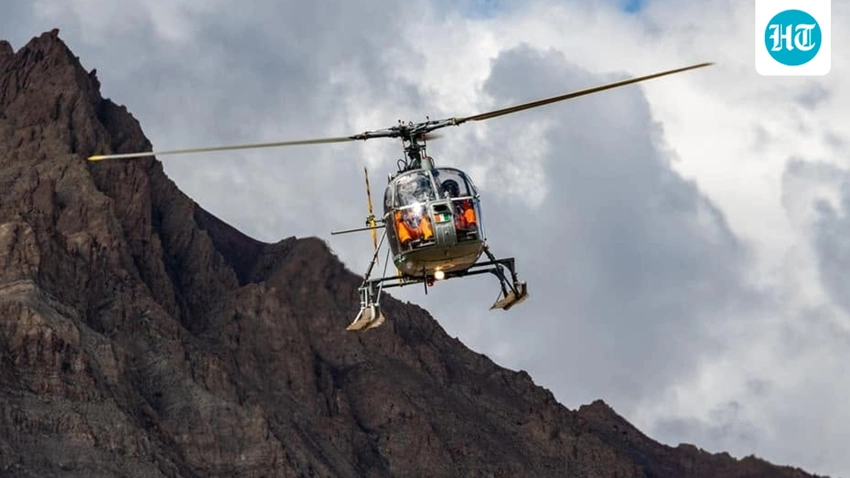
The Indian Army’s Cheetal helicopters are continuing their regular mountain sorties in the demanding Ladakh sector, including over the Siachen glacier. This ongoing operation comes even as investigators delve into a suspected technical failure that led to a recent crash.
Officials familiar with the developments stated on Thursday that the Leh-based HQs 14 Corps, which oversees operations in the sector, operates a fleet of around 25 Cheetals. These aircraft are a re-engined variant of the long-serving Cheetah helicopter.
The investigation has reportedly focused on a material failure in the transmission system of the single-engine helicopter that crashed near Leh’s Tangtse area on May 20. One official mentioned, “The probe will identify which component in the transmission system failed after which corrective steps will be taken.”
Despite the crash, these helicopters remain indispensable for high-altitude operations. The heavier Advanced Light Helicopter (ALH) Dhruv is not suitable for frontline duties in the challenging Ladakh mountains. The Cheetals, praised for their "exceptional power-to-weight ratio," have continued their daily flights since the May 20 incident.
In a fortunate turn, the two pilots—a lieutenant colonel and a major—and the third occupant, Major General Sachin Mehta, General Officer Commanding of the Karu-based 3 Infantry Division, remarkably survived the crash with only minor injuries, a detail first reported by HT.
The Cheetal project, initiated approximately 25 years ago, aimed to enhance high-altitude operational capabilities, improve maintainability, and provide a crucial mid-life upgrade for safer and more reliable operations. These helicopters are equipped with a modern and fuel-efficient TM333–2M2 engine, along with an automatic back-up engine control system.
However, the May 20 crash has once again highlighted the urgent need for a prompt replacement of the aging Cheetah and Chetak fleets. These helicopter models were originally designed six decades ago, and a history of crashes has led to increasing scrutiny regarding their safety.
