Anne Frank Reimagined: Where Does Artistic Freedom End?

Anne Frank Reimagined: Where Does Artistic Freedom End?
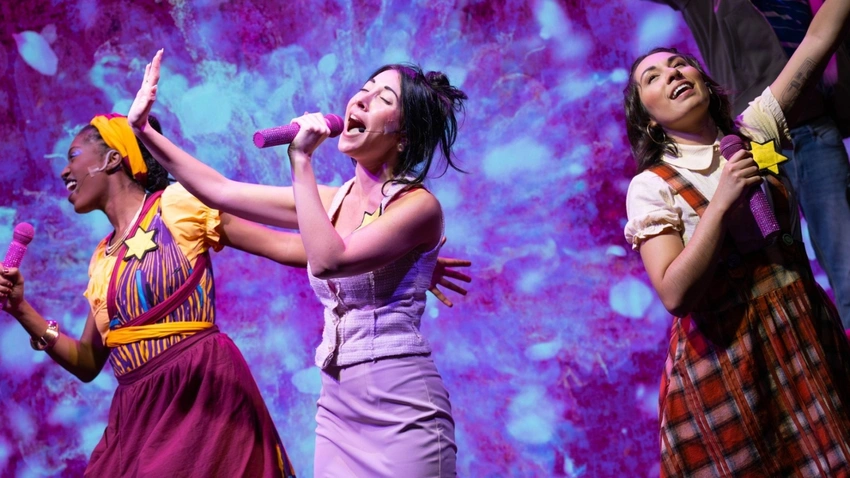
A new musical, Slam Frank, reinterprets Anne Frank's story with a contemporary, provocative lens. We explore the fine line between artistic license and historical sensitivity in theater.
The stage has always been a space for challenging norms, but where do we draw the line when retelling stories rooted in profound tragedy? This question is front and center with the buzz surrounding Slam Frank, the off-Broadway musical that has everyone talking.
Andrew Fox, the creative force behind Slam Frank, isn't just pushing boundaries; he’s obliterating them. His show reimagines Anne Frank’s story through an “intersectional, multiethnic, genderqueer, Afro-Latin hip-hop lens.” We're talking about a narrative where Anne is a pansexual Latina, hiding from Nazis with a Black mother, a neurodivergent gay father, an ultra-orthodox Jewish sister, and a gender-fluid love interest. It's a provocative premise, to say the least, backed by a vibrant hip-hop-meets-pop songbook featuring tunes like “Yeast of Edith,” “Non-Binary,” and “Herstory.”
Fox, who cites influences from Kanye West and Taylor Swift to Stephen Sondheim and Lin-Manuel Miranda, firmly believes musical theater is “the last truly punk-rock revolutionary art form.” And he's leaning into that philosophy. He's openly embraced a “master troll” persona online, using it to critique what he sees as the “excesses of the identity-politics era.” When outrage inevitably surfaces, say, regarding the casting of a non-Jewish actor for a Jewish role, his response is often one of deadpan indignance, challenging the very notion of who owns a story or its interpretation.
Slam Frank successfully crowdfunded its cast album, now available for $20, ahead of its reopening at the 330-plus-seat Orpheum Theatre. This demonstrates a clear appetite, or at least a significant curiosity, for such audacious artistic endeavors. But the central tension remains: Is this a brilliant, necessary recontextualization for a new generation, or an insensitive, even disrespectful, trivialization of a historical trauma?
For artists, the temptation to deconstruct and rebuild classic narratives is strong. It’s how art evolves, how it stays relevant, and how it sparks crucial conversations. However, when the source material involves genocide and unimaginable suffering, the stakes are profoundly high. The danger is not just offending an audience, but potentially distorting history, particularly for those who lack prior knowledge of the events.
Fox's approach, while undeniably generating conversation and attention, forces us to confront uncomfortable questions: Who has the right to interpret history? Can satire or recontextualization be so edgy that it crosses a line into trivialization? And when is the artist's message of “punk-rock revolution” outweighed by the public’s expectation of historical fidelity and sensitivity? These aren't easy answers, and Slam Frank is making sure we can’t ignore the questions.
