Digital Clutter is the New Fast Fashion

Digital Clutter is the New Fast Fashion
Comparing the 'bloatware' of our digital lives, thousands of screenshots and unread tabs, to the physical waste of a disposable wardrobe.
In my daytime life as a content drafter, I am a professional weaver of "the now." I spend forty hours a week convincing people that their lives are one specific purchase away from coherence. But by night, huddled over a fraying paperback with a fistful of sticky notes, I am a forensic investigator of "the then." I am obsessed with the way stories endure, the way a well-placed metaphor can act as a mirror for our messy, modern selves.
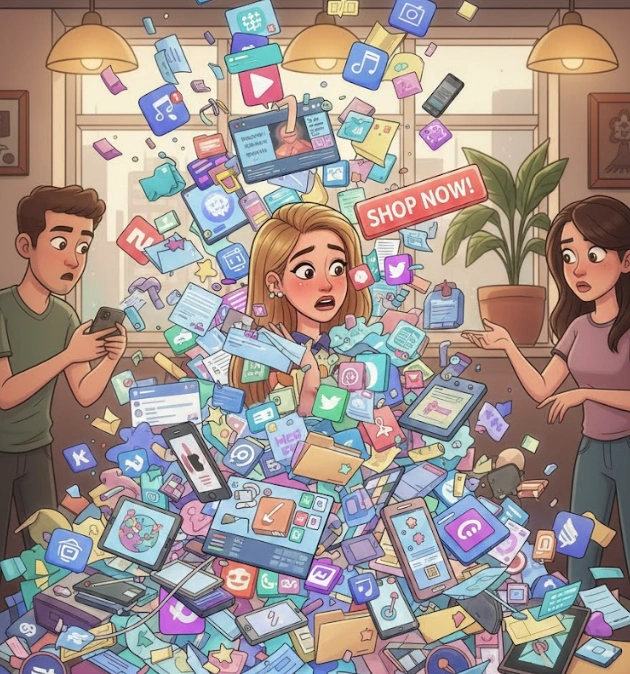
Lately, that mirror is reflecting something particularly hideous: my "To Read" tab on Chrome. It has 47 open windows. My phone’s photo gallery is a graveyard of 4,000 screenshots, recipes I’ll never cook, book recommendations I’ve already forgotten, and memes that were funny for exactly three seconds in 2024.
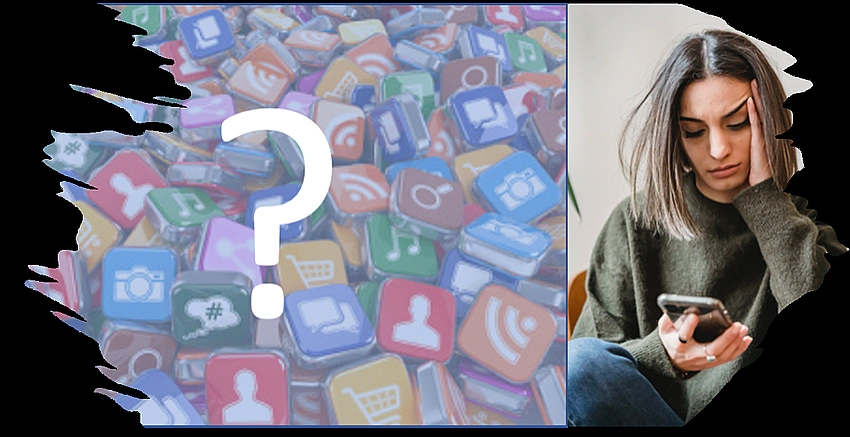
We talk a lot about the environmental and ethical rot of fast fashion, the mountains of Shein polyester clogging the Atacama Desert. But we need to start talking about digital clutter as its psychological and ecological twin. Your cloud storage is the new landfills, and your unread tabs are the new "haul" videos.
The Dopamine of the Save
Fast fashion thrives on the haul.the rush of acquisition. Digital clutter operates on the same neurological loop. When we screenshot a sophisticated infographic or "Save for Later" a long-form essay on The Cut, we get a micro-dose of dopamine. We feel like we have acquired the knowledge without actually having to do the labor of reading it.
It is the intellectual equivalent of buying a $5 sequined top for a "night out" that never happens. We aren't collecting information; we are collecting the identity of someone who is informed. It’s performative intelligence, stored in a data center in Virginia that is currently consuming enough electricity to power a small nation.
The Bloatware of the Soul
In literary terms, we are living in a Borges short story, the Library of Babel, but instead of infinite books, it’s infinite content. When everything is preserved, nothing is prioritized.
Sociologically, this is Digital Maximalism. We have been sold the lie that more connectivity and more data equal a more life-enhanced existence. But much like a closet bursting with cheap acrylic sweaters, a digital life overflowing with unorganized "bloatware" leads to a specific kind of modern paralysis: decision fatigue. We are so busy archiving our lives that we’ve stopped inhabiting them. We are like the characters in a Victorian gothic novel, haunted by the ghosts of our own interests.
The Radical Act of Deletion
If the antidote to fast fashion is the slow wardrobe, repairing, darning, and repeating, then the antidote to digital clutter is the digital edit.
It is the radical act of closing a tab without reading it. It is the mercy of the "Delete All" button. In a world that wants us to be infinite, choosing to be finite is a form of resistance. I’ve started treating my digital space like my physical bookshelf: if it doesn’t serve as an escape hatch or a mirror, it doesn’t get to stay.
Because at the end of the day, a story only matters if you actually read it. Everything else is just landfill.
#DigitalClutter #MindfulTech #EcoTech #CloudStorage #DigitalMinimalism
