Texas Anti-ICE Protesters Get Decades-Long Sentences, One Gets 100 Years!

Texas Anti-ICE Protesters Get Decades-Long Sentences, One Gets 100 Years!
Nine activists involved in an anti-ICE protest in Alvarado, Texas, have received harsh sentences, including 100 years for one who shot a police officer. This case is seen as a major test of dissent crackdown.
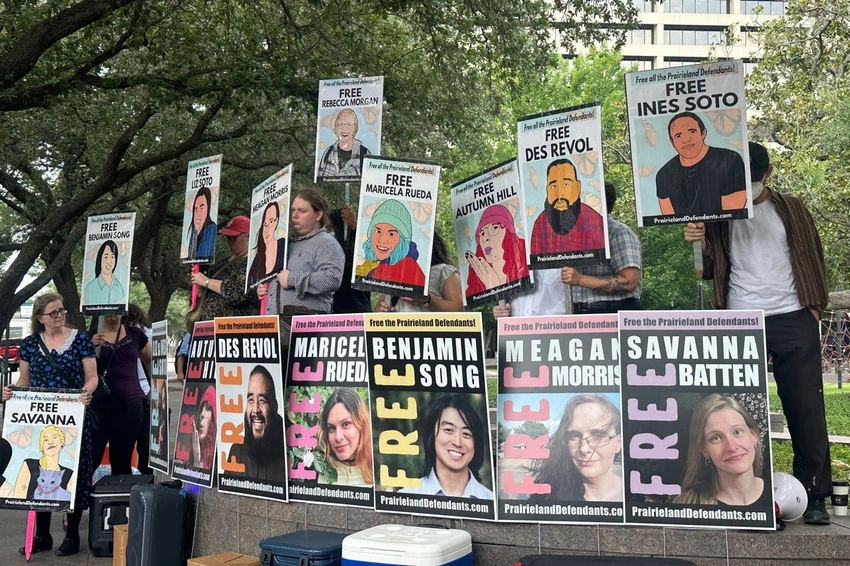
A group of Texas activists involved in a controversial anti-ICE protest have been handed exceptionally severe sentences, with one individual receiving 100 years in prison for shooting a police officer. The case, widely observed as a benchmark for the Trump administration's approach to dissent, saw nine protesters convicted on terrorism charges.
The incident unfolded during a Fourth of July protest at the Prairieland detention center in Alvarado, Texas. Demonstrators initially gathered to conduct a noise demonstration using fireworks, aiming to show solidarity with those detained inside the facility. However, the situation quickly escalated when a splinter group vandalized vehicles in the parking lot, damaged a guard shack, slashed the tires of a government van, and destroyed a security camera.
The confrontation took a dramatic turn when police arrived on the scene. Benjamin Song, one of the activists, fired an AR-15 rifle from the woods, striking an officer in the shoulder. Fortunately, the officer survived the attack. Song was subsequently convicted of attempted murder of an officer, along with firearm and explosives charges, riot, and providing material support to terrorists. He faced a possible life sentence and ultimately received a 100-year prison term.
Five other activists – Zachary Evetts, Autumn Hill, Savanna Batten, Elizabeth Soto, and Meagan Morris – were each sentenced to 50 years in prison. Another demonstrator, Maricela Rueda, received a 70-year sentence. These six individuals were convicted of riot, providing material support to terrorists, and explosive charges. Rueda also faced an additional charge of corruptly concealing a document. The harshness of these sentences has sparked significant debate, particularly when compared to penalties issued in other high-profile cases involving political unrest.
