CJI Kant: Justice Must Find Its Way to Citizen, Not Wait in Courtrooms

CJI Kant: Justice Must Find Its Way to Citizen, Not Wait in Courtrooms
Chief Justice of India Surya Kant inaugurates Bihar's first Victim Rights Centre (VRC), emphasizing accessible justice for vulnerable communities. A pivotal step towards empowering the unheard.
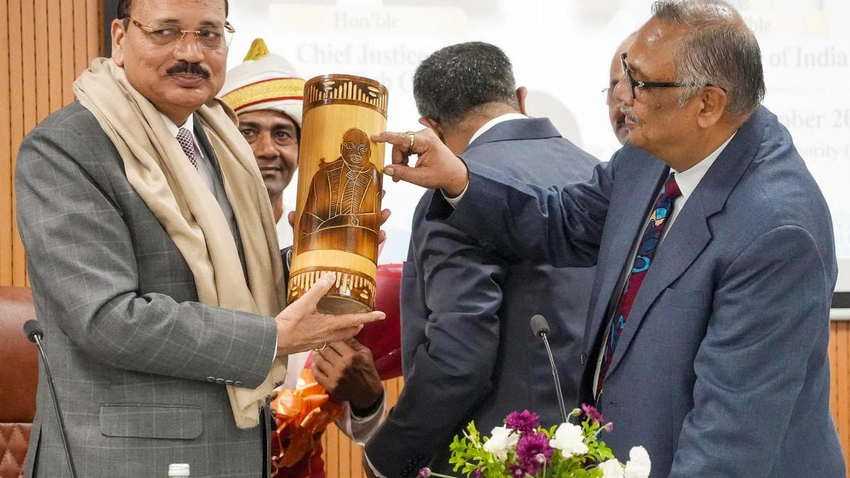
Chief Justice of India (CJI) Justice Surya Kant on Saturday, September 26, 2026, inaugurated Bihar's pioneering Victim Rights Centre (VRC). This landmark initiative is designed to serve as a crucial single-window mechanism for crime victims, ensuring that justice isn't confined to courtrooms but actively reaches those who need it most.
Speaking at the launch, CJI Kant emphasized a profound principle:
justice must not wait for the citizen to find it; the justice system must find its way to the citizen.
He highlighted the imperative for justice to extend to the vulnerable, the unheard, and those who struggle to navigate the complex legal system independently.
The event, held at the Bihar State Legal Services Authority (BSLSA) premises, also saw the flagging off of nine multi-utility vehicles, the launch of a dedicated transgender helpline, and the release of a book on VRC. These initiatives, though diverse in their approach, share the common goal of enhancing accessibility to justice. The CJI was joined by Patna High Court Chief Justice V.
Kameshwar Rao, who is also Patron-in-Chief of BSLSA, and Patna High Court seniormost judge and Executive Chairman of BSLSA, Justice Sudhir Singh, along with other esteemed officials.
CJI Kant elaborated on the significance of the VRC, explaining that victims should not be burdened with understanding legal intricacies to access their guaranteed rights. These rights include compensation, legal and medical assistance, counselling, protection, and rehabilitation. He acknowledged that while these entitlements exist across various statutes and institutions, their fragmented nature often makes them difficult for victims to access.
Special attention was drawn to the transgender helpline, recognizing that historically marginalized communities face unique barriers even before formal legal proceedings begin. The newly launched multi-utility vehicles are set to play a vital role in taking legal awareness, documentation support, and first-point assistance directly to villages and settlements beyond the immediate reach of conventional courts and legal institutions.
When people cannot easily reach the system, the system must be prepared to reach them,
the CJI affirmed.
The success of these initiatives, CJI Kant stressed, would not be measured by the inauguration ceremony itself, but by their tangible impact on people's lives. This includes effective responses to calls for help, actual delivery of promised entitlements, sparing victims the painful repetition of their stories, and ensuring legal assistance reaches communities with limited access to courtrooms.
Justice V. Kameshwar Rao lauded the VRC as a significant step towards making justice more accessible and responsive to those who have suffered due to crime. He pointed out that discussions around criminal justice often overlook the victim, focusing primarily on the state and the accused.
The VRC aims to re-center the victim's concerns. Justice Sudhir Singh underscored that institutional arrangements alone are insufficient; the sensitivity with which individuals are treated when approaching the justice system is paramount.
He eloquently summarized the endeavor:
nyay tabhi saarthak hai jab wah vyakti tak pahunche, jise uski sabse adhik awashyakta hai
, meaning, "Justice is meaningful only when it reaches the person who needs it the most."
This comprehensive approach by the judiciary signals a proactive shift towards ensuring that justice is not just a right, but an accessible reality for every citizen.
