Hezbollah rocket attack hits Israeli border town after president's visit

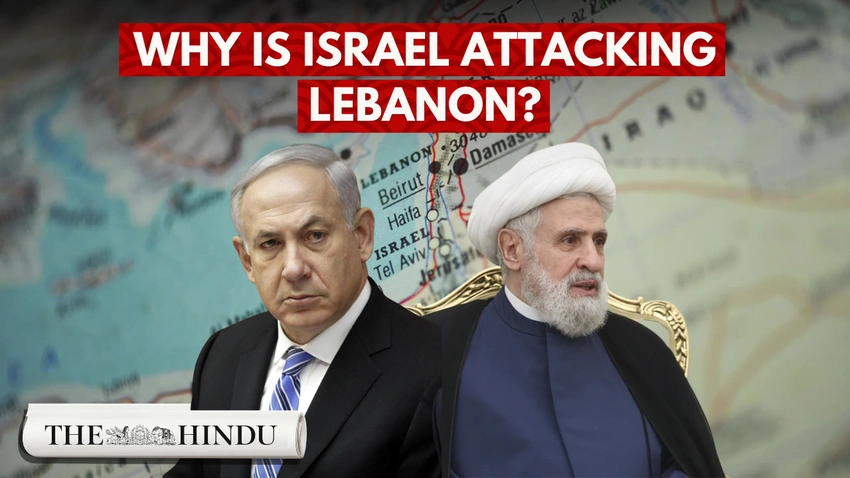
Hezbollah rocket attack hits Israeli border town after president's visit
Tensions spike as Hezbollah fires rockets into a northern Israeli border town soon after the Israeli president's trip, signaling a widening front in the Israel-Hezbollah conflict.
A Hezbollah rocket attack targeted a northern Israeli border town shortly after a visit by the Israeli president, marking a fresh escalation in the already volatile Israel-Hezbollah war. The flare-up comes amid days of intensifying cross-border fire that has tested ceasefire lines and raised fears of a broader conflict in the region.
Earlier on the same day, an Israeli strike hit Hazmieh, a residential area on Beirut’s eastern outskirts, killing at least one person, according to Lebanon's health ministry. The strike in Hazmieh was described as the second attack on the Christian-dominated neighborhood within the ongoing conflict, underscoring how fighting has spilled beyond Gaza into Lebanon and widened the danger for civilians on both sides.
Lebanon’s prime minister said Iran’s Guards are commanding Hezbollah operations in Lebanon, a claim that has sharpened regional tensions and fed accusations that external powers are pulling Lebanon deeper into the West Asia war. The statement comes as officials warn that the country could face renewed violence tied to the broader confrontation between Israel and allied factions.
Analysts point to a widening battlefield, noting that the conflict has shifted from a predominantly Gaza-centered confrontation to a multi-front war that now includes cross-border exchanges in Lebanon and the potential for a ground maneuver in southern Lebanon. The situation remains highly volatile, with civilian areas repeatedly caught in the crossfire and international actors urging restraint while stressing the risk of a broader regional escalation.
As fighting persists, residents in affected towns and border communities face renewed displacement and fear, while leaders on both sides reiterate vows to defend national security. The latest exchanges come at a moment when regional security arrangements are already under strain, prompting calls for de-escalation and urgent humanitarian and diplomatic efforts to avert a wider crisis.
