Growing Up With Harry Potter and Growing Into Yourself

Growing Up With Harry Potter and Growing Into Yourself
Growing Up With Harry Potter and Growing Into Yourself
Some stories stay with you because they are entertaining. Others stay because they grow alongside you, changing meaning as you change. The Harry Potter series belongs to the second kind. It is not just a story you read once: it is a world you return to at different stages of life, each time understanding it differently.
For many readers, childhood began with the wonder of entering Hogwarts: a place that felt like an answer to a question you did not yet know how to ask. The idea that somewhere, beyond ordinary life, there existed a world where you could belong differently.
That sense of belonging is one of the most powerful parts of the series.
At a young age, the story feels magical in a literal sense: spells, creatures, secret passages, hidden rooms. Hogwarts becomes a dream, not just because of magic, but because it feels structured yet full of possibility.
There are houses, friendships, classes, and routines, but also mystery and unpredictability.
It feels like a place where identity can unfold.
And that matters to children, because childhood is a time of forming identity without fully understanding it.
As readers grow older, the story changes.
The magic remains, but it becomes quieter compared to the emotional complexity beneath it. The characters begin to feel less like fictional figures and more like reflections of real human experiences—friendship, insecurity, jealousy, courage, loss, and choice.
Harry is no longer just a hero.
He becomes someone navigating pressure, expectation, and uncertainty.
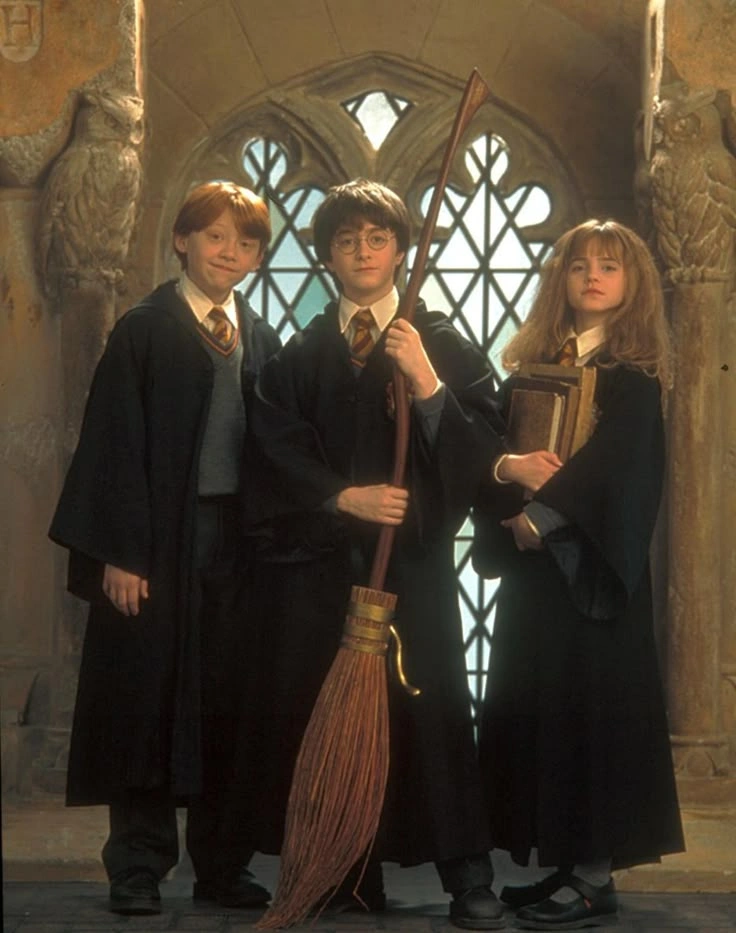
Ron becomes more than comic relief: he represents insecurity and loyalty existing at the same time.
Hermione becomes more than intelligence: she represents discipline, care, and the quiet strength of consistency.
These shifts matter because they align with how readers themselves grow.
At a younger age, you look for adventure.
Later, you begin to understand emotion.
And eventually, you recognize complexity.
The series grows with you because it contains all three layers.
One of the most significant themes that becomes clearer over time is the idea that identity is not fixed.
Throughout the series, characters are constantly making choices that shape who they become. The famous distinction between what you are born with and what you choose becomes more meaningful as you age.
At first, it feels like a simple message.
Later, it feels like responsibility.
Because growing up means realizing that you are not only defined by circumstances, but by how you respond to them.
The series also explores friendship in a way that evolves with age. Early on, friendship feels straightforward: shared experiences, loyalty, standing together against obvious challenges.
Ultimately, growing up with Harry Potter is not just about following a narrative.
It is about following your own development alongside it.
The story becomes a reference point.
A place you return to when you want to understand something about yourself more clearly.
And growing into yourself is not a single moment.
It is a process.
One that continues, changes direction, and deepens over time.
The series reflects that.
It begins with wonder.
Moves through complexity.
And ends with a sense of quiet understanding.
Not because everything is resolved perfectly, but because the characters, and the readers, have learned how to live with what they have experienced.
And perhaps that is why it stays.
Because it does not only tell a story about magic.
It becomes part of the story of growing up itself.
