Bumble's Big Shift: Does Letting Men Message First Fix Dating?

Bumble's Big Shift: Does Letting Men Message First Fix Dating?
Bumble, the app built on women making the first move, just changed its core rule. Is this a savvy evolution or a risky surrender of its unique identity in the dating world?
The dating app landscape just witnessed a seismic shift. Bumble, a platform that has proudly staked its entire identity on women making the first move since its inception in 2014, has officially flipped the script.
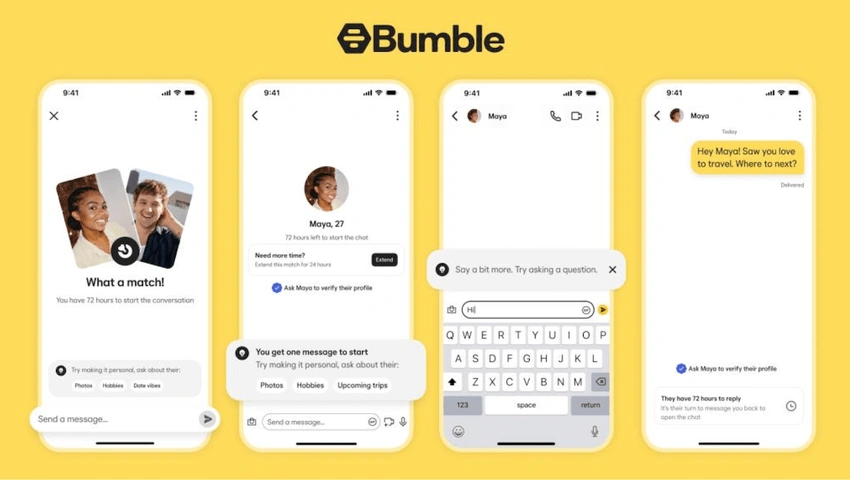
The company announced a significant update: anyone in a match can now send the initial message.
For a decade, Bumble stood apart. It launched as the considerate alternative to apps like Tinder, specifically designed to empower women in heterosexual connections by giving them the sole power to initiate conversations. This mechanism aimed to curb the deluge of unsolicited and often unwelcome messages that frequently plagued other dating platforms, offering a more controlled and, ideally, safer experience.
It was a foundational pillar, the very thing that made Bumble, well, Bumble.
Now, that defining feature is gone. In addition to opening the messaging floodgates, Bumble has also extended the response window from a tight 24 hours to a more generous 72 hours. This change aims to alleviate pressure on users to craft a quick reply, giving them more flexibility and reducing the feeling of constantly needing to check the app to avoid a lost connection.
Bumble's founder and CEO, Whitney Wolfe Herd, framed this pivotal move not as a retreat, but as an evolution of the company's original mission. Herd stated, “While women making the first move was a radical idea, being women-first was never about prescribing just one way to connect.
It was about designing an experience with women's needs in mind to create better outcomes for everyone.” This perspective suggests the change is a response to evolving user desires rather than a concession.
And user data certainly backs up this claim. According to Bumble's internal surveys, a significant 66% of women expressed a preference for men to send the first message, with many citing reduced stress as a key benefit. Furthermore, over half of the members surveyed indicated that the extended response window significantly improved their overall experience.
These statistics paint a picture of a user base ready for, and perhaps even actively desiring, this new approach.
So, what does this mean for online dating?
Is Bumble's bold move a step forward or a step backward? On one hand, it could be a pragmatic evolution.
The dating scene is constantly shifting, and what worked in 2014 might not be what users want in 2024. If the goal is to create “better outcomes for everyone” and cater to what the community is “asking for - more flexibility, less pressure, and more opportunities to create real, meaningful connections” - then adapting to user preferences, especially those of its core female audience, seems like a logical, forward-thinking adjustment.
However, there's also a compelling argument for it being a step backward. Bumble's unique selling proposition was its differentiation.
By removing the women-first rule, it arguably loses a significant part of what made it distinct.
Will it now devolve into another generic dating app, potentially reintroducing the very “unsolicited messages and general weirdness” it initially sought to eliminate? The risk is that in chasing broader appeal, it might dilute its core brand and alienate the users who were drawn to its original, protective ethos.
Ultimately, whether this is a shrewd adaptation or a misguided capitulation remains to be seen. Bumble is betting that flexibility and reduced pressure will lead to more meaningful connections, even if it means shedding its most iconic feature. Only time, and user engagement, will tell if this major pivot truly enhances the dating experience or if it's a regrettable move that blurs its unique identity.
