The internet's wild future: More cats, more chaos, and .fart?

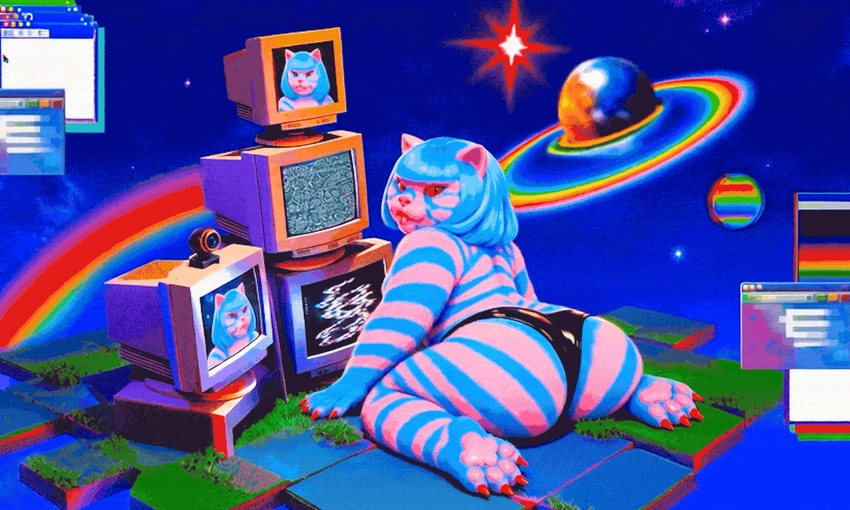
The internet's wild future: More cats, more chaos, and .fart?
Get ready for a digital revolution! Hundreds of new top-level domains, from .meow to .fart, are coming. This isn't just about weird website endings; it's about shaping our online identities and the internet's next big ph
The internet is about to get a whole lot weirder, and a lot more reflective of our wildest online selves. Imagine typing in a URL that ends not in .com, but in something like .meow or even, yes, .fart . It's the next frontier of our digital landscape.
Soon, for the first time since 2012, the window opens for anyone to invent a new top-level domain (TLD), that's the part to the right of the dot, like .org or .dev. And come August 12, that window closes. We're talking hundreds of new possibilities, potentially transforming how we find and interact with content online.
At the heart of this transformation is ICANN, the Internet Corporation for Assigned Names and Numbers.
They're the global body that sets the rules for domain names.
While their work might sound like 'boring technical stuff,' it solves incredibly complex problems.
For example, when Ukraine asked ICANN to shut down Russian TLDs, ICANN declined, upholding a core rule: ensure stability and security, but 'don't police content.'
I've been in Seville for ICANN86, witnessing this global governance firsthand. It's a fascinating mix, big tech players like Google and Amazon, domain registrars like GoDaddy, UN agencies, academics, and a surprising number of lawyers. One longtime attendee aptly called it a “traveling circus,” as this crowd hops from Mumbai to Seville to Bali, shaping the internet's future over policy forums and tapas bars.
Beyond the novelty, these TLDs are big business. Google famously paid $25 million for the .app string in 2012, recognizing its value. Owning a TLD means you can sell domains through registrars, collecting yearly fees.
Verisign, which owns .com, pulls in a staggering $1.5 billion annually, a testament to the lucrative nature of managing a database of words.
As the saying goes, 'man, .app is a good string.'
It's about identity. Think about it: our digital presence is becoming as important as our physical one.
New TLDs could allow for incredibly niche, expressive, or community-specific online homes.
Whether you want to claim your piece of the internet with a .cat or a .geek suffix, the upcoming flood of TLDs will redefine how we brand ourselves and explore the web. Get ready, because the internet's about to get a whole lot more personalized, and perhaps, a little more chaotic.
