When Leaders Claim 'Meddling': The California Election Shockwave

When Leaders Claim 'Meddling': The California Election Shockwave
What message do leaders send when they publicly claim to have intervened in an election outcome? We're diving into the implications of such extraordinary statements on democratic trust.
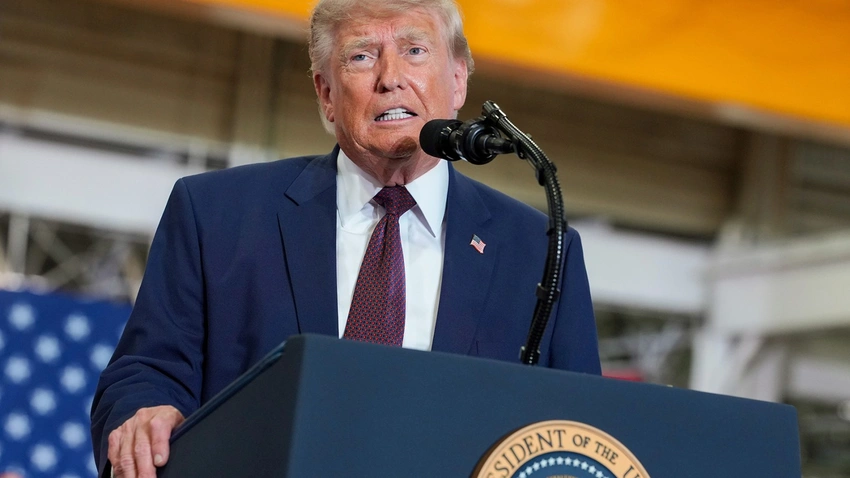
When a prominent leader openly declares personal intervention in an election, crediting it for a specific outcome, it sends a seismic shockwave through the political landscape. This isn't just about a win or a loss; it’s about the very foundations of electoral integrity and public trust.
Take the recent scenario in California. After Republican Spencer Pratt failed to advance in the Los Angeles mayoral race, a narrative of 'rigged elections' quickly emerged from certain corners. Yet, when it came to the gubernatorial primary, the story took an extraordinary turn. Republican Steve Hilton, originally projected to lose, ultimately advanced to the general election.
The remarkable claim? That this reversal wasn’t due to votes being counted, but to a direct, personal intervention. The assertion is that a phone call to a 'very powerful, very good U.S. attorney in California'—potentially Bill Essayli, the U.S. attorney for the Central District—was the catalyst. The message conveyed was stark: “Do me a favor, they’re trying to steal that election too.”
The narrative is compelling: 'He was definitely going to lose,' the leader reportedly stated of Hilton. Then, 'About an hour after the call: “Ladies and gentlemen, Mr. Hilton has won.” If I had not made that call, Steve Hilton would right now be watching the election from home.' This isn't merely strong rhetoric; it’s a direct attribution of an election outcome to external pressure rather than the democratic process itself.
Think about what this communicates. On one hand, it suggests an almost omnipotent ability to influence the democratic machinery, turning the tide with a single phone call. On the other, it paints the electoral system as inherently corruptible, easily swayed, and in constant need of a strong hand to prevent theft. Even with Hilton advancing, securing 24.7 percent of the vote against Democrat Xavier Becerra’s 28.1 percent and Tom Steyer’s 22.8 percent, the focus shifts from the voters' choice to the alleged backroom maneuvering.
What are the long-term consequences of such claims? For voters, it fosters cynicism and doubt, eroding faith in institutions designed to be impartial. For political actors, it can normalize the idea that elections are not fair contests but battles of influence. It creates an environment where every close race, every unexpected result, can be called into question, not just by opponents but by the victors themselves, albeit for different reasons.
Ultimately, when leaders claim to have 'meddled' successfully, they’re not just telling a story; they’re rewriting the rules of engagement. They're sending a clear message that the electoral process is not sacrosanct, but a system that can be bent to a powerful will. The real question is: what kind of democracy are we building when its integrity is openly treated as a pawn in a political playbook?
