Bhopal–Jabalpur Highway Becomes First in India to Feature Red Table-Top Markings for Wildlife Protec

Bhopal–Jabalpur Highway Becomes First in India to Feature Red Table-Top Markings for Wildlife Protec
Bhopal–Jabalpur Highway Becomes First in India to Feature Red Table-Top Markings for Wildlife Protec
India installs its first road marking on NH-45—a 5-mm red, table-top strip designed to slow vehicles for wildlife safety. The ₹122.25 crore upgrade includes fencing and underpasses after a cheetah cub's death.
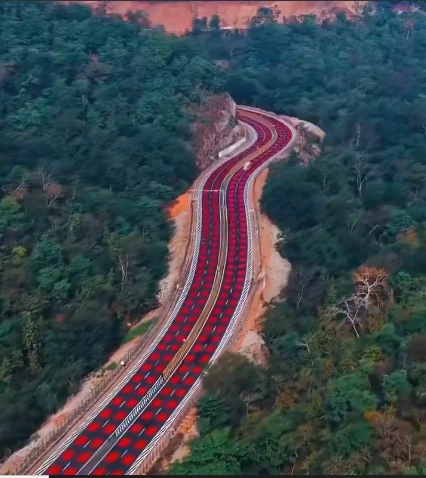
A 5 mm thick "table-top red marking" was applied to a two-kilometre high-risk section of the Bhopal–Jabalpur National Highway (NH-45) by the National Highways Authority of India (NHAI). By physically slowing down cars, this innovative method seeks to increase wildlife safety on the road. A week earlier, a cheetah cub died in a hit-and-run incident in Gwalior, prompting the urgent action.
This is the first road marking on an Indian highway, according to regional NHAI officials. It is an essential component of a larger ₹122.25 crore project to extend the 11.9 km highway stretch, which also involves building fencing and underpasses.
Wildlife Deaths Call for Immediate Action
The recent death of a cheetah cub served as a stark reminder of the growing threat highways pose to India's wildlife, which prompted the swift implementation of the new safety marking. High-speed traffic in animal corridors poses a serious risk, as evidenced by the cub's death on the Agra–Mumbai Highway after it strayed from Kuno National Park.
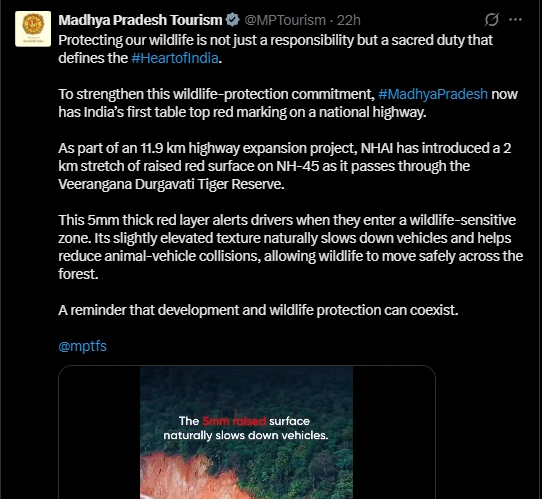
With 237 animal-vehicle collisions and 94 fatalities over the past two years, Madhya Pradesh in particular is dealing with a serious conflict. Because of the high number of fatal incidents on roads that cross protected areas, such as the Veerangana Durgavati Tiger Reserve, authorities had to act quickly and decisively to protect animals crossing the road to access their habitat.
Table-Top Red Indication
Applying the "table-top," a 5 mm thick red surface layer, over the road in the tiger reserve's designated danger zone is an inventive solution. The bright red colour acts as an instant visual warning to drivers entering a wildlife zone, according to NHAI officials.
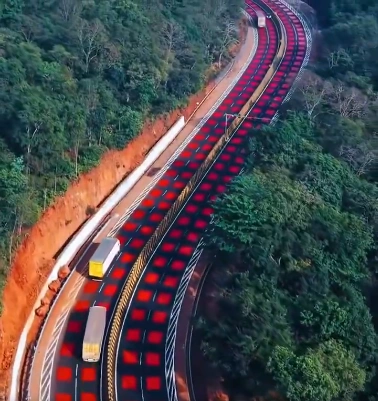
Importantly, cars are automatically forced to slow down due to the slightly elevated, textured surface, which reduces the chance of collisions. This is a part of an extensive ₹122.25 crore project on the 11.9-kilometre stretch that will build about 25 underpasses based on animal movement patterns. White shoulder lines, speed detector development, and chain-link fencing to prevent animal access are additional safety features.
From the Indian's Perspective
A prime example of responsible, moral infrastructure development is the NHAI's swift action on NH-45, which combined this creative red marking with structural safeguards like fencing and underpasses. It demonstrates that our priceless wildlife need not be sacrificed in the name of large-scale expansion, such as making a two-lane road into a four-lane one.
The "table-top" approach is a great, straightforward example of coexistence and empathy built into the road itself. We applaud the authorities for acting quickly after the cheetah cub died.
#WildlifeSafety #NH45 #CheetahConservation #RoadSafetyIndia #FirstOfItsKind
